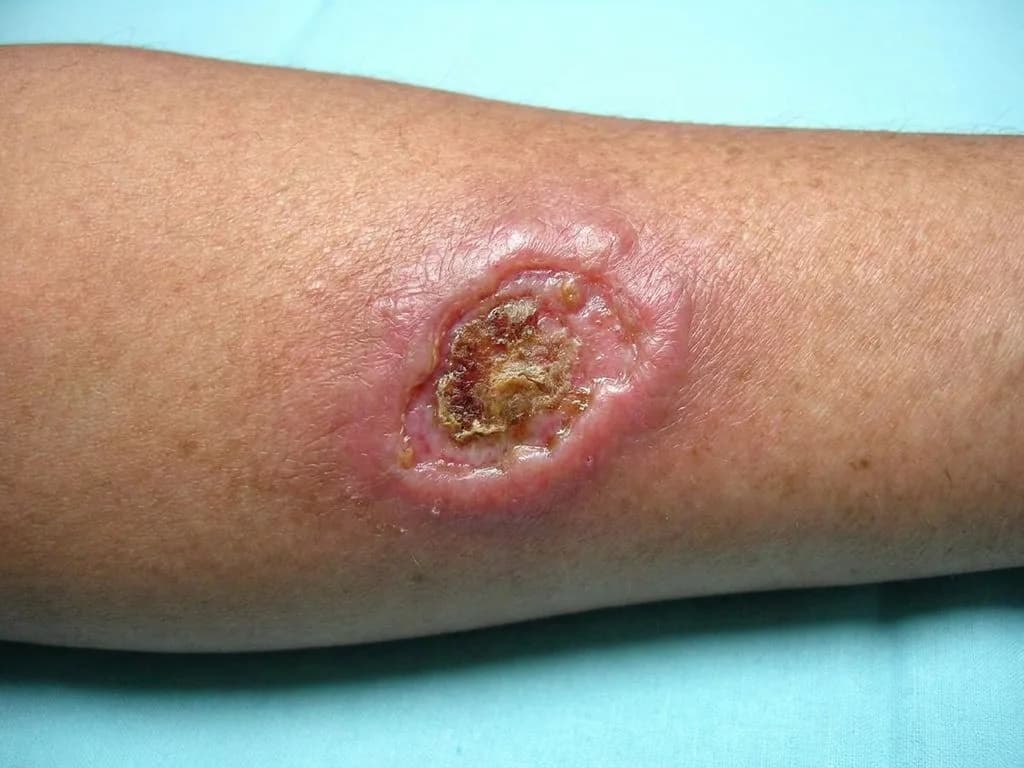
Correct Answer: A. Sandfly
The condition shown in the image is visceral leishmaniasis (kala-azar), diagnosed by the presence of Leishmania donovani amastigotes within macrophages. The sandfly (Phlebotomus species in the Indian subcontinent) is the obligate vector for transmission of L. donovani. Female sandflies become infected when taking a blood meal from an infected human and transmit the parasite through their saliva during subsequent feeding. India accounts for approximately 60% of the global kala-azar burden, with endemic foci in Bihar, Jharkhand, and parts of Uttar Pradesh. The diagnosis is confirmed by demonstrating the characteristic intracellular amastigotes in bone marrow, spleen, or lymph node aspirates (as shown in the image). Phlebotomus argentipes is the principal vector in the Indian subcontinent. The sandfly is a small (2–3 mm), nocturnal insect that breeds in dark, damp crevices and is anthropophilic, making human-to-vector transmission efficient in endemic areas. Recognition of the vector is essential for epidemiological control and public health interventions in India.
Why the other options are wrong
B. Ixodes Tick — Ixodes ticks are vectors for Borrelia burgdorferi (Lyme disease) and Babesia species, not Leishmania. This is a common trap because both are arthropod-borne diseases, but the tick vector is specific to spirochetal and protozoan infections of temperate zones, not leishmaniasis endemic to tropical India. C. Anopheles mosquito — Anopheles mosquitoes transmit Plasmodium species (malaria), not Leishmania. While both are vector-borne parasitic diseases endemic in India, the mosquito vector is specific to malaria. NBE may pair this option to test whether students confuse different arthropod vectors of tropical diseases. D. Tsetse fly — Tsetse flies (Glossina species) transmit Trypanosoma species (African sleeping sickness), not Leishmania. This is geographically specific to sub-Saharan Africa and is not endemic in India. The trap here is confusing different protozoan parasites transmitted by different fly vectors.
High-Yield Facts
- Phlebotomus argentipes is the principal sandfly vector for Leishmania donovani in the Indian subcontinent.
- Visceral leishmaniasis (kala-azar) is diagnosed by demonstrating amastigotes in macrophages from bone marrow, spleen, or lymph node aspirates.
- India accounts for ~60% of global kala-azar cases, with endemic foci in Bihar, Jharkhand, and eastern Uttar Pradesh.
- Sandflies are 2–3 mm, nocturnal, anthropophilic insects that breed in dark, damp crevices and feed on human blood.
- Female sandflies transmit Leishmania through saliva during blood feeding; males do not feed on blood.
Mnemonics
Vector-Disease Pairing (STAMP) Sandfly → Leishmaniasis; Tsetse → Trypanosomiasis; Anopheles → Malaria; Mosquito (Culex/Aedes) → Filaria/Dengue; Phlebotomus → Kala-azar. Kala-azar Epidemiology (BAJ) Bihar endemic; Amastigotes in macrophages; Jharkhand focus. Use when recalling Indian leishmaniasis hotspots.
NBE Trap
NBE pairs leishmaniasis with other vector-borne tropical diseases (malaria, Lyme disease, sleeping sickness) to test whether students can discriminate between arthropod vectors and their specific parasitic pathogens. The trap is strongest when students confuse "protozoan parasite" with "any arthropod vector."
Clinical Pearl
In an Indian patient presenting with hepatosplenomegaly, fever, and pancytopenia from an endemic area (Bihar/Jharkhand), always suspect kala-azar and confirm with bone marrow aspiration showing Leishmania amastigotes. Vector control targeting Phlebotomus argentipes breeding sites (dark, damp crevices in houses) is the cornerstone of India's National Kala-azar Elimination Programme.
_Reference: Jawetz, Melnick & Adelberg's Medical Microbiology (Leishmaniasis chapter); Park's Textbook of Preventive and Social Medicine (Kala-azar epidemiology in India)_