
NEETPGAI
FeaturesBlogComparePricing
Log inStart Free
NEETPGAI

AI-powered NEET PG preparation platform. Master all 19 subjects with adaptive MCQs, AI tutoring, and spaced repetition.

Product

  • Features
  • Subjects
  • Previous Year Questions
  • Compare
  • Pricing
  • Blog

Features

  • Adaptive MCQ Practice
  • AI Tutor
  • Mock Tests
  • Spaced Repetition

Resources

  • Blog
  • Study Guides
  • NEET PG Updates
  • Contact & support

Legal

  • Privacy Policy
  • Terms of Service

Stay updated

© 2026 NEETPGAI. All rights reserved.
    PYQs/2018/Q252
    Verified answer (AI cross-checked + SME reviewed)

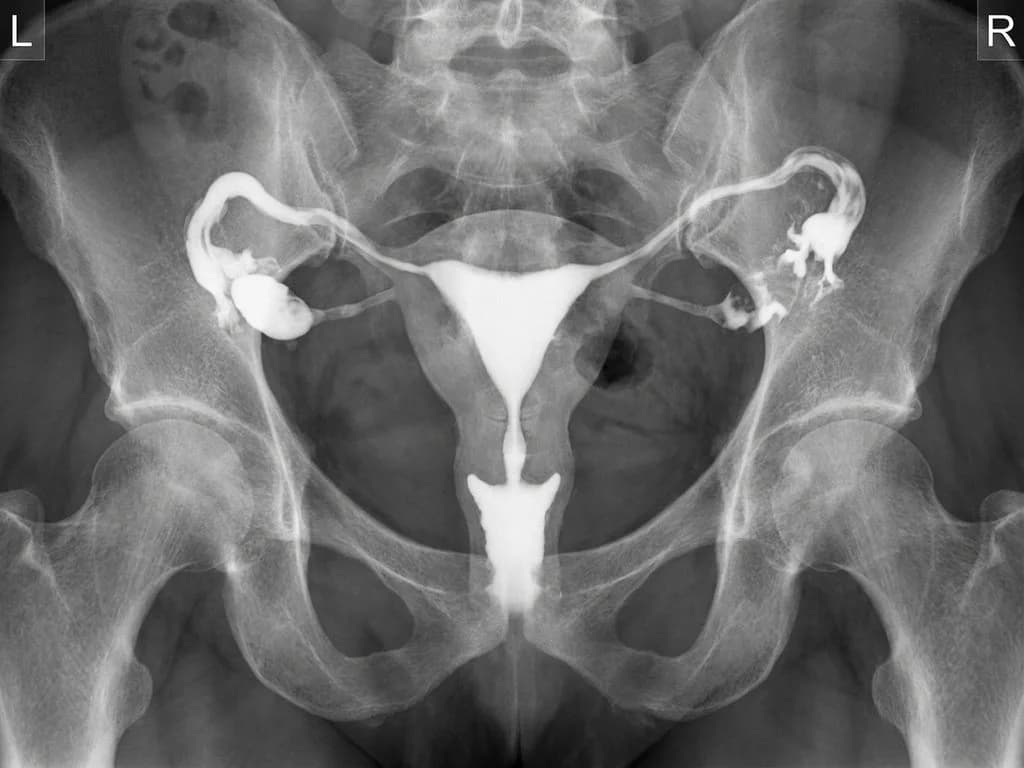
    Q252 (2018, OBGy Imaging) — Correct answer: A. Hysterosalpingography.
    NEET PG 2018
    Q252
    scan Radiology
    OBGy Imaging
    tier-3 (2/3 verifier agreement)
    Clinical image for NEET PG 2018 Q252

    The image seen below shows

    A. Hysterosalpingography
    B. Magnetic Resonance Imaging
    C. Positron Emission Tomogrpahy
    D. Laparoscopic chromopertubation

    Correct Answer: A. Hysterosalpingography

    Hysterosalpingography (HSG) is a fluoroscopic radiographic procedure that visualizes the uterine cavity and fallopian tubes after injection of water-soluble or oil-based contrast medium through the cervix. The image demonstrates the characteristic appearance of HSG: contrast filling the uterine cavity in a triangular or pear-shaped configuration, followed by spillage into the peritoneal cavity via patent fallopian tubes. This is the gold standard first-line imaging for assessing tubal patency and uterine cavity abnormalities in infertility workup, as per Indian guidelines (ASRM-equivalent protocols followed in ICMR-recommended fertility centres). HSG is preferred in Indian clinical practice because it is cost-effective, requires minimal radiation exposure compared to CT, provides dynamic information about tubal function, and can be therapeutic (flushing debris in mild tubal obstruction). The procedure is typically performed in the follicular phase (days 7–10 of menstrual cycle) to avoid disrupting an early pregnancy and to optimize visualization when the endometrium is thin.

    Why the other options are wrong

    B. Magnetic Resonance Imaging — MRI provides excellent soft-tissue contrast and is superior for evaluating endometrial pathology, adenomyosis, and fibroid characterization, but it cannot assess tubal patency dynamically. MRI is a second-line investigation reserved for cases where HSG findings are equivocal or when detailed uterine anatomy (e.g., septate vs. bicornuate uterus) needs clarification. The image clearly shows contrast spillage into the peritoneal cavity—a dynamic phenomenon that MRI cannot demonstrate. C. Positron Emission Tomography — PET imaging uses radioactive tracers to assess metabolic activity and is used in oncology and neurology, not in routine infertility or gynecological imaging. PET has no role in evaluating tubal patency or uterine cavity morphology. This is a distractor that tests whether students confuse advanced imaging modalities with basic diagnostic procedures in obstetrics and gynaecology. D. Laparoscopic chromopertubation — Laparoscopic chromopertubation is an invasive surgical procedure performed under general anaesthesia to assess tubal patency by injecting dye (methylene blue or indigo carmine) and observing spillage into the peritoneal cavity. While it provides direct visualization, it is reserved for cases where HSG is inconclusive, contraindicated, or when concurrent pelvic pathology (endometriosis, adhesions) needs evaluation. HSG is the non-invasive first-line test, making it the appropriate answer for this radiographic image.

    High-Yield Facts

    • HSG is the first-line imaging for tubal patency assessment in infertility workup; performed in follicular phase (days 7–10) to avoid early pregnancy disruption.
    • Contrast spillage into peritoneal cavity on HSG indicates patent fallopian tubes; absence suggests tubal obstruction requiring further evaluation.
    • Water-soluble contrast is preferred in India for HSG in suspected tubal obstruction (allows repeat imaging if needed); oil-based contrast (Lipiodol) may have therapeutic benefit in mild tubal factor infertility.
    • HSG cost-effectiveness and radiation safety make it the standard first-line investigation in Indian fertility centres; MRI is reserved for detailed uterine anatomy evaluation.
    • Contraindications to HSG: active pelvic infection, pregnancy, recent uterine instrumentation, or iodine allergy (if iodinated contrast used).

    Mnemonics

    HSG Timing: FOL-LICULAR Follicular phase (days 7–10) → Optimal endometrial thinness → Low risk of pregnancy disruption → Lower false positives from blood clots. When HSG Fails → Next Step: LAPS Laparoscopy with Anaesthesia → Peritoneal Spillage assessment (chromopertubation) when HSG inconclusive or concurrent pelvic pathology suspected.

    NBE Trap

    NBE may pair "laparoscopic chromopertubation" with HSG images to test whether students confuse the invasive surgical procedure with the non-invasive radiographic first-line investigation. Students who focus on "tubal patency assessment" without considering the imaging modality may incorrectly select the laparoscopic option.

    Clinical Pearl

    In Indian fertility centres, HSG remains the gateway investigation for tubal factor infertility because it is affordable, non-invasive, and provides both diagnostic and therapeutic value (oil-based contrast can flush mild debris). A normal HSG with bilateral spillage essentially rules out tubal obstruction as a cause of infertility, allowing the workup to focus on ovulatory or male factors—critical in resource-limited settings.

    _Reference: DC Dutta's Textbook of Obstetrics (7th ed.), Ch. 9 (Infertility); Harrison Principles of Internal Medicine, Ch. 297 (Infertility and Reproductive Endocrinology)_

    Ask AI Tutor about this question

    Stuck on a distractor? Want a worked-through clinical scenario? The AI Tutor is a NEETPGAI Pro feature — sign up free to practice the full question bank, then unlock the AI Tutor when you're ready.

    Explain this concept in plain language
    Why is each wrong option wrong?
    Give me a clinical scenario where this is tested
    Sign up free Already have an account? Log in

    Free to start, no credit card required. The 3 prompts/day quota is shared with practice + tutor + deep-dive across NEETPGAI.

    Memory-based reconstruction

    NBE does not officially release NEET PG papers per the 2025 Supreme Court directive. This question was reconstructed from 1 community source: PrepLadder NEET PG 2018 Recall PDF. Cross-verified by Claude Haiku 4.5 + Gemini 2.5 Flash + community-aggregate vote, then reviewed by a practising medical SME.

    ← All NEET PG 2018 questionsPractice with AI Tutor →