
NEETPGAI
FeaturesBlogComparePricing
Log inStart Free
NEETPGAI

AI-powered NEET PG preparation platform. Master all 19 subjects with adaptive MCQs, AI tutoring, and spaced repetition.

Product

  • Features
  • Subjects
  • Previous Year Questions
  • Compare
  • Pricing
  • Blog

Features

  • Adaptive MCQ Practice
  • AI Tutor
  • Mock Tests
  • Spaced Repetition

Resources

  • Blog
  • Study Guides
  • NEET PG Updates
  • Contact & support

Legal

  • Privacy Policy
  • Terms of Service

Stay updated

© 2026 NEETPGAI. All rights reserved.
    PYQs/2018/Q9
    Verified answer (AI cross-checked + SME reviewed)

    Q9 (2018, Upper Limb) — Correct answer: A. Flexion.
    NEET PG 2018
    Q9
    bone Anatomy
    Upper Limb
    tier-2 (3/3 verifier agreement)
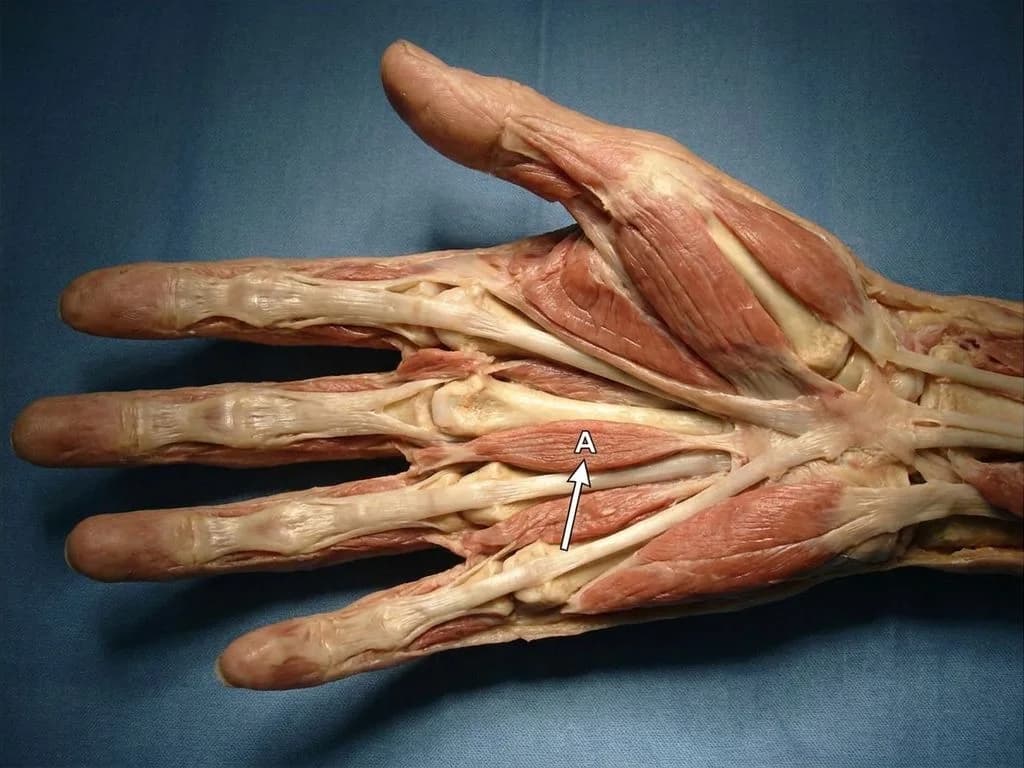
    Clinical image for NEET PG 2018 Q9

    What is the function of the muscle markes as A in the image below, at the metacarpophalangeal joint?

    A. Flexion
    B. Extension
    C. Adduction
    D. Abduction

    Correct Answer: A. Flexion

    The muscle marked as A is the flexor digitorum superficialis (FDS) or flexor digitorum profundus (FDP), both of which are intrinsic flexors of the metacarpophalangeal (MCP) joint. At the MCP joint, these muscles produce flexion because their tendons pass volar (palmar) to the axis of rotation of the MCP joint. The axis of rotation at the MCP joint runs transversely through the metacarpal head. Any muscle with a moment arm on the volar side of this axis will produce flexion. The flexor digitorum muscles originate from the forearm, pass through the carpal tunnel, and insert on the phalanges distal to the MCP joint. When they contract, they pull the phalanges in a volar direction, causing the fingers to curl into flexion—the primary functional movement for grip and precision pinch in Indian clinical practice. This is distinct from the intrinsic hand muscles (lumbricals and interossei), which have a more complex action at the MCP joint due to their dorsal insertion on the extensor apparatus.

    Why the other options are wrong

    B. Extension — Extension at the MCP joint is produced by the extensor digitorum communis (EDC) and extensor indicis proprius, whose tendons pass dorsal to the MCP joint axis. The muscle marked A passes volar to the axis, making it a flexor, not an extensor. This is a common NBE trap—confusing the anatomical course of flexor vs. extensor tendons in the hand. C. Adduction — Adduction at the MCP joint is produced by the palmar interossei (PAD—Palmar ADduct), which have insertions on the medial side of the extensor apparatus. The muscle A is a long flexor of the forearm, not an intrinsic hand muscle, so it has no adduction function at the MCP joint. Adduction/abduction occur primarily at the MCP joint, not at the interphalangeal joints. D. Abduction — Abduction at the MCP joint is produced by the dorsal interossei (DAB—Dorsal ABduct), which spread the fingers apart. The muscle A is a flexor with a volar moment arm; it cannot produce abduction. This option tests whether students confuse the anatomical actions of extrinsic forearm muscles with intrinsic hand muscles.

    High-Yield Facts

    • Flexor digitorum superficialis and profundus pass volar to the MCP joint axis → produce flexion at MCP joint.
    • Extensor digitorum communis passes dorsal to the MCP joint axis → produces extension at MCP joint.
    • Lumbricals insert on the lateral bands of the extensor apparatus → produce MCP flexion AND IP extension (complex action).
    • Palmar interossei (PAD) adduct fingers; dorsal interossei (DAB) abduct fingers at the MCP joint.
    • In Indian hand surgery, flexor digitorum profundus is the primary muscle tested for grip strength and finger flexion in clinical examination.

    Mnemonics

    PAD & DAB for Intrinsic Hand Muscles PAD = Palmar interossei ADduct (bring fingers together). DAB = Dorsal interossei ABduct (spread fingers apart). Use this to remember which intrinsic muscles control adduction/abduction at the MCP joint—the extrinsic flexors/extensors do not. Volar = Flexion, Dorsal = Extension Any tendon passing volar (palmar) to the MCP joint axis produces flexion. Any tendon passing dorsal produces extension. This simple rule applies to all long muscles of the forearm acting on the hand.

    NBE Trap

    NBE commonly pairs forearm flexor muscles with intrinsic hand muscle actions (adduction/abduction) to trap students who confuse extrinsic and intrinsic hand anatomy. The correct answer requires knowing that flexor digitorum muscles act only on flexion/extension at the MCP joint, not on abduction/adduction.

    Clinical Pearl

    In Indian orthopedic and hand surgery practice, testing flexor digitorum profundus strength (by asking the patient to flex the distal interphalangeal joint while the MCP and PIP joints are held extended) is a routine bedside test for ulnar nerve integrity and grip function—essential after hand trauma or nerve injury repair.

    _Reference: Bailey & Love's Short Practice of Surgery (Hand Surgery chapter); Clinically Oriented Anatomy by Moore (Upper Limb, Hand section)_

    Ask AI Tutor about this question

    Stuck on a distractor? Want a worked-through clinical scenario? The AI Tutor is a NEETPGAI Pro feature — sign up free to practice the full question bank, then unlock the AI Tutor when you're ready.

    Explain this concept in plain language
    Why is each wrong option wrong?
    Give me a clinical scenario where this is tested
    Sign up free Already have an account? Log in

    Free to start, no credit card required. The 3 prompts/day quota is shared with practice + tutor + deep-dive across NEETPGAI.

    Memory-based reconstruction

    NBE does not officially release NEET PG papers per the 2025 Supreme Court directive. This question was reconstructed from 1 community source: PrepLadder NEET PG 2018 Recall PDF. Cross-verified by Claude Haiku 4.5 + Gemini 2.5 Flash + community-aggregate vote, then reviewed by a practising medical SME.

    ← All NEET PG 2018 questionsPractice with AI Tutor →