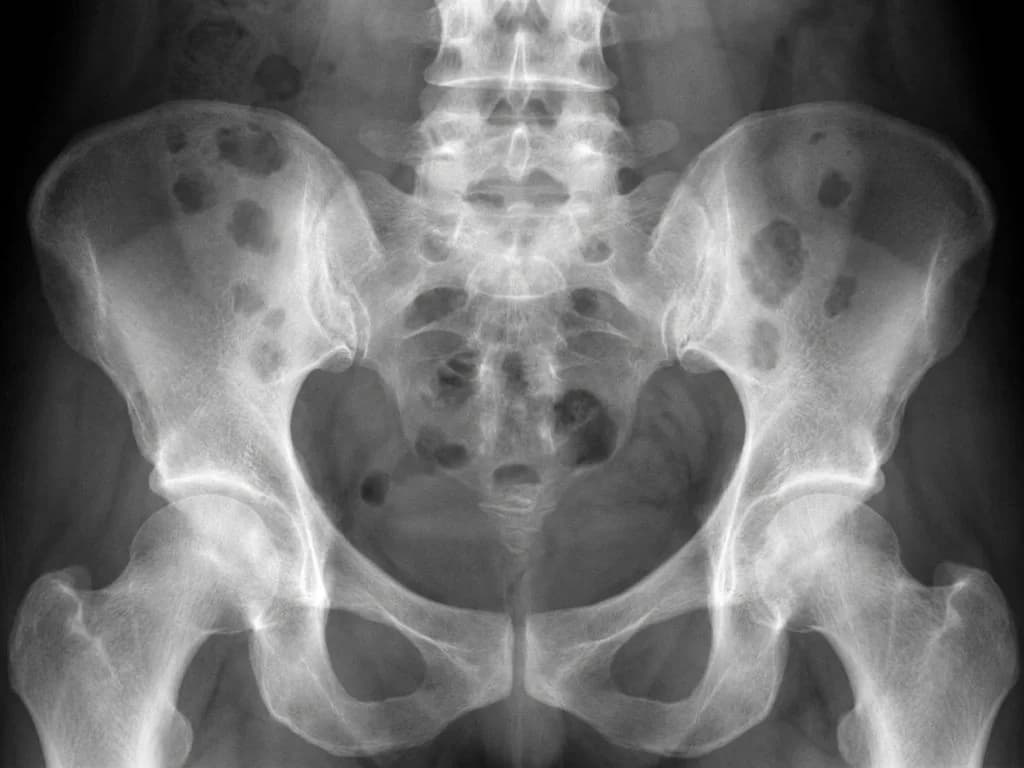
Correct Answer: A. Langerhans cell histiocytosis
Langerhans cell histiocytosis (LCH) is a clonal disorder of dendritic cells that classically presents with punched-out lytic bone lesions on X-ray, particularly in the skull and long bones. The key discriminator here is the combination of: (1) radiological finding of well-demarcated, round lytic lesions with sharp borders ("punched-out" appearance), (2) normal hematological and urinary parameters, and (3) clinical presentation in an elderly patient. LCH can present as unifocal (eosinophilic granuloma) or multifocal disease. The normal blood counts and urinalysis rule out systemic involvement that would be expected in multiple myeloma or metastatic disease. The lesions in LCH result from infiltration by abnormal Langerhans cells (CD1a+, Langerin+) that trigger osteoclastic bone resorption. In Indian practice, LCH is often underdiagnosed in elderly patients who present with isolated bone lesions; the diagnosis requires histopathology showing characteristic Birbeck granules on electron microscopy or immunohistochemistry positivity for CD1a and S100 protein.
Why the other options are wrong
B. Multiple myeloma — Multiple myeloma typically presents with lytic lesions but accompanied by elevated serum calcium, elevated creatinine, anemia, and hypercalcemia-related urinary abnormalities (proteinuria, Bence Jones proteins). The question explicitly states hematological and urinary tests were normal, which excludes myeloma. Additionally, myeloma lesions are often more diffuse and associated with generalized osteopenia rather than discrete punched-out lesions. C. Hyperparathyroidism — Hyperparathyroidism causes generalized osteopenia and subperiosteal resorption rather than discrete lytic lesions. Crucially, it would present with elevated serum calcium and elevated PTH levels, which would be detected on biochemical testing. The normal hematological and urinary tests (which would include serum calcium) rule out primary hyperparathyroidism as the diagnosis. D. Metastasis — Metastatic bone lesions are typically osteolytic or osteosclerotic but lack the characteristic punched-out, well-demarcated appearance of LCH. Metastases usually present with systemic symptoms, elevated inflammatory markers, or abnormal hematological findings. The normal clinical examination and normal laboratory parameters make disseminated metastatic disease unlikely; moreover, the radiological pattern is not typical of common metastases.
High-Yield Facts
- Punched-out lytic lesions with sharp borders on skull and long bones are pathognomonic for Langerhans cell histiocytosis.
- CD1a and Langerin positivity on immunohistochemistry is diagnostic; Birbeck granules on electron microscopy are characteristic.
- Normal hematological and biochemical parameters distinguish LCH from myeloma (which shows anemia, hypercalcemia) and hyperparathyroidism (which shows elevated calcium and PTH).
- Unifocal eosinophilic granuloma (single bone lesion) is the most common presentation in adults; multifocal disease is more common in children.
- LCH lesions result from clonal proliferation of abnormal dendritic cells that trigger osteoclastic bone resorption, not direct tumor invasion.
Mnemonics
LCH Bone Lesions: PUNCHED Perfectly demarcated / Uniform borders / Normal labs / Clonal dendritic cells / History of isolated lesions / Eosinophilic granuloma (unifocal) / Diagnosis: CD1a+ on IHC Lytic Lesion Differential: MYELOMA vs LCH MYELOMA: Anemia, Hypercalcemia, Proteinuria (Bence Jones). LCH: Normal labs, Punched-out lesions, CD1a+. Use this when labs are normal → think LCH.
NBE Trap
NBE often pairs "lytic bone lesions" with "multiple myeloma" to trap students who skip the critical clue: normal hematological and urinary tests. Myeloma cannot present with normal labs; LCH can. The trap is recognizing that normal labs + punched-out lesions = LCH, not myeloma.
Clinical Pearl
In Indian clinical practice, LCH presenting as isolated eosinophilic granuloma in elderly patients is often missed because it is considered a "pediatric disease." However, unifocal bone lesions with punched-out appearance and normal systemic parameters should always raise suspicion for LCH; biopsy with CD1a immunostaining is diagnostic and guides treatment (observation vs. local therapy vs. systemic chemotherapy depending on extent).
_Reference: Robbins and Cotran Pathologic Basis of Disease, Ch. 26 (Bones and Joints); Harrison's Principles of Internal Medicine, Ch. 375 (Langerhans Cell Histiocytosis)_