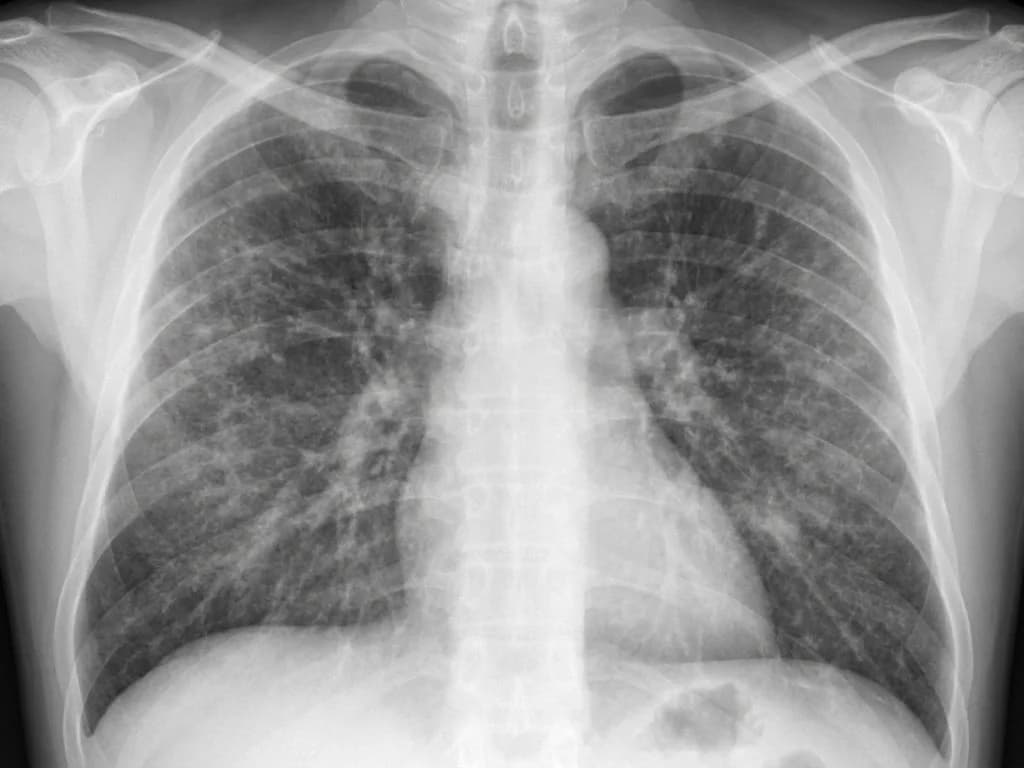
Correct Answer: C. Pneumocystis jirovecii pneumonia
Pneumocystis jirovecii pneumonia (PCP) is the most common opportunistic infection in HIV-positive patients with CD4 count <200 cells/μL in India, particularly when antiretroviral therapy (ART) is delayed or unavailable. The clinical triad of subacute presentation (3 weeks), dry cough, and constitutional symptoms (fever, weight loss) is pathognomonic. The chest X-ray classically shows bilateral interstitial infiltrates with a "ground-glass" appearance—a hallmark radiological finding. PCP causes diffuse alveolar damage through trophozoite invasion and foam formation in alveoli, leading to progressive hypoxemia and dyspnea. The organism is ubiquitous in the environment and colonizes the lungs of immunocompromised hosts when CD4 count falls below 200 cells/μL. Unlike bacterial pneumonias (staphylococcal, pneumococcal) which present acutely with focal consolidation and productive cough, PCP has an insidious onset over weeks. TB, though common in HIV patients in India, typically presents with night sweats, hemoptysis, and upper lobe cavitary lesions on imaging. The diagnosis is confirmed by induced sputum smear (Wright-Giemsa or silver stain) or bronchoalveolar lavage. First-line treatment in India is trimethoprim-sulfamethoxazole (TMP-SMX) with adjunctive corticosteroids if PaO2 <70 mmHg, as per Indian HIV treatment guidelines.
Why the other options are wrong
A. Tuberculosis — While TB is the most common opportunistic infection in HIV patients in India overall, the subacute dry cough with bilateral interstitial infiltrates is atypical for TB. Pulmonary TB in HIV typically presents with upper lobe cavitary lesions, night sweats, and hemoptysis. The ground-glass interstitial pattern is characteristic of PCP, not TB. TB would show focal consolidation or cavitation, not diffuse bilateral interstitial involvement. This is a common NBE trap—students reflexively choose TB in HIV patients without analyzing the radiological pattern. B. Staphylococcal pneumonia — Staphylococcal pneumonia presents acutely (days, not weeks) with productive cough, high fever, and focal consolidation on chest X-ray. The 3-week subacute course with dry cough and bilateral interstitial infiltrates excludes bacterial pneumonia. Staphylococcal infections in HIV typically occur with higher CD4 counts and are not the classic opportunistic infection at CD4 <200 cells/μL. The ground-glass pattern is incompatible with bacterial pneumonia, which causes lobar or segmental consolidation. D. Pneumococcal pneumonia — Pneumococcal pneumonia, like other bacterial infections, presents acutely with productive cough, high fever, and focal lobar consolidation—not the insidious 3-week dry cough described here. Pneumococcal disease occurs across all CD4 counts but is not the classic opportunistic infection at CD4 <200 cells/μL. The bilateral interstitial ground-glass pattern is pathognomonic for PCP, not pneumococcal disease. Pneumococcal pneumonia would show lobar or segmental consolidation, not diffuse interstitial infiltrates.
High-Yield Facts
- PCP occurs at CD4 <200 cells/μL in HIV patients; prophylaxis with TMP-SMX is indicated below this threshold per Indian HIV guidelines.
- Bilateral interstitial 'ground-glass' infiltrates on chest X-ray are the classic radiological hallmark of PCP; focal consolidation excludes PCP.
- Subacute presentation over 1–4 weeks with dry cough, fever, and dyspnea is typical for PCP; acute presentation with productive cough suggests bacterial pneumonia.
- TMP-SMX is first-line treatment for PCP in India; add corticosteroids if PaO2 <70 mmHg to reduce mortality.
- Induced sputum smear (Wright-Giemsa or silver stain) or BAL with immunofluorescence confirms PCP diagnosis.
- PCP is the most common opportunistic infection in untreated HIV patients with CD4 <200 cells/μL in resource-limited settings like India.
Mnemonics
PCP vs Bacterial Pneumonia: GROUND vs LOBAR GROUND = PCP (Ground-glass, Gradual onset, Respiratory distress, Opportunistic, Unproductive cough, Non-focal infiltrates, Dry cough). LOBAR = Bacterial (Lobar consolidation, Acute onset, Productive cough, Oxygen saturation drops acutely, Bacteria, Acute fever, Respiratory symptoms acute). PCP Prophylaxis Threshold: CD4 <200 When CD4 drops below 200 cells/μL, start TMP-SMX prophylaxis. Remember: '2' in CD4 <200 = 2 drugs (TMP + SMX). Stop prophylaxis when CD4 >200 for >3 months on ART.
NBE Trap
NBE pairs HIV with TB to lure students into reflexive TB selection without analyzing the radiological pattern. The bilateral interstitial ground-glass appearance is the discriminator—TB causes cavitary or focal consolidation, not diffuse interstitial disease. Students must recognize that radiological pattern trumps epidemiology in this scenario.
Clinical Pearl
In Indian HIV clinics, PCP is increasingly recognized as the "great imitator" of TB in CD4 <200 patients. The key bedside pearl: if the patient is on ART with rising CD4 and the infiltrates are bilateral interstitial (not cavitary), think PCP first. Early recognition and TMP-SMX initiation can be life-saving, especially in resource-limited settings where CD4 monitoring may be delayed.
_Reference: Harrison Ch. 197 (HIV/AIDS); Robbins Ch. 8 (Infectious Diseases); KD Tripathi Ch. 47 (Antimicrobials)_