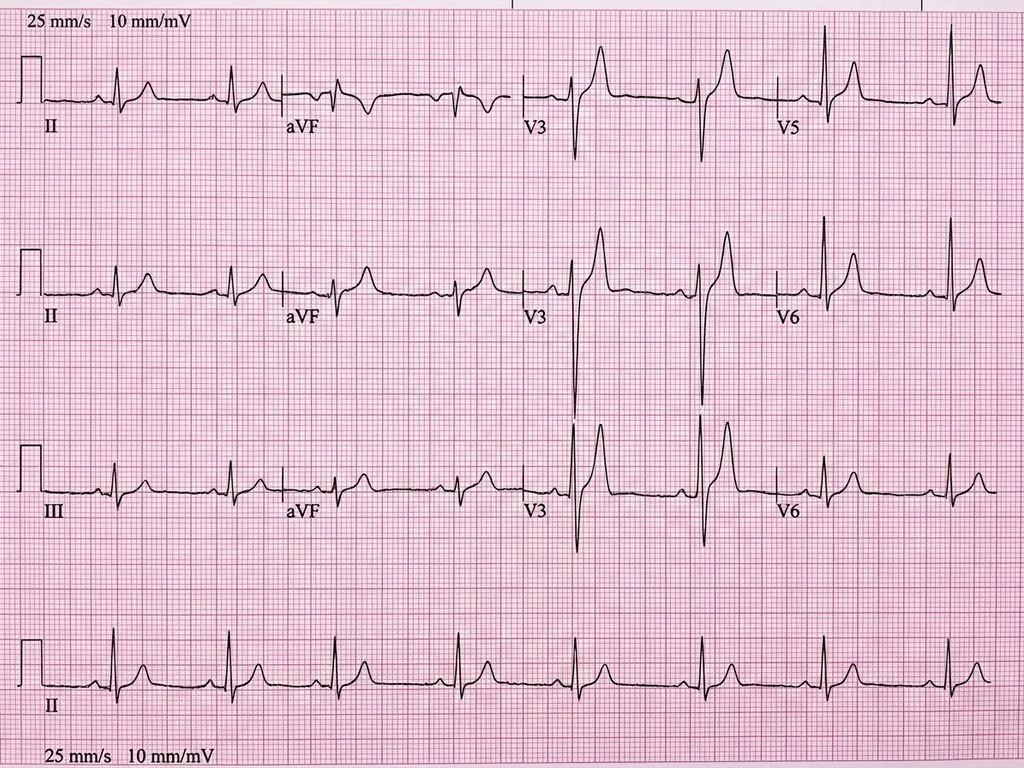
Correct Answer: B. Hypothermia
Osborn waves (also called J waves) are distinctive electrocardiographic findings pathognomonic for hypothermia. They appear as a characteristic deflection at the junction between the QRS complex and the ST segment—a small positive wave at the junction point that creates a "hump" or "camel hump" appearance. This wave emerges due to the differential effect of cold on ventricular repolarization: the epicardium repolarizes faster than the endocardium in severe hypothermia, creating a voltage gradient that manifests as the Osborn wave. The mechanism is temperature-dependent; as core body temperature drops below 32°C, this electrophysiological phenomenon becomes increasingly prominent. In Indian clinical practice, hypothermia is encountered in high-altitude mountaineering accidents, prolonged exposure in northern regions, and accidental immersion. The presence of Osborn waves on ECG is a diagnostic clue for severe hypothermia and warrants immediate passive or active rewarming depending on the clinical context. Other ECG changes in hypothermia include bradycardia, prolonged PR/QRS/QT intervals, and atrial fibrillation (the "holiday heart" of hypothermia), but the Osborn wave is the pathognomonic finding.
Why the other options are wrong
A. Hypocalcaemia — Hypocalcaemia prolongs the QT interval (lengthened ST segment) due to delayed repolarization, but does NOT produce Osborn waves. The ECG shows a prolonged QT with a normal QRS-ST junction. NBE may pair this with ECG changes to trap students who confuse metabolic electrolyte effects with temperature-induced arrhythmias. C. Hypothyroidism — Hypothyroidism causes bradycardia, low voltage complexes, and prolonged intervals, but Osborn waves are NOT a feature. The ECG changes reflect metabolic slowing, not the specific epicardial-endocardial repolarization mismatch seen in hypothermia. This is a distractor that exploits the word 'hypo-' prefix. D. Hypokalaemia — Hypokalaemia produces U waves (small deflection after T wave), ST depression, and T-wave flattening, but NOT Osborn waves. The U wave is the classic ECG marker of low potassium. NBE may use this to test whether students can distinguish between different metabolic ECG patterns.
High-Yield Facts
- Osborn wave (J wave) = small positive deflection at QRS-ST junction, pathognomonic for hypothermia (core temp <32°C)
- Mechanism: differential repolarization between epicardium (faster) and endocardium (slower) in cold
- Other hypothermia ECG findings: bradycardia, prolonged PR/QRS/QT, atrial fibrillation ('holiday heart')
- Hypocalcaemia ECG: prolonged QT (lengthened ST), no Osborn wave
- Hypokalaemia ECG: U waves, ST depression, T-wave flattening
- Clinical pearl: Osborn wave presence indicates severe hypothermia requiring immediate rewarming protocol
Mnemonics
OSBORN = Osborn waves in Severe Hypothermia O = Osborn wave (J wave at QRS-ST junction) | S = Severe hypothermia (core <32°C) | B = Bradycardia | O = Other changes (prolonged intervals, AF) | R = Rewarming needed | N = Not seen in other 'hypo-' conditions ECG 'Hypo-' Patterns (Memory Hook) Hypocalcaemia → QT ↑ (ST prolonged) | Hypokalaemia → U waves | Hypothermia → Osborn wave | Hypothyroidism → low voltage + bradycardia
NBE Trap
NBE exploits the "hypo-" prefix by clustering hypocalcaemia, hypothermia, hypothyroidism, and hypokalaemia as options, betting students will confuse metabolic ECG changes with temperature-induced findings. The Osborn wave is unique to hypothermia and is the discriminator.
Clinical Pearl
In Indian emergency departments, a patient pulled from a cold water immersion or found unconscious in a northern winter with bradycardia and an Osborn wave on ECG is a classic hypothermia presentation. The presence of this wave should prompt immediate rewarming and careful handling to avoid triggering ventricular fibrillation (the "afterdrop" phenomenon).
_Reference: Harrison Ch. 272 (Hypothermia); Guyton & Hall Ch. 42 (Temperature Regulation); KD Tripathi Ch. 8 (Cardiac Electrophysiology)_