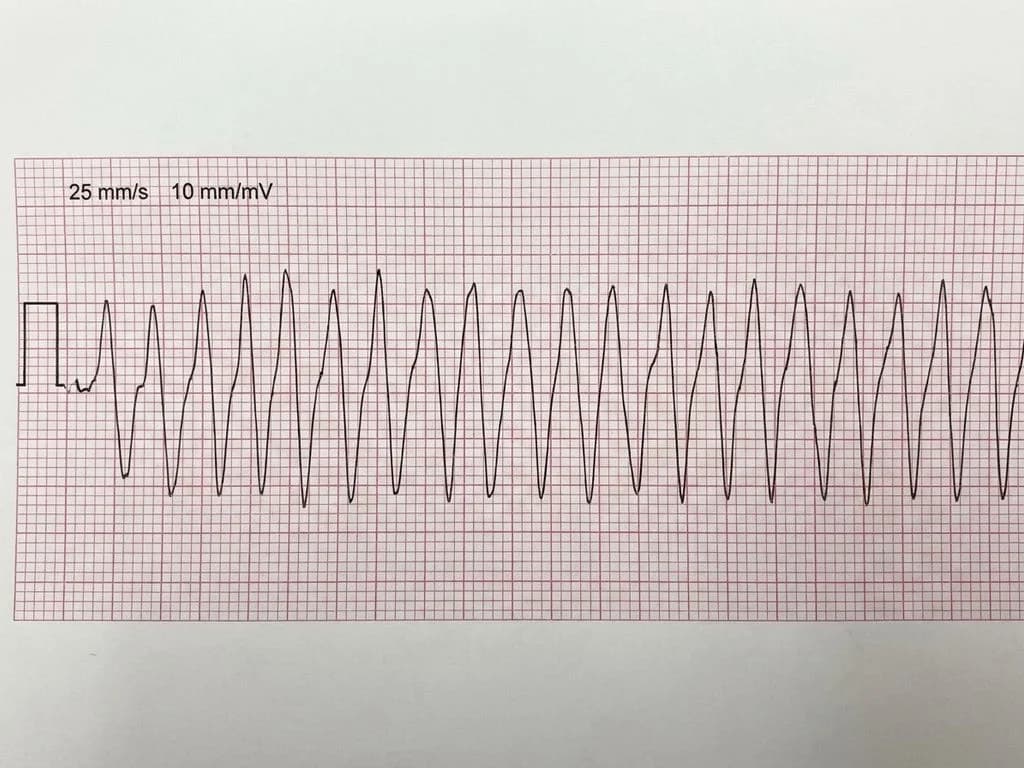
Correct Answer: C. DC cardioversion
This patient presents with haemodynamic instability (BP 70/50 mmHg) and unconsciousness in the setting of a tachyarrhythmia on ECG. The clinical presentation of severe hypotension with altered consciousness in an acute arrhythmia mandates immediate DC cardioversion regardless of the specific arrhythmia type. According to AHA/ACC guidelines and Indian cardiac practice (CSCI guidelines), any patient with haemodynamically unstable arrhythmia—whether SVT, VT, or atrial fibrillation with rapid ventricular response—requires synchronised DC cardioversion as the first-line definitive treatment. Pharmacological interventions (adenosine, verapamil) are contraindicated in haemodynamic instability because they require time to work and may further worsen perfusion. Carotid massage is a vagal manoeuvre suitable only for stable patients with SVT. The unconsciousness indicates severe cerebral hypoperfusion, making immediate electrical therapy the only appropriate choice. DC cardioversion restores normal rhythm and haemodynamics within seconds, preventing cardiogenic shock and multi-organ failure.
Why the other options are wrong
A. Carotid massage — Carotid massage is a vagal manoeuvre used only in stable patients with SVT to terminate the arrhythmia. This patient is unconscious with shock-level hypotension; vagal manoeuvres are ineffective and dangerous in haemodynamic instability. Precious time would be wasted attempting a non-definitive intervention while the patient deteriorates. B. IV verapamil — Verapamil is a calcium-channel blocker used for rate control in stable SVT or AF. In haemodynamic instability, IV verapamil is contraindicated because it causes negative inotropy and vasodilation, further worsening BP and perfusion. Pharmacological agents require 2–5 minutes to work; this patient needs immediate rhythm restoration. D. IV adenosine — Adenosine is first-line for stable SVT but is ineffective and dangerous in haemodynamically unstable patients. It causes transient asystole and hypotension, which this patient cannot tolerate. Adenosine also requires IV access and time; DC cardioversion is faster and more reliable in shock.
High-Yield Facts
- Haemodynamic instability + arrhythmia = DC cardioversion, regardless of rhythm type or aetiology.
- Synchronised DC cardioversion is used for SVT, AF, and atrial flutter; unsynchronised (defibrillation) is used for VF and pulseless VT.
- Adenosine and verapamil are contraindicated in shock; they worsen hypotension and delay definitive therapy.
- Unconsciousness in arrhythmia = severe hypoperfusion; indicates need for immediate electrical therapy, not pharmacological trial.
- CSCI/AHA guideline: Any arrhythmia with SBP <90 mmHg, altered mental status, or signs of shock requires immediate DC cardioversion.
Mnemonics
SHOCK = Synchronised Cardioversion Hemodynamically Obligatory Cardiogenic Knock-out When a patient is in shock (SBP <90, unconscious, or pulmonary oedema) with any arrhythmia, forget drugs—reach for the defibrillator. Synchronised DC cardioversion is the only answer. ACLS Rule: Unstable = Electricity, Stable = Drugs Haemodynamically unstable arrhythmia → DC cardioversion. Haemodynamically stable arrhythmia → pharmacological rate/rhythm control. This patient is unstable; electricity wins.
NBE Trap
NBE may expect students to identify the specific arrhythmia from the ECG and reflexively choose adenosine (for SVT) or verapamil (for AF), forgetting that haemodynamic instability overrides all pharmacological algorithms. The trap is treating the rhythm instead of treating the patient's shock state.
Clinical Pearl
In Indian emergency departments, the most common error is attempting adenosine or verapamil in haemodynamically unstable patients, delaying definitive therapy. A simple rule: if the patient is unconscious or SBP <90 mmHg with an arrhythmia, do not wait for IV drugs to work—cardiovert immediately. This prevents cardiogenic shock progression and reduces in-hospital mortality.
_Reference: Harrison Ch. 226 (Arrhythmias); CSCI Guidelines on Acute Coronary Syndromes and Arrhythmia Management; Guyton Ch. 13 (Cardiac Arrhythmias)_