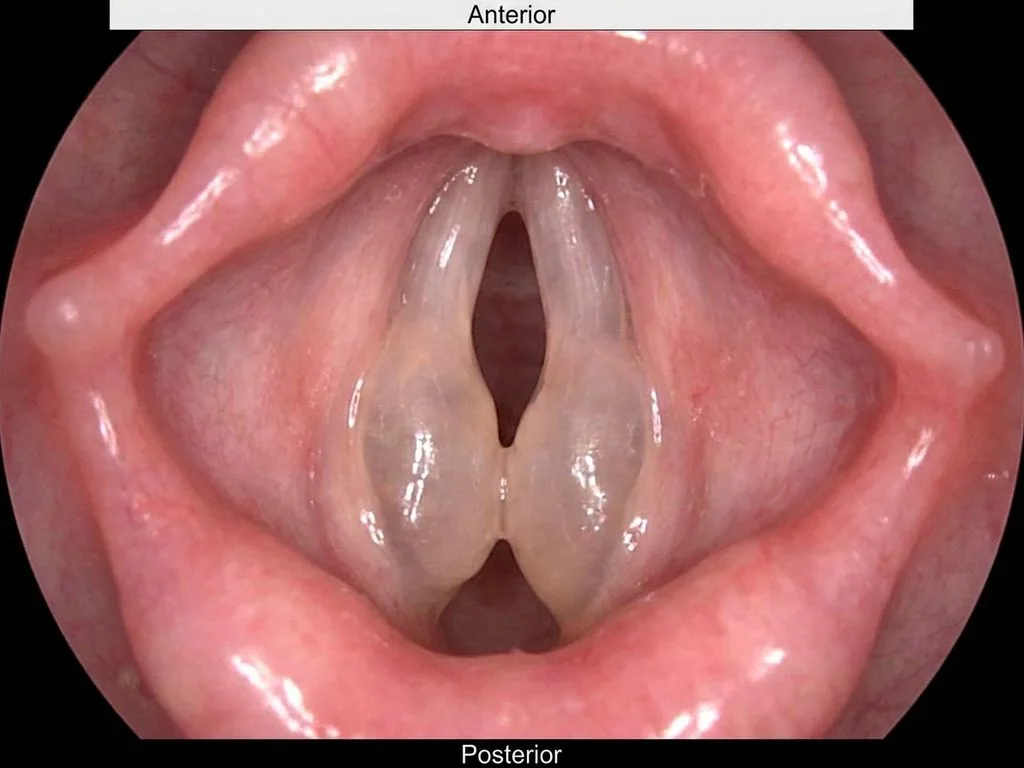
Correct Answer: B. Laryngeal papilloma
Laryngeal papilloma (recurrent respiratory papillomatosis, RRP) presents as multiple, warty, cauliflower-like nodular lesions on the vocal cords and laryngeal surfaces. The image description "La d" likely refers to laryngeal lesions with the characteristic appearance of papillomatous growth. RRP is caused by human papillomavirus (HPV types 6, 11 for benign form; 16, 18 for malignant potential). The key discriminating feature is the multiple, warty, pedunculated appearance with intact mucosa and absence of ulceration or deep infiltration. In Indian pediatric populations, juvenile-onset RRP (JORRP) is more common and presents before age 5 with progressive hoarseness and stridor. Adult-onset RRP typically presents with hoarseness and recurrent need for endoscopic removal. The lesions are benign but have malignant potential (especially with HPV 16/18), requiring regular surveillance. Diagnosis is clinical on laryngoscopy; biopsy confirms HPV positivity. Management involves repeated endoscopic laser ablation or microdebrider removal, with adjuvant therapies (cidofovir, interferon) in aggressive cases per Indian ENT guidelines.
Why the other options are wrong
A. Malignancy — Laryngeal malignancy (squamous cell carcinoma) typically presents as a solitary, ulcerated, infiltrative lesion with irregular borders, often with cervical lymphadenopathy and constitutional symptoms. The image shows multiple papillomatous lesions without ulceration or deep invasion, which is inconsistent with malignancy. NBE may trap students who know HPV-16/18 can undergo malignant transformation in RRP, but the acute presentation here is benign papillomatosis, not frank carcinoma. C. Reinke's edema — Reinke's edema presents as bilateral, smooth, gelatinous swelling of the vocal cords (Reinke's space) causing a characteristic 'sausage-like' appearance and low-pitched hoarseness. It is associated with chronic smoking and voice abuse. The image shows discrete, warty nodules rather than diffuse smooth edema, making this diagnosis incorrect. Reinke's edema lacks the papillomatous, pedunculated morphology seen in RRP. D. Tracheomalacia — Tracheomalacia is a structural abnormality of the trachea characterized by loss of cartilage support and dynamic airway collapse during expiration, not a visible lesion on the vocal cords. It presents with expiratory stridor and barking cough, diagnosed by bronchoscopy showing dynamic collapse. This is a functional airway problem, not a mucosal lesion, and would not produce the papillomatous appearance described in the image.
High-Yield Facts
- RRP is caused by HPV-6/11 (benign) or HPV-16/18 (malignant potential); juvenile-onset RRP presents before age 5 with hoarseness and stridor.
- Laryngoscopic appearance: multiple, warty, cauliflower-like, pedunculated lesions on vocal cords and laryngeal surfaces without ulceration.
- Management: repeated endoscopic laser ablation or microdebrider removal; adjuvant cidofovir or interferon in aggressive/recurrent cases.
- Malignant transformation risk is 5–50% in HPV-16/18 positive cases; regular surveillance endoscopy mandatory.
- Juvenile-onset RRP has better prognosis than adult-onset; vertical transmission during vaginal delivery is a known risk factor.
Mnemonics
RRP vs Reinke's — WARTY vs WATERY WARTY = RRP (warty, papillomatous, pedunculated nodules). WATERY = Reinke's edema (watery, smooth, gelatinous swelling). Use this when comparing benign laryngeal lesions. HPV in RRP — JUVENILE JORRP Juvenile-onset RRP (JORRP) = HPV-6/11 (benign, better prognosis). Adult-onset RRP = HPV-16/18 (malignant potential). Remember: Juveniles get benign HPV; adults risk malignancy.
NBE Trap
NBE may pair HPV-16/18 with malignant transformation in RRP to lure students into selecting "Malignancy" instead of recognizing the acute presentation of benign papillomatous lesions. The key is distinguishing between the morphology of RRP (multiple warty lesions) and the morphology of frank carcinoma (solitary ulcerated infiltrative lesion).
Clinical Pearl
In Indian pediatric ENT practice, JORRP is a common cause of recurrent hoarseness and stridor in children under 5 years. Parents often report progressive voice change and breathing difficulty over weeks to months. Repeated endoscopic removal is the mainstay, and early HPV typing (via PCR or immunohistochemistry) guides surveillance intensity and adjuvant therapy decisions.
_Reference: Bailey & Love Ch. 37 (Larynx); Robbins Ch. 16 (Neoplasia — HPV-associated lesions)_