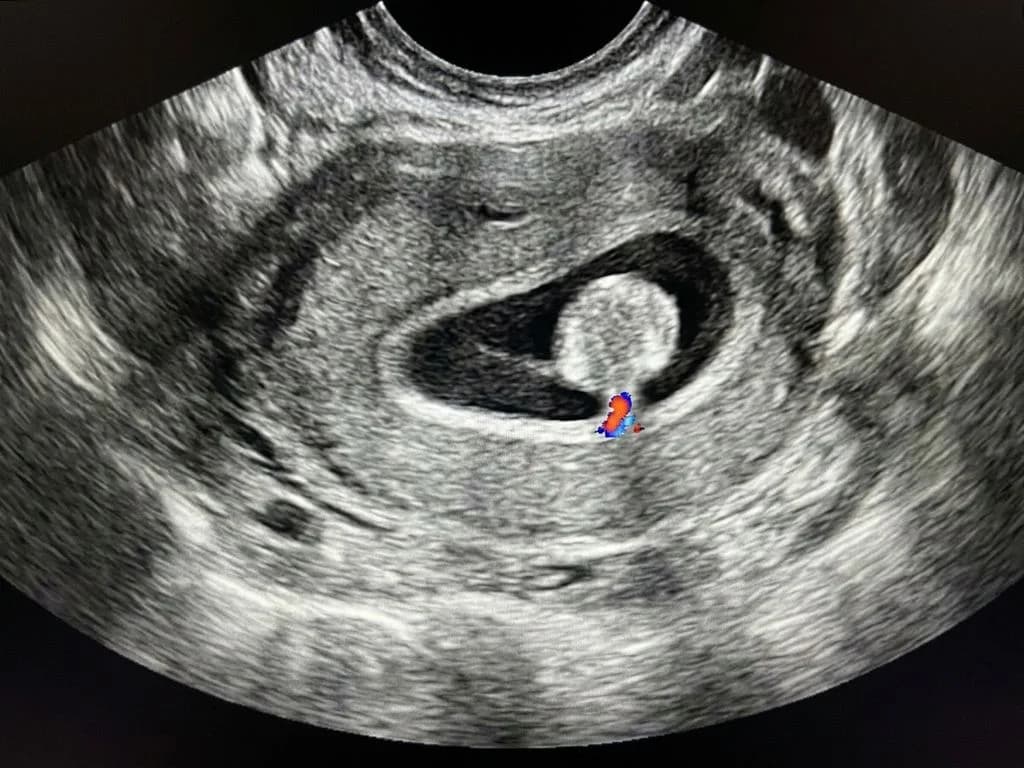
Correct Answer: D. Endometrial polyp
Endometrial polyps are benign proliferations of endometrial glands and stroma that project into the uterine cavity. The key discriminating feature in this case is the feeding vessel visualized on ultrasonography—this represents the vascular pedicle supplying the polyp, which is pathognomonic for polyps. Postmenopausal bleeding is the classic presentation, occurring in 20–40% of women with endometrial polyps due to surface ulceration and bleeding. On ultrasound, polyps appear as echogenic or isoechoic masses with a well-defined stalk and single or multiple feeding vessels (color Doppler shows arterial flow). Endometrial polyps are extremely common in postmenopausal women and are benign lesions with <1% malignant potential. They are managed by hysteroscopic polypectomy, which is both diagnostic and therapeutic. The presence of a feeding vessel on imaging essentially rules out fibroid (which is myometrial, not endometrial, and lacks a single pedicle) and makes carcinoma less likely (which typically shows irregular vascularity and heterogeneous echotexture). This is a high-yield imaging-based diagnosis question testing recognition of the classic sonographic sign.
Why the other options are wrong
A. Fibroid uterus — Fibroids (leiomyomas) are myometrial masses, not endometrial, and arise from smooth muscle of the uterine wall. They do not project into the endometrial cavity with a single feeding vessel; instead, they distort the endometrium from outside. Fibroids may cause abnormal uterine bleeding but typically present with menorrhagia (heavy menstrual bleeding) rather than postmenopausal bleeding. The sonographic finding of a discrete endometrial mass with a feeding vessel is incompatible with fibroid pathology. B. Leiomyosarcoma — Leiomyosarcoma is a rare malignant smooth muscle tumor (0.1–0.3% of uterine tumors) that arises from myometrium, not endometrium. It presents with rapid uterine enlargement, abnormal bleeding, and pelvic pain, but the imaging would show a large, heterogeneous, infiltrative mass with irregular vascularity—not a well-demarcated endometrial polyp with a single feeding vessel. The benign appearance and location make malignancy extremely unlikely here. C. Endometrial carcinoma — Endometrial carcinoma does cause postmenopausal bleeding and may show vascularity on Doppler, but the sonographic hallmark is an irregular, heterogeneous mass with thickened endometrium (>4 mm) and abnormal, chaotic vascularity. A well-defined endometrial mass with a single feeding vessel (pedicle) is characteristic of benign polyp, not malignancy. Carcinoma typically lacks the discrete, stalk-like appearance with organized vascular supply seen in polyps.
High-Yield Facts
- Feeding vessel on ultrasound is the pathognomonic sign for endometrial polyp; represents the vascular pedicle of the polyp.
- Postmenopausal bleeding is the most common presentation of endometrial polyps (20–40% of cases); caused by surface ulceration and bleeding.
- Hysteroscopic polypectomy is the gold standard for diagnosis and treatment of endometrial polyps in India (FOGSI guidelines).
- Malignant potential <1% for endometrial polyps; they are benign lesions and do not require adjuvant therapy after removal.
- Endometrial polyps are common in postmenopausal women, especially those on tamoxifen or with obesity and metabolic syndrome.
Mnemonics
POLYP FEATURES (Sonographic) Projects into cavity | Organized feeding vessel | Localized/well-defined | Yellow/echogenic | Pedicle (stalk) visible Postmenopausal Bleeding Differential — CAFE Carcinoma (irregular, heterogeneous) | Atrophic vaginitis (clinical diagnosis) | Fibroid (myometrial, no pedicle) | Endometrial polyp (feeding vessel, stalk)
NBE Trap
NBE pairs postmenopausal bleeding with malignancy (carcinoma) to lure students into choosing option C; however, the specific sonographic finding of a feeding vessel is the discriminating feature that points to benign polyp rather than malignancy. Students who focus only on the symptom (bleeding) rather than the imaging sign (pedicle) will miss this question.
Clinical Pearl
In Indian clinical practice, endometrial polyps are the most common benign cause of postmenopausal bleeding and are frequently encountered in outpatient gynecology clinics. The presence of a feeding vessel on transvaginal ultrasound essentially confirms the diagnosis and guides the gynecologist to proceed directly to hysteroscopic polypectomy without further imaging, making this a cost-effective and rapid diagnostic approach in resource-limited settings.
_Reference: DC Dutta's Textbook of Gynaecology (6th ed.), Ch. 18 (Abnormal Uterine Bleeding); FOGSI Guidelines on Abnormal Uterine Bleeding in Postmenopausal Women_