
NEETPGAI
FeaturesBlogComparePricing
Log inStart Free
NEETPGAI

AI-powered NEET PG preparation platform. Master all 19 subjects with adaptive MCQs, AI tutoring, and spaced repetition.

Product

  • Features
  • Subjects
  • Previous Year Questions
  • Compare
  • Pricing
  • Blog

Features

  • Adaptive MCQ Practice
  • AI Tutor
  • Mock Tests
  • Spaced Repetition

Resources

  • Blog
  • Study Guides
  • NEET PG Updates
  • Contact & support

Legal

  • Privacy Policy
  • Terms of Service

Stay updated

© 2026 NEETPGAI. All rights reserved.
    PYQs/2021/Q139
    Verified answer (AI cross-checked + SME reviewed)

    Q139 (2021, Skin Appendages and their Disorders) — Correct answer: A. Amoxiclav.
    NEET PG 2021
    Q139
    hand Dermatology
    Skin Appendages and their Disorders
    tier-2 (3/3 verifier agreement)
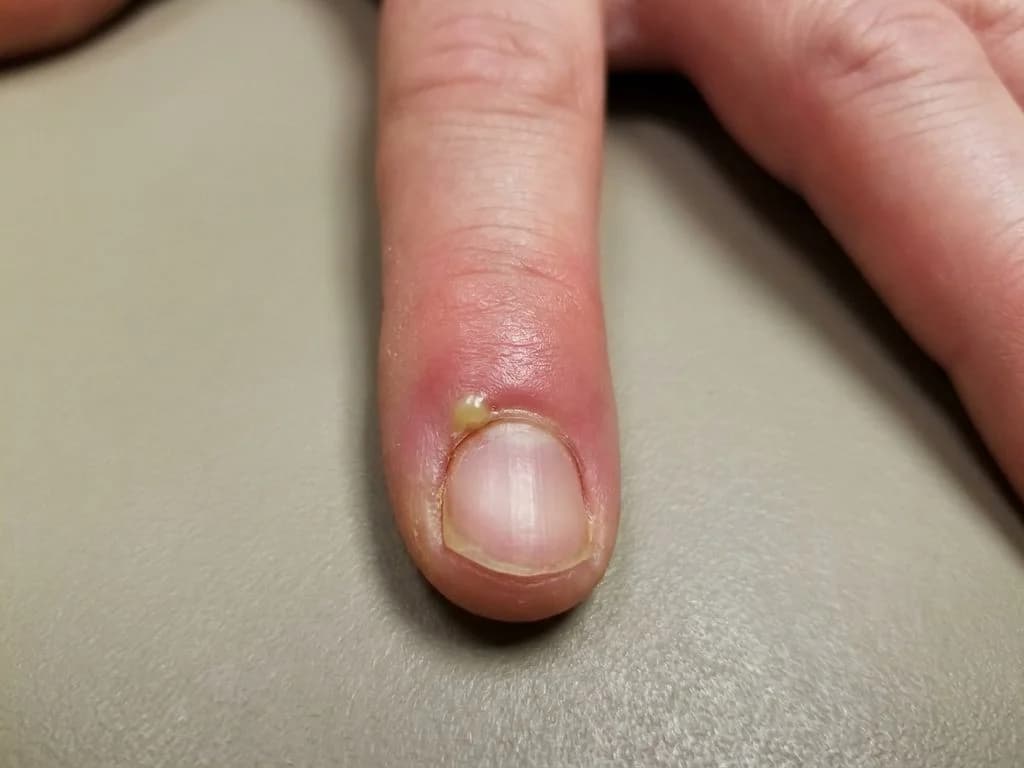
    Clinical image for NEET PG 2021 Q139

    What is the treatment of choice for a patient with paronychia of the index finger on the right hand, as shown in the image below? La d

    A. Amoxiclav
    B. Norfloxacin
    C. Amikacin
    D. Metronidazole

    Correct Answer: A. Amoxiclav

    Paronychia is an acute or chronic infection of the nail fold (lateral or proximal) caused most commonly by Staphylococcus aureus and Streptococcus pyogenes in acute cases. Amoxiclav (amoxicillin + clavulanic acid) is the first-line empirical antibiotic for acute bacterial paronychia in India because it provides broad-spectrum coverage against both gram-positive cocci (including β-lactamase-producing S. aureus) and some gram-negative organisms. The clavulanic acid component overcomes β-lactamase resistance, making it superior to amoxicillin alone. In acute paronychia presenting with localized swelling, erythema, and purulent drainage (as typically seen clinically), oral amoxiclav 625 mg thrice daily for 7–10 days is the standard DOC. Incision and drainage may be needed if fluctuance is present. Chronic paronychia, by contrast, is often multifactorial (Candida, irritants, trauma) and requires topical antifungals and moisture control rather than systemic antibiotics. The question context of acute paronychia with visible inflammation makes amoxiclav the clear choice per Indian dermatology guidelines and standard practice in primary care settings across India.

    Why the other options are wrong

    B. Norfloxacin — Norfloxacin is a fluoroquinolone with good gram-negative coverage but suboptimal activity against Streptococcus pyogenes, which is a major pathogen in acute paronychia. It is not first-line for this condition and is typically reserved for gram-negative infections (UTI, GI infections). NBE may trap students who confuse fluoroquinolones with broad-spectrum agents. C. Amikacin — Amikacin is an aminoglycoside with excellent gram-negative and some gram-positive coverage, but it is NOT first-line for acute paronychia due to poor oral bioavailability (requires IM/IV), higher cost, and risk of nephrotoxicity and ototoxicity. It is reserved for serious systemic infections or hospital-acquired infections, not superficial skin infections. D. Metronidazole — Metronidazole is an antiprotozoal and anaerobic agent used for infections caused by anaerobes and protozoa (e.g., giardiasis, amebic dysentery, bacterial vaginosis). Acute paronychia is caused by aerobic bacteria (S. aureus, S. pyogenes), not anaerobes, making metronidazole inappropriate. This is a classic NBE distractor for students who confuse infection types.

    High-Yield Facts

    • Acute paronychia is most commonly caused by Staphylococcus aureus and Streptococcus pyogenes; amoxiclav 625 mg TDS is the first-line oral antibiotic in India.
    • Clavulanic acid in amoxiclav overcomes β-lactamase resistance produced by S. aureus, making it superior to amoxicillin monotherapy.
    • Chronic paronychia is multifactorial (Candida, irritants, moisture) and requires topical antifungals and moisture control, NOT systemic antibiotics.
    • Incision and drainage is indicated if fluctuance or abscess formation is present; antibiotics alone are insufficient in such cases.
    • Fluoroquinolones (norfloxacin, ciprofloxacin) have poor streptococcal coverage and are not first-line for acute paronychia.

    Mnemonics

    PUSS = Paronychia Usual Suspects & Staph Paronychia → Usually Staph aureus & Strep pyogenes → Amoxiclav (covers both). Use this when you see acute paronychia with pus/swelling. β-LAC-CLAV = β-lactamase Coverage β-lactamase-producing Staph → need Clavulanic acid with amoxicillin. Amoxiclav = amoxicillin + clavulanic acid. Recall when you see 'resistant Staph' or 'paronychia.'

    NBE Trap

    NBE pairs paronychia with fluoroquinolones (norfloxacin) to trap students who confuse 'broad-spectrum' with 'appropriate for skin infections.' Fluoroquinolones lack adequate streptococcal coverage, the key discriminator. Similarly, metronidazole is offered to confuse students about anaerobic vs. aerobic pathogens in nail fold infections.

    Clinical Pearl

    In Indian primary care and outpatient dermatology clinics, acute paronychia presenting with erythema, swelling, and purulent drainage is almost always empirically treated with oral amoxiclav 625 mg TDS for 7–10 days. If fluctuance is visible or the patient does not respond in 48–72 hours, incision and drainage under local anesthesia is performed. Chronic paronychia (common in housewives and wet workers in India) requires a completely different approach: topical antifungals (clotrimazole), moisture control, and avoidance of irritants—antibiotics are ineffective.

    _Reference: Robbins & Cotran Pathologic Basis of Disease (Ch. 25 – Skin); Indian Dermatology guidelines (IADVL); KD Tripathi Essentials of Medical Pharmacology (Ch. 48 – β-lactam antibiotics)_

    Ask AI Tutor about this question

    Stuck on a distractor? Want a worked-through clinical scenario? The AI Tutor is a NEETPGAI Pro feature — sign up free to practice the full question bank, then unlock the AI Tutor when you're ready.

    Explain this concept in plain language
    Why is each wrong option wrong?
    Give me a clinical scenario where this is tested
    Sign up free Already have an account? Log in

    Free to start, no credit card required. The 3 prompts/day quota is shared with practice + tutor + deep-dive across NEETPGAI.

    Memory-based reconstruction

    NBE does not officially release NEET PG papers per the 2025 Supreme Court directive. This question was reconstructed from 1 community source: PrepLadder NEET PG 2021 Recall PDF. Cross-verified by Claude Haiku 4.5 + Gemini 2.5 Flash + community-aggregate vote, then reviewed by a practising medical SME.

    ← All NEET PG 2021 questionsPractice with AI Tutor →