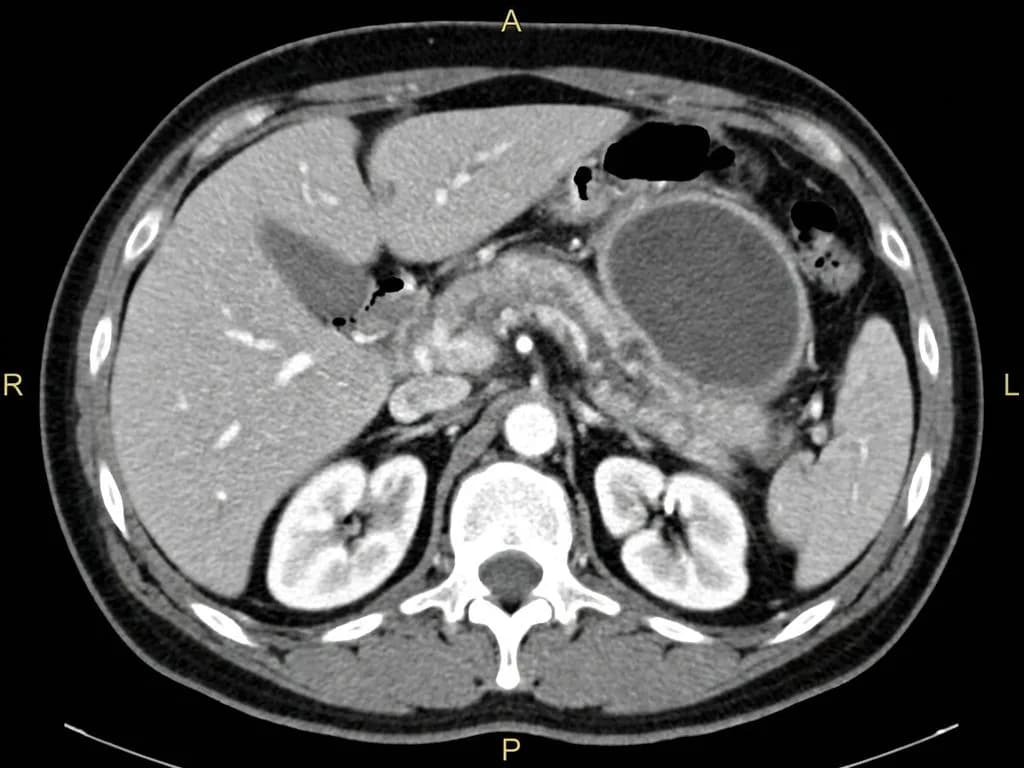
Correct Answer: D. Serum lipase
Acute pancreatitis in an alcoholic patient with CT evidence of fluid collection near the pancreatic body is a classic presentation. The discriminating fact is that pancreatic enzymes (amylase and lipase) are the gold-standard markers of pancreatic parenchymal injury, not liver enzymes or tumor markers. Lipase is superior to amylase because it is more specific for pancreatic tissue and remains elevated longer (7–10 days vs. 2–3 days for amylase). In acute pancreatitis, pancreatic acinar cells release lipase into the bloodstream; serum lipase elevation ≥3× the upper limit of normal, combined with characteristic clinical presentation and imaging findings, confirms the diagnosis per Harrison and Indian surgical guidelines. While alcohol-induced pancreatitis may cause secondary hepatic dysfunction (explaining potential bilirubin elevation), the primary pancreatic injury is best reflected by lipase. GGT elevation occurs with chronic alcohol use and cholestasis but is not specific to acute pancreatic injury. CEA is a tumor marker irrelevant to acute inflammatory pancreatitis.
Why the other options are wrong
A. Serum GGT — GGT (gamma-glutamyltransferase) is a marker of hepatic enzyme induction and cholestasis, elevated in chronic alcohol use and liver disease, but NOT specific to pancreatic injury. While alcoholic patients often have elevated GGT due to liver involvement, it does not reflect acute pancreatic parenchymal damage. This is an NBE trap targeting students who conflate alcohol-induced liver disease with pancreatitis. B. Serum bilirubin — Bilirubin elevation occurs when pancreatic edema compresses the common bile duct, causing obstructive jaundice—a secondary finding in severe pancreatitis, not the primary marker of pancreatic injury. Bilirubin is a marker of cholestasis/hepatic dysfunction, not pancreatic acinar cell damage. Many acute pancreatitis cases have normal bilirubin, making it unreliable for diagnosis. C. CEA — CEA (carcinoembryonic antigen) is an oncofetal tumor marker used in colorectal and other malignancies, completely unrelated to acute inflammatory pancreatitis. Its elevation would suggest malignancy, not acute pancreatic inflammation. This is a distractor option with no clinical relevance to the acute pancreatitis scenario.
High-Yield Facts
- Lipase is the most specific pancreatic enzyme; elevated ≥3× ULN in acute pancreatitis; remains elevated 7–10 days (longer than amylase).
- Amylase is less specific (salivary glands, other tissues); peaks at 24–48 hours and normalizes within 2–3 days.
- Alcohol is the second leading cause of acute pancreatitis in India (after gallstones); chronic alcohol causes chronic pancreatitis with fat/protein malabsorption.
- CT imaging with fluid collection near pancreatic body confirms acute pancreatitis; helps grade severity and detect complications (necrosis, abscess).
- GGT and bilirubin reflect hepatic/biliary involvement (secondary), not primary pancreatic injury; not diagnostic for pancreatitis.
Mnemonics
LIPASE > AMYLASE in Pancreatitis Long-lasting (7–10 days), Increased specificity, Pancreatic tissue-specific, Amylase is shorter-lived (2–3 days) and less specific. Use LIPASE for diagnosis and follow-up; amylase for early detection only. Pancreatic Enzymes vs. Liver Markers PANCREAS = Lipase/Amylase (parenchymal injury). LIVER = GGT/Bilirubin (cholestasis/dysfunction). In acute pancreatitis, pancreatic enzymes spike; liver markers rise only if bile duct is compressed.
NBE Trap
NBE pairs alcohol-induced pancreatitis with GGT elevation to trap students who conflate chronic alcohol liver disease with acute pancreatic injury. The question emphasizes "alcoholic patient" to lure selection of GGT, which is a marker of hepatic enzyme induction, not pancreatic parenchymal damage.
Clinical Pearl
In Indian tertiary centers, lipase is now the preferred first-line test for suspected pancreatitis (replacing amylase) because it remains elevated longer and guides clinical decisions during hospital stay. A patient with alcohol-induced pancreatitis and normal lipase at 48 hours is unlikely to have ongoing pancreatic injury, even if bilirubin remains elevated from bile duct compression.
_Reference: Harrison Ch. 347 (Acute Pancreatitis); Robbins Ch. 20 (Pancreas); Bailey & Love Ch. 62 (Pancreatic Surgery)_