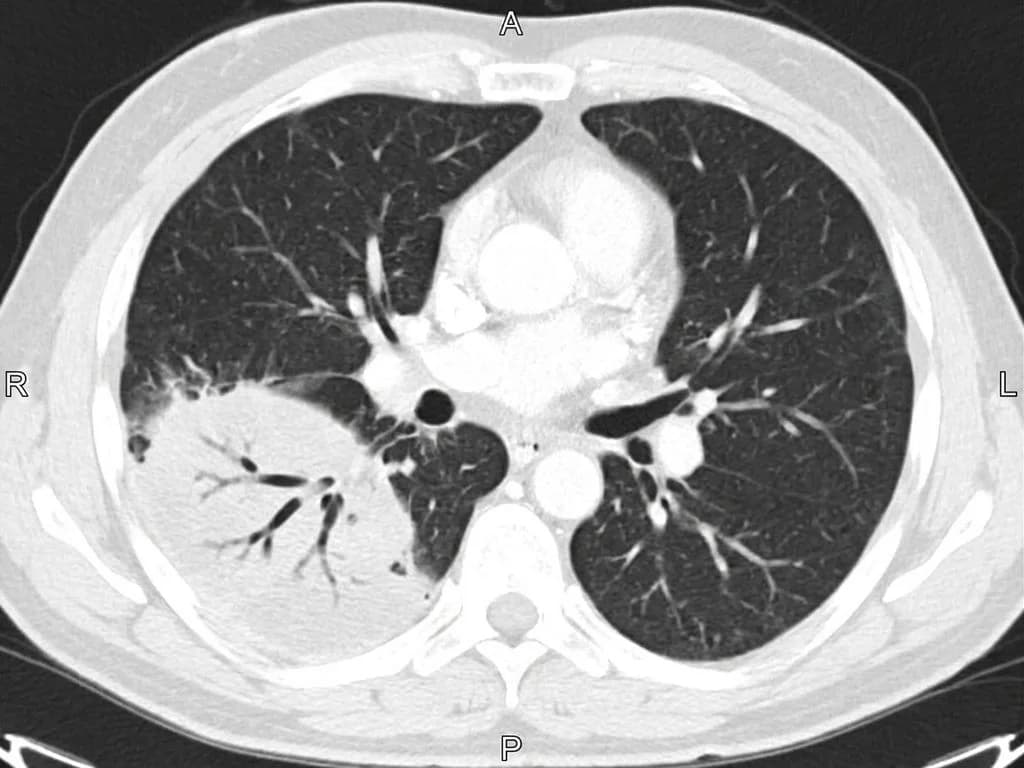
Correct Answer: D. Consolidation with air bronchogram
The clinical triad of fever, cough with expectoration, and breathlessness in a 35-year-old female strongly suggests community-acquired pneumonia (CAP). The CT finding of consolidation with air bronchogram is the pathognomonic radiological sign of alveolar filling disease. Air bronchogram appears as a branching pattern of air-filled bronchi (which remain radiolucent) contrasting against consolidated, fluid-filled alveoli (which appear opaque). This occurs because the bronchi remain patent while the surrounding lung parenchyma fills with inflammatory exudate, pus, or edema—the hallmark of bacterial pneumonia. In India, Streptococcus pneumoniae and Haemophilus influenzae remain the most common CAP pathogens in this demographic. The presence of air bronchogram specifically indicates alveolar consolidation rather than interstitial or pleural pathology, making it the gold standard CT sign for pneumonia. This finding mandates empirical antibiotic therapy (typically amoxicillin-clavulanate or fluoroquinolone as per Indian guidelines) and warrants assessment for complications like pleural effusion or empyema.
Why the other options are wrong
A. Diaphragmatic hernia — Diaphragmatic hernia presents with bowel loops or abdominal organs herniating into the thorax, typically visible as gas-filled loops in the lower hemithorax. The clinical presentation (acute fever, cough, expectoration) and the presence of air bronchogram—a sign of alveolar consolidation—are incompatible with hernia. Hernia is a structural defect, not an acute infectious process, and would not cause this acute respiratory presentation. B. Mediastinal mass — A mediastinal mass would present as a discrete mass lesion in the mediastinal compartment, often with mass effect on adjacent structures. It would not produce air bronchogram or the acute infectious symptoms (fever, productive cough) described. Mediastinal masses typically present with insidious symptoms like chest pain or superior vena cava syndrome, not acute pneumonia-like presentation. The air bronchogram is incompatible with a solid mass. C. Pleural effusion — Pleural effusion appears as a crescent-shaped or layering opacity at the lung base without air bronchogram. While pleural effusion can coexist with pneumonia, it is a secondary finding (parapneumonic effusion) and does not itself explain the air bronchogram sign. The air bronchogram is a hallmark of alveolar consolidation, not pleural fluid. Effusion alone would not produce the branching air-filled bronchi pattern seen on CT.
High-Yield Facts
- Air bronchogram = air-filled bronchi visible against consolidated alveoli; pathognomonic for alveolar filling (pneumonia, pulmonary edema, aspiration).
- Consolidation with air bronchogram on CT is the gold standard sign for bacterial pneumonia and indicates need for antibiotics.
- In India, S. pneumoniae and H. influenzae are the leading CAP pathogens; empirical therapy is amoxicillin-clavulanate or fluoroquinolone.
- Fever + cough + expectoration + air bronchogram = community-acquired pneumonia until proven otherwise; assess for complications (empyema, sepsis).
- Air bronchogram is absent in pleural effusion (which shows crescent opacity) and absent in mediastinal masses (which are discrete, non-alveolar lesions).
Mnemonics
AIR BRONCHOGRAM = Alveolar Infiltration Requiring Antibiotics When you see air bronchogram on imaging, think alveolar disease (pneumonia, pulmonary edema, aspiration). The air-filled bronchi stand out because alveoli are filled with fluid/pus, not air. This is your cue to start antibiotics for suspected pneumonia. CAP Triad: Fever-Cough-Consolidation Fever + productive cough + consolidation with air bronchogram = community-acquired pneumonia. This triad is the classic presentation in Indian primary care and warrants empirical antibiotics without waiting for culture.
NBE Trap
NBE may pair pleural effusion with pneumonia to lure students into choosing effusion as the primary diagnosis. However, the air bronchogram is the discriminating sign—it indicates alveolar consolidation (pneumonia), not pleural fluid. Effusion is a secondary complication, not the primary pathology.
Clinical Pearl
In Indian outpatient practice, a patient with acute fever, cough, and breathlessness presenting with air bronchogram on CT should be started on empirical antibiotics immediately (amoxicillin-clavulanate 625 mg TDS or levofloxacin 500 mg OD) without waiting for sputum culture, as delayed treatment increases mortality in CAP. Always assess for hypoxia (SpO₂ <90%) and signs of sepsis to guide admission decisions.
_Reference: Harrison Ch. 297 (Pneumonia); Robbins Ch. 15 (Respiratory Pathology); KD Tripathi Ch. 47 (Respiratory Infections)_