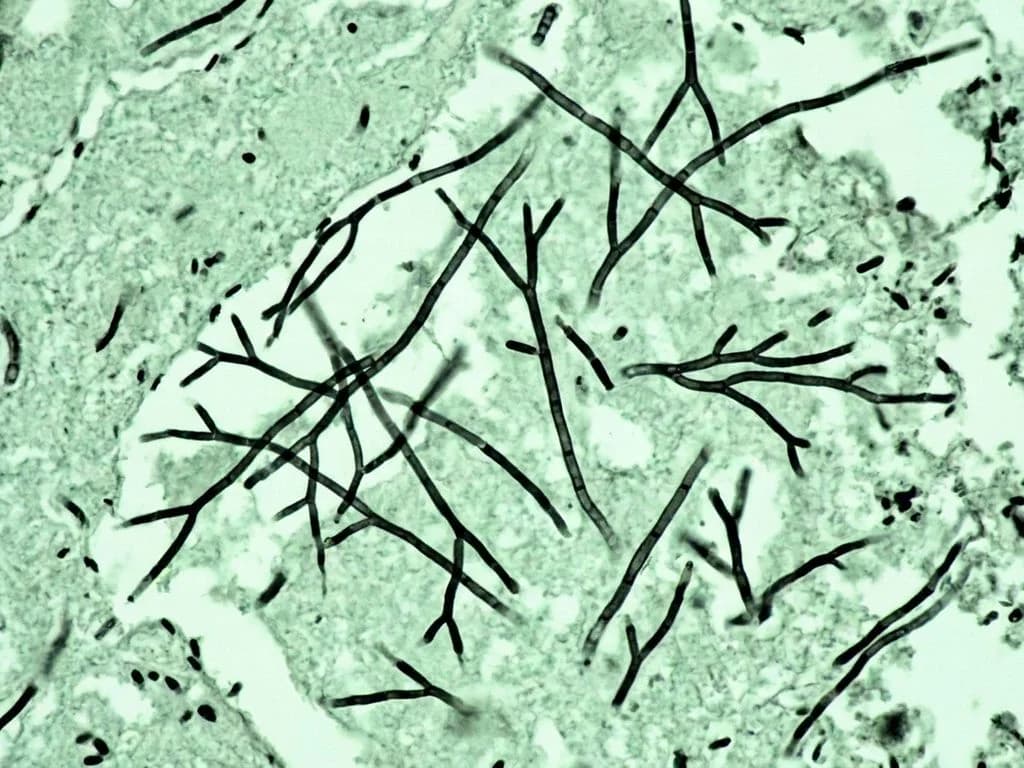
Correct Answer: B. Mucor
Mucor is the correct answer because the clinical presentation of a diabetic patient with pneumonia and histopathological evidence of dichotomous (right-angle) branching is pathognomonic for mucormycosis. Dichotomous branching at 90° angles is the hallmark microscopic feature of Mucorales (order containing Mucor, Rhizopus, and others). However, in the Indian context, Mucor is the most common cause of mucormycosis, particularly in immunocompromised hosts and diabetics. The fungus shows broad, aseptate (or sparsely septate) hyphae with irregular branching patterns. Mucormycosis in diabetics classically presents as rhinocerebral, pulmonary, or cutaneous disease. The pulmonary form manifests as pneumonia with rapid progression, especially in poorly controlled diabetes. Histologically, the fungus invades blood vessels causing angioinvasion and tissue necrosis. The dichotomous branching pattern distinguishes Mucor from Aspergillus (which shows acute-angle branching at 45°) and from Candida (which is a yeast with pseudohyphae). In India, post-COVID mucormycosis has become increasingly prevalent, and Mucor is the predominant causative agent in pulmonary and rhinocerebral forms.
Why the other options are wrong
A. Rhizopus — Rhizopus also belongs to Mucorales and shows dichotomous branching, making it morphologically similar to Mucor. However, Rhizopus is more commonly associated with cutaneous and gastrointestinal mucormycosis rather than primary pulmonary disease in diabetics. While both can cause pulmonary infection, Mucor is epidemiologically more frequent in respiratory tract involvement in India. The question's clinical context (truck driver with pneumonia) and the emphasis on histology without additional clinical clues point to Mucor as the more likely answer in standard NEET PG teaching. C. Candida — Candida is a dimorphic yeast that appears as oval/round cells with pseudohyphae on histology, NOT dichotomous branching. Candida typically causes oral thrush, esophagitis, or disseminated candidiasis in immunocompromised patients, but does not produce the characteristic right-angle branching pattern shown in the image. This is a classic NBE trap: students may confuse Candida as a common fungal pathogen in diabetics, but the histological finding of dichotomous branching immediately excludes it. D. Aspergillus — Aspergillus shows acute-angle (45°) branching, not dichotomous (90°) branching. While Aspergillus fumigatus can cause pulmonary infections (aspergillosis, aspergilloma) in diabetics and immunocompromised hosts, the histological branching pattern is distinctly different. Aspergillus hyphae are also septate (with regular septa), whereas Mucor hyphae are aseptate or sparsely septate. The dichotomous branching pattern is the discriminating feature that rules out Aspergillus.
High-Yield Facts
- Dichotomous (90°) branching is pathognomonic for Mucorales; Aspergillus shows acute-angle (45°) branching.
- Mucor hyphae are aseptate or sparsely septate; Aspergillus hyphae are regularly septate.
- Mucor is the most common cause of mucormycosis in India, especially in diabetics and post-COVID patients.
- Angioinvasion by Mucor leads to vascular thrombosis, tissue necrosis, and rapid clinical progression.
- Pulmonary mucormycosis in diabetics presents as pneumonia with hemoptysis; rhinocerebral form is also common.
- Broad, ribbon-like hyphae (10–20 μm) are seen on histology; culture on Sabouraud dextrose agar shows rapid growth.
Mnemonics
DICHOTOMOUS = MUCOR Dichotomous (90°) branching = Mucor; Acute-angle (45°) = Aspergillus. Remember: Mucor makes a right angle (like a T-junction), Aspergillus makes an acute angle (like a V). DIABETIC + FUNGAL PNEUMONIA = MUCOR In India, when you see a diabetic with rapid-onset pneumonia + fungal hyphae, think Mucor first (especially post-COVID). Mucor is angioinvasive and causes tissue necrosis → rapid deterioration.
NBE Trap
NBE pairs "fungal pneumonia in diabetics" with Candida or Aspergillus to test whether students rely on clinical context alone. The dichotomous branching histology is the discriminating feature that forces correct identification of Mucor, not just pattern recognition of "diabetic + fungus."
Clinical Pearl
In Indian hospitals, post-COVID mucormycosis caused by Mucor has become a major concern in diabetic patients. The angioinvasive nature means early diagnosis via histology and aggressive antifungal therapy (liposomal amphotericin B) + glycemic control are lifesaving. A truck driver with poor access to healthcare and uncontrolled diabetes is at high risk.
_Reference: Jawetz, Melnick & Adelberg's Medical Microbiology (Mucormycosis chapter); Robbins & Cotran Pathologic Basis of Disease (Fungal infections, Ch. 8)_