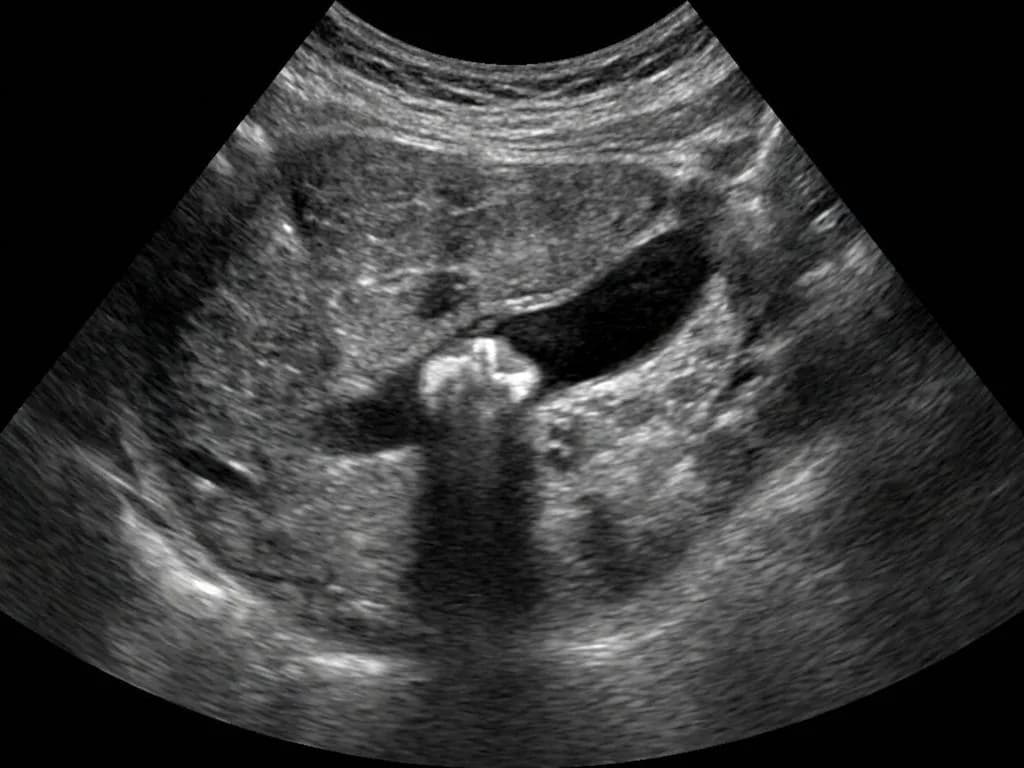
Correct Answer: A. Sialolithiasis
Sialolithiasis (salivary gland stone) presents classically with unilateral neck pain exacerbated by eating—a cardinal symptom due to increased salivary flow triggering obstruction and pain. The ultrasound imaging (though not visible here) would show an echogenic focus with acoustic shadowing within the salivary gland parenchyma or duct, pathognomonic for stone. The patient's fear of eating (odynophagia during mastication) is the key discriminator: stones obstruct salivary flow, causing pressure buildup and pain that worsens with gustatory stimulation. Sialolithiasis most commonly affects the submandibular gland (80% of cases) due to its mucous secretions, narrow duct (Wharton's duct), and alkaline pH favoring calcification. On ultrasound, stones appear as hyperechoic lesions with posterior acoustic shadowing—a highly specific finding. The patient may also report recurrent swelling of the affected gland, pus discharge from the duct opening, or secondary sialadenitis if infected. Management depends on stone size and location: small stones may pass spontaneously or be expelled with sialagogues (lemon drops, pilocarpine); larger stones require sialolithotomy or extracorporeal shock-wave lithotripsy (ESWL), increasingly available in Indian tertiary centres. This diagnosis fits the clinical presentation and imaging findings perfectly.
Why the other options are wrong
B. Osteoma of the floor of the mouth — Osteoma is a benign bone tumour that presents as a hard, painless swelling of the floor of mouth or mandible. It does NOT cause pain on eating or show acoustic shadowing on ultrasound; imaging would reveal a bony lesion with corticated margins. The acute, eating-related pain in this case is incompatible with a slow-growing benign tumour. NBE trap: confusing any hard neck mass with osteoma. C. Cervical lymphadenopathy — Lymphadenopathy presents as multiple, mobile, rubbery nodes in the neck, often with systemic symptoms (fever, weight loss, night sweats). Ultrasound shows hypoechoic, rounded nodes without acoustic shadowing. Lymph nodes do NOT cause pain specifically triggered by eating or produce the characteristic echogenic shadow of a stone. The unilateral, eating-triggered pain is atypical for lymphadenopathy. D. Foreign body — Foreign bodies in the salivary duct are rare and usually have a clear history of ingestion or trauma. Ultrasound findings depend on the foreign body material (radiopaque vs radiolucent); most do not produce the classic acoustic shadowing pattern of a stone. The patient's presentation lacks any history of foreign body ingestion, making this diagnosis unlikely despite superficial similarity to obstruction.
High-Yield Facts
- Submandibular gland accounts for 80% of sialoliths due to mucous secretions, narrow Wharton's duct, and alkaline pH.
- Ultrasound hallmark: hyperechoic focus with posterior acoustic shadowing—highly specific for stone.
- Eating-triggered pain (odynophagia during mastication) is the cardinal symptom; pain worsens with sialagogues due to increased salivary flow against obstruction.
- Parotid stones (20% of cases) present with pain anterior to ear; submandibular stones cause pain in floor of mouth and anterior neck.
- Management: small stones (<5 mm) may pass spontaneously; larger stones require sialolithotomy, ESWL, or sialoendoscopy (increasingly available in India).
- Secondary sialadenitis risk increases if stone causes prolonged obstruction; may present with fever, purulent discharge from duct opening.
Mnemonics
STONE in Salivary gland Submandibular (80%) → Tight duct (Wharton's) → Obstruction → Neck pain on Eating Ultrasound shadow = Stone Acoustic shadowing (dark tail behind bright focus) on ultrasound = sialolith until proven otherwise. No shadow = not a stone.
NBE Trap
NBE pairs "neck pain + eating" with lymphadenopathy or osteoma to trap students who forget that sialoliths specifically worsen with mastication due to reflex salivary flow against obstruction. The eating-triggered pain is the discriminating feature.
Clinical Pearl
In Indian outpatient practice, ask patients with unilateral neck pain: "Does it hurt more when you eat or suck on a lemon?" A positive answer almost always points to sialolithiasis. Submandibular stones are so common that they should be your first differential in any patient with eating-triggered neck pain and a palpable hard mass in the floor of mouth.
_Reference: Bailey & Love Ch. 39 (Salivary Gland Disorders); Harrison Ch. 33 (Oral and Salivary Gland Diseases)_