
NEETPGAI
FeaturesBlogComparePricing
Log inStart Free
NEETPGAI

AI-powered NEET PG preparation platform. Master all 19 subjects with adaptive MCQs, AI tutoring, and spaced repetition.

Product

  • Features
  • Subjects
  • Previous Year Questions
  • Compare
  • Pricing
  • Blog

Features

  • Adaptive MCQ Practice
  • AI Tutor
  • Mock Tests
  • Spaced Repetition

Resources

  • Blog
  • Study Guides
  • NEET PG Updates
  • Contact & support

Legal

  • Privacy Policy
  • Terms of Service

Stay updated

© 2026 NEETPGAI. All rights reserved.
    PYQs/2022/Q32
    Verified answer (AI cross-checked + SME reviewed)

    Q32 (2022, Obstetrics) — Correct answer: B. Manual removal of placenta.
    NEET PG 2022
    Q32
    baby OBG
    Obstetrics
    tier-2 (3/3 verifier agreement)
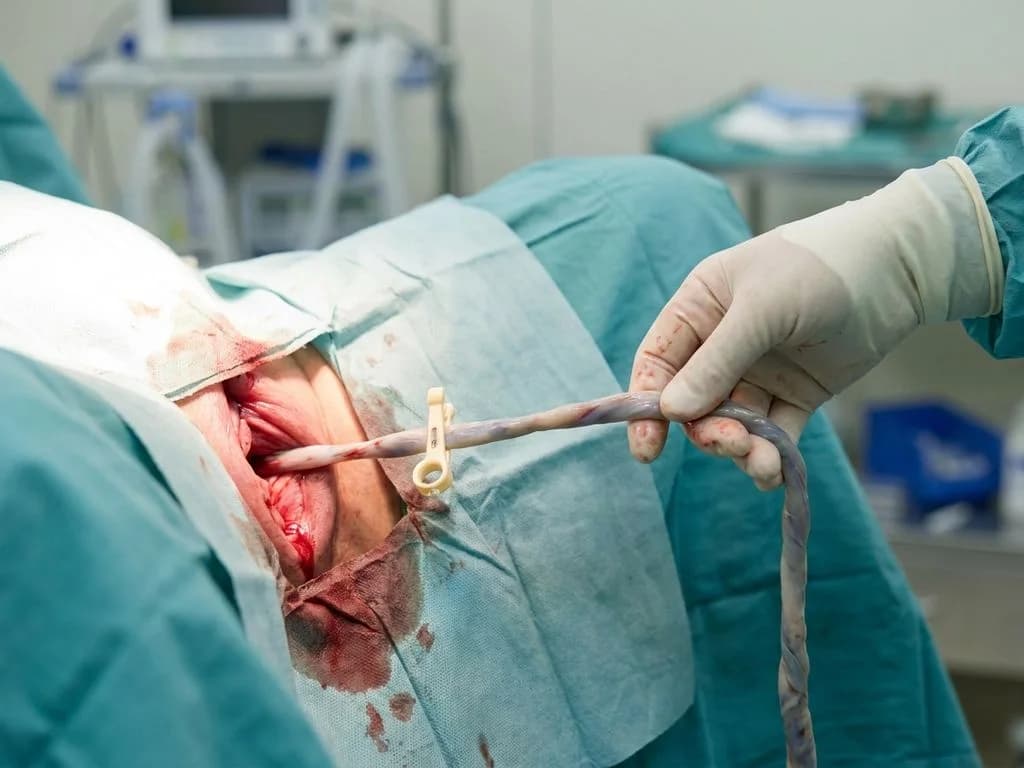
    Clinical image for NEET PG 2022 Q32

    While conducting a delivery, you perform the maneuver shown below [image]. Following this, there is incomplete separation of the placenta and massive hemorrhage. What is your next step in management? [image]

    A. Start oxytocin infusion and wait for spontaneous delivery of placenta
    B. Manual removal of placenta
    C. Arrange for blood and use Crede's method for placental delivery
    D. Uterine massage

    Correct Answer: B. Manual removal of placenta

    The image depicts a maneuver (likely fundal pressure or Brandt-Andrews maneuver) performed during the third stage of labour. When incomplete placental separation occurs with massive hemorrhage, this represents a retained placenta with hemorrhage — a true obstetric emergency. Manual removal of placenta (MRPL) is the gold standard management in this scenario because: (1) it immediately controls hemorrhage by allowing direct uterine compression and identification of bleeding vessels, (2) it removes the source of continued bleeding from the placental bed, and (3) it prevents further maternal blood loss and shock. Per Indian guidelines (FOGSI, ICOG) and standard obstetric practice, when placental separation is incomplete and hemorrhage is ongoing, waiting for spontaneous delivery or using conservative methods risks maternal exsanguination. MRPL must be performed under anesthesia (spinal or general) with IV access, cross-matched blood available, and uterotonic support (oxytocin/ergot alkaloids post-removal). This is the standard of care in Indian tertiary centers and aligns with Harrison and Robbins principles of managing life-threatening hemorrhage in obstetrics.

    Why the other options are wrong

    A. Start oxytocin infusion and wait for spontaneous delivery of placenta — This is wrong because oxytocin alone cannot separate an already-retained placenta; it only aids separation when the placenta is partially separated. Waiting for spontaneous delivery in the setting of massive hemorrhage is dangerous and delays definitive management. This option represents a conservative approach suitable only for minor bleeding without separation failure — a critical NBE trap that confuses management of normal third stage with retained placenta with hemorrhage. C. Arrange for blood and use Crede's method for placental delivery — Crede's method (external fundal pressure) is contraindicated when the placenta is incompletely separated because it risks uterine rupture and placental fragmentation, leading to retained fragments and worsening hemorrhage. While arranging blood is correct, Crede's method is an outdated technique (pre-1980s) and is not recommended in modern Indian obstetric practice. This option tests whether students confuse historical methods with current evidence-based management. D. Uterine massage — Uterine massage is appropriate for atonic postpartum hemorrhage (soft, boggy uterus) but is ineffective and potentially harmful in retained placenta with incomplete separation. Massaging a uterus with an adherent placenta does not aid separation and delays definitive intervention. This option is a distractor that tests understanding of the specific pathophysiology — retained placenta requires mechanical removal, not massage.

    High-Yield Facts

    • Retained placenta with hemorrhage is an obstetric emergency requiring immediate manual removal under anesthesia, not conservative management.
    • MRPL is contraindicated in placenta accreta/increta/percreta (risk of massive hemorrhage, hysterectomy may be needed) — diagnosis must be suspected preoperatively.
    • Incomplete placental separation + massive hemorrhage = MRPL; incomplete separation + minor bleeding = wait 30 min with oxytocin, then reassess.
    • Brandt-Andrews maneuver (controlled cord traction with fundal support) aids normal placental separation; failure of this maneuver signals retained placenta.
    • MRPL technique: hand inserted into uterus, follow cord to placenta, separate by sweeping motion, remove placenta, then oxytocin/ergot to contract uterus and control bleeding.

    Mnemonics

    MRPL Indications (RHINO) Retained placenta >30 min, Hemorrhage (massive), Incomplete separation, Need for immediate delivery, Other failed conservative measures. Use this when deciding between watchful waiting and MRPL. Third Stage Hemorrhage Management (CRAM) Control (IV access, cross-match), Rub (uterine massage for atony), Agents (oxytocin/ergot), Manual removal (if retained placenta). Sequence guides decision-making.

    NBE Trap

    NBE pairs "oxytocin + wait" with retained placenta to trap students who conflate normal third-stage management with emergency retained placenta. The key discriminator is massive hemorrhage — this shifts the decision from conservative to surgical immediately.

    Clinical Pearl

    In Indian tertiary centers, retained placenta with hemorrhage is a leading cause of maternal mortality. Delays in MRPL due to attempting conservative measures (oxytocin, massage, Crede's) have resulted in preventable deaths. The rule: if placenta is not delivered within 30 minutes of cord clamping AND there is significant bleeding, proceed to MRPL immediately — do not wait.

    _Reference: DC Dutta's Textbook of Obstetrics (3rd Stage of Labour, Retained Placenta); Harrison Ch. 6 (Obstetric Hemorrhage); FOGSI Guidelines on Management of Third Stage Labour_

    Ask AI Tutor about this question

    Stuck on a distractor? Want a worked-through clinical scenario? The AI Tutor is a NEETPGAI Pro feature — sign up free to practice the full question bank, then unlock the AI Tutor when you're ready.

    Explain this concept in plain language
    Why is each wrong option wrong?
    Give me a clinical scenario where this is tested
    Sign up free Already have an account? Log in

    Free to start, no credit card required. The 3 prompts/day quota is shared with practice + tutor + deep-dive across NEETPGAI.

    Memory-based reconstruction

    NBE does not officially release NEET PG papers per the 2025 Supreme Court directive. This question was reconstructed from 1 community source: PrepLadder NEET PG 2022 Recall PDF. Cross-verified by Claude Haiku 4.5 + Gemini 2.5 Flash + community-aggregate vote, then reviewed by a practising medical SME.

    ← All NEET PG 2022 questionsPractice with AI Tutor →