
NEETPGAI
FeaturesBlogComparePricing
Log inStart Free
NEETPGAI

AI-powered NEET PG preparation platform. Master all 19 subjects with adaptive MCQs, AI tutoring, and spaced repetition.

Product

  • Features
  • Subjects
  • Previous Year Questions
  • Compare
  • Pricing
  • Blog

Features

  • Adaptive MCQ Practice
  • AI Tutor
  • Mock Tests
  • Spaced Repetition

Resources

  • Blog
  • Study Guides
  • NEET PG Updates
  • Contact & support

Legal

  • Privacy Policy
  • Terms of Service

Stay updated

© 2026 NEETPGAI. All rights reserved.
    PYQs/2022/Q59
    Verified answer (AI cross-checked + SME reviewed)

    Q59 (2022, Bone and Joint Infections) — Correct answer: B. Salmonella.
    NEET PG 2022
    Q59
    bone Orthopedics
    Bone and Joint Infections
    tier-2 (3/3 verifier agreement)
    Clinical image for NEET PG 2022 Q59

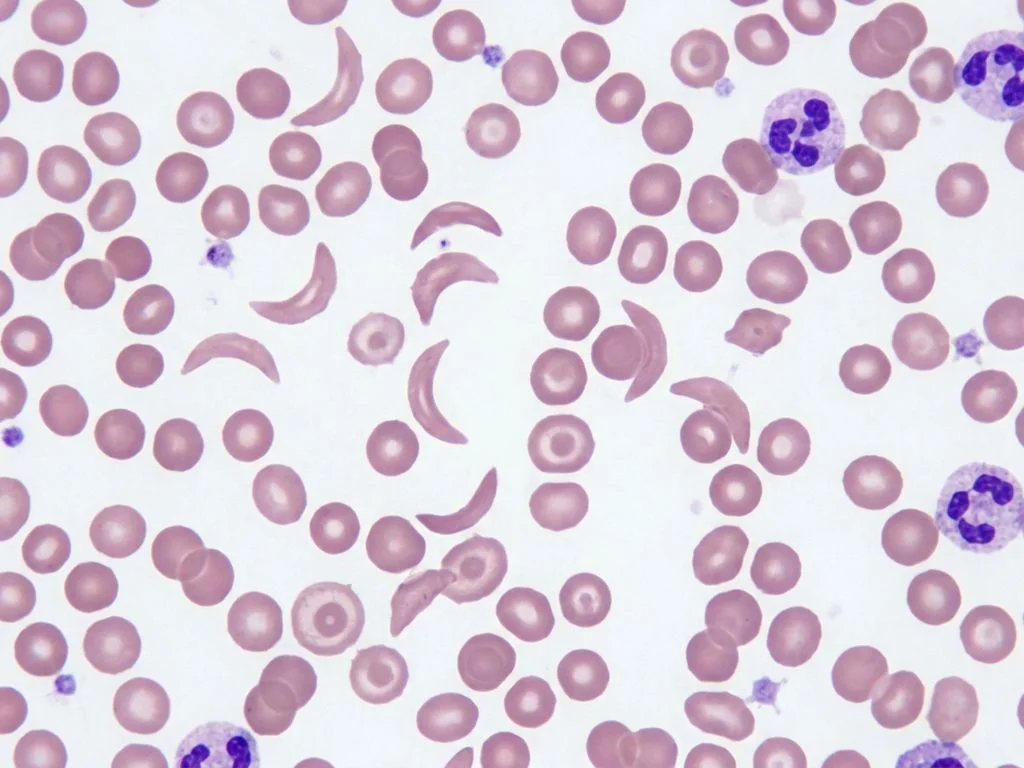
    A child with a history of recurrent respiratory infections presented with complaints of pain around the knee and a high fever. X – ray shows lytic and sclerotic bone. His peripheral blood smear is shown in the image below. Aspirate from the joint will most likely show: [image] [image]

    A. Staphylococcus aureus
    B. Salmonella
    C. Streptococcus
    D. Escherichia

    Correct Answer: B. Salmonella

    The clinical presentation—recurrent respiratory infections, fever, knee pain, and mixed lytic-sclerotic bone lesions—combined with the peripheral blood smear findings (which likely show abnormal RBCs consistent with a hemoglobinopathy) points to sickle cell disease or thalassemia. In these hemolytic anemias, particularly sickle cell disease, Salmonella is the characteristic organism causing osteomyelitis and septic arthritis, not the typical Staph aureus seen in immunocompetent children. This occurs because: (1) functional asplenia in sickle cell disease impairs opsonization of Gram-negative organisms; (2) bone infarction from sickling creates a favorable microenvironment for Salmonella seeding; (3) Salmonella has a predilection for infarcted bone. The mixed lytic-sclerotic pattern on X-ray is typical of Salmonella osteomyelitis in sickle cell patients, reflecting both bone destruction and reactive sclerosis. Joint aspirate culture will grow Salmonella species (non-typhoidal), confirming the diagnosis. This is a high-yield association in Indian pediatric practice where hemoglobinopathies are endemic in certain populations.

    Why the other options are wrong

    A. Staphylococcus aureus — While Staph aureus is the most common cause of osteomyelitis and septic arthritis in otherwise healthy children, it is NOT the typical pathogen in sickle cell disease. The hemolytic anemia with functional asplenia shifts the microbiology toward Gram-negative organisms, particularly Salmonella. Choosing Staph aureus ignores the critical clue of the abnormal blood smear and recurrent infections suggesting an underlying hemoglobinopathy. C. Streptococcus — Streptococcus species (Group A or pneumococcus) are not characteristic bone and joint pathogens in sickle cell disease. While pneumococcal infection is a concern in asplenic patients, it typically causes bacteremia and meningitis, not osteomyelitis. The mixed lytic-sclerotic bone pattern is not typical of streptococcal infection. D. Escherichia — E. coli is primarily a urinary tract and enteric pathogen. While Gram-negative organisms can cause osteomyelitis in immunocompromised states, E. coli does not have the characteristic predilection for infarcted bone that Salmonella demonstrates in sickle cell disease. The clinical context and bone imaging pattern do not support E. coli as the diagnosis.

    High-Yield Facts

    • Salmonella osteomyelitis is the pathognomonic bone infection in sickle cell disease, occurring in ~50% of sickle cell patients at some point.
    • Functional asplenia in sickle cell disease impairs opsonization of Gram-negative organisms, predisposing to Salmonella and other encapsulated bacteria.
    • Mixed lytic-sclerotic bone lesions on X-ray are characteristic of Salmonella osteomyelitis in hemolytic anemias, distinguishing it from typical Staph aureus infection.
    • Non-typhoidal Salmonella (S. typhimurium, S. enteritidis) are the usual culprits; typhoidal Salmonella causes systemic typhoid, not bone infection.
    • Bone infarction from sickling creates ischemic foci that are uniquely susceptible to Salmonella seeding, explaining the organism's predilection for this site.

    Mnemonics

    SALMONELLA in SICKLE CELL Sickle cell → Salmonella osteomyelitis. When you see hemolytic anemia + bone infection, think Salmonella first, not Staph. ASPLENIA = Gram-NEGATIVE risk Functional asplenia (sickle cell) → impaired opsonization → Gram-negative organisms (Salmonella, H. influenzae) dominate. Staph is Gram-positive.

    NBE Trap

    NBE pairs "fever + bone infection" with Staph aureus (the textbook answer in immunocompetent children) to trap students who miss the critical clue of recurrent respiratory infections and abnormal blood smear indicating an underlying hemoglobinopathy. The question tests whether you recognize that microbiology shifts in specific disease states.

    Clinical Pearl

    In Indian pediatric practice, particularly in populations with high prevalence of hemoglobinopathies (tribal and certain ethnic groups), a child presenting with osteomyelitis or septic arthritis should prompt immediate inquiry into hemoglobin electrophoresis status. Salmonella osteomyelitis in sickle cell disease often requires prolonged antibiotics (fluoroquinolones or cephalosporins) and may recur, unlike typical Staph infections.

    _Reference: Harrison Ch. 139 (Sickle Cell Disease); Robbins Ch. 14 (Hemolytic Anemias); Bailey & Love Ch. 35 (Bone and Joint Infections)_

    Ask AI Tutor about this question

    Stuck on a distractor? Want a worked-through clinical scenario? The AI Tutor is a NEETPGAI Pro feature — sign up free to practice the full question bank, then unlock the AI Tutor when you're ready.

    Explain this concept in plain language
    Why is each wrong option wrong?
    Give me a clinical scenario where this is tested
    Sign up free Already have an account? Log in

    Free to start, no credit card required. The 3 prompts/day quota is shared with practice + tutor + deep-dive across NEETPGAI.

    Memory-based reconstruction

    NBE does not officially release NEET PG papers per the 2025 Supreme Court directive. This question was reconstructed from 1 community source: PrepLadder NEET PG 2022 Recall PDF. Cross-verified by Claude Haiku 4.5 + Gemini 2.5 Flash + community-aggregate vote, then reviewed by a practising medical SME.

    ← All NEET PG 2022 questionsPractice with AI Tutor →