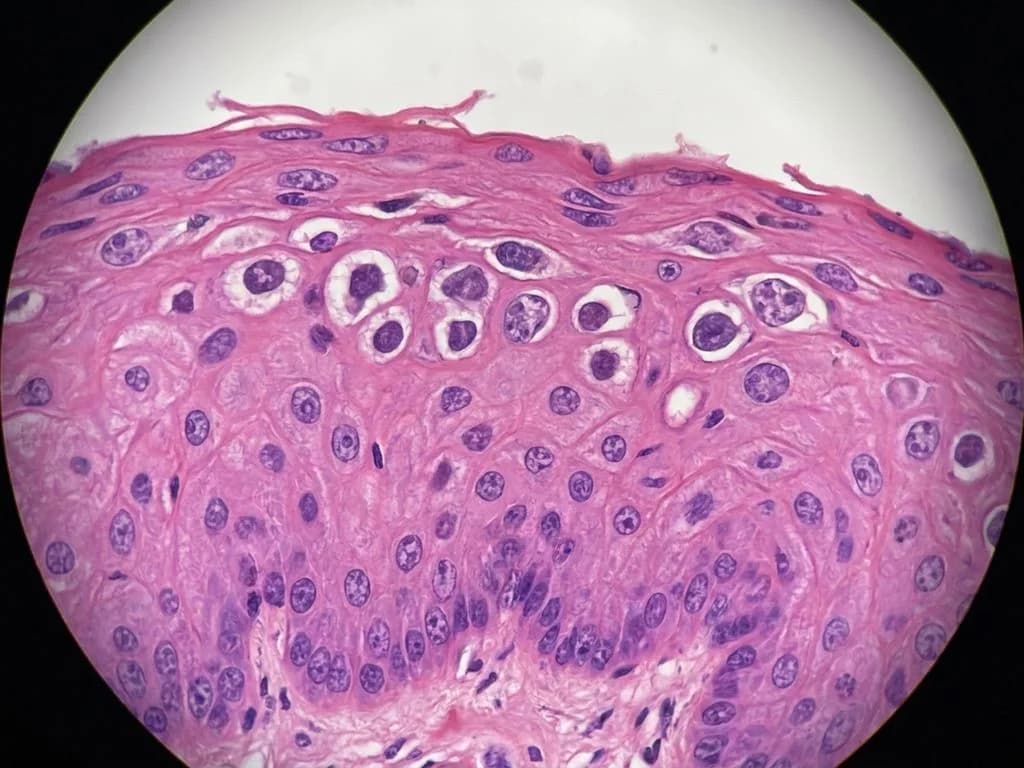
Correct Answer: A. HPV 18
HPV 18 is a high-risk (oncogenic) human papillomavirus type that is strongly associated with malignant transformation of anogenital warts and cervical intraepithelial neoplasia (CIN). The presence of squamous atypia on biopsy is a critical clinical clue pointing toward high-risk HPV infection, as these types possess the E6 and E7 oncoproteins that inactivate p53 and Rb tumor suppressors, driving malignant progression. HPV 18 accounts for approximately 20% of cervical cancers in India and is particularly associated with adenocarcinomas of the cervix. In the context of anogenital warts with histological atypia, HPV 18 (along with HPV 16, the most common high-risk type) must be identified and managed aggressively with close surveillance and consideration of excisional treatment. The Indian Academy of Dermatology and Venereology (IADV) guidelines emphasize that any anogenital wart with atypia warrants HPV typing and oncological follow-up. HPV 18 is also included in the 9-valent HPV vaccine (Gardasil 9), which is increasingly recommended in India for primary prevention of cervical and anogenital cancers.
Why the other options are wrong
B. HPV 2 — HPV 2 is not a recognized human papillomavirus type in the standard classification. The HPV genome is classified into types 1–226, but HPV 2 is not epidemiologically significant in anogenital disease. This is a distractor option designed to test whether students know the actual HPV types associated with genital disease. C. HPV 6 — HPV 6 is a low-risk (non-oncogenic) HPV type responsible for the majority of benign anogenital warts (condyloma acuminata). Although it causes visible warts, it does NOT cause malignant transformation and does not produce squamous atypia on histology. The presence of atypia in this case rules out HPV 6 as the causative agent. D. HPV 11 — HPV 11 is also a low-risk HPV type, typically associated with benign anogenital warts and recurrent respiratory papillomatosis (RRP) in children. Like HPV 6, it lacks oncogenic potential and does not cause squamous atypia. The histological finding of atypia is incompatible with low-risk HPV types, making this option incorrect.
High-Yield Facts
- HPV 16 and 18 are the two most common high-risk types; HPV 16 causes 50% of cervical cancers in India, HPV 18 causes 20%.
- High-risk HPV types (16, 18, 31, 33, 35, 39, 45, 51, 52, 56, 58, 59, 66, 68) encode E6/E7 oncoproteins that inactivate p53 and Rb, driving malignant transformation.
- Low-risk HPV types (6, 11, 42, 43, 44) cause benign warts without malignant potential; they do NOT produce squamous atypia.
- Squamous atypia on biopsy of anogenital warts is a red flag for high-risk HPV infection and warrants HPV typing, excision, and oncological surveillance.
- 9-valent HPV vaccine (Gardasil 9) covers HPV 16, 18, 31, 33, 45, 52, 58 and is increasingly used in India for cervical cancer prevention.
- HPV 18 is particularly associated with adenocarcinoma of the cervix and is more common in women with HIV/AIDS in India.
Mnemonics
HIGH-RISK HPV: 16, 18, 31, 33, 45, 52, 58 Remember '16 and 18 are the BIG TWO' — these cause ~70% of cervical cancers. The rest (31, 33, 45, 52, 58) are secondary high-risk types. Use this when you see 'atypia' or 'malignancy risk' in the stem. LOW-RISK HPV: 6 and 11 (Benign Warts) '6 and 11 = Benign' — these cause condyloma acuminata without atypia. If the question mentions atypia, squamous dysplasia, or malignant potential, eliminate 6 and 11 immediately.
NBE Trap
NBE pairs anogenital warts with low-risk HPV types (6, 11) in many questions, conditioning students to default to these answers. This question uses the discriminator 'squamous atypia on biopsy' to force recognition that high-risk types (16, 18) are present — students who reflexively choose HPV 6 or 11 without reading the histology clue will fall into the trap.
Clinical Pearl
In Indian clinical practice, any patient presenting with anogenital warts and histological atypia must be counseled about malignancy risk, offered HPV typing (if available), and referred for gynecological/urological surveillance. HPV 18 is particularly common in women with cervical dysplasia in India and warrants aggressive management to prevent progression to invasive cancer.
_Reference: Robbins Ch. 7 (Neoplasia); Harrison Ch. 209 (Cervical Cancer); KD Tripathi Ch. 57 (Antivirals and HPV vaccines)_