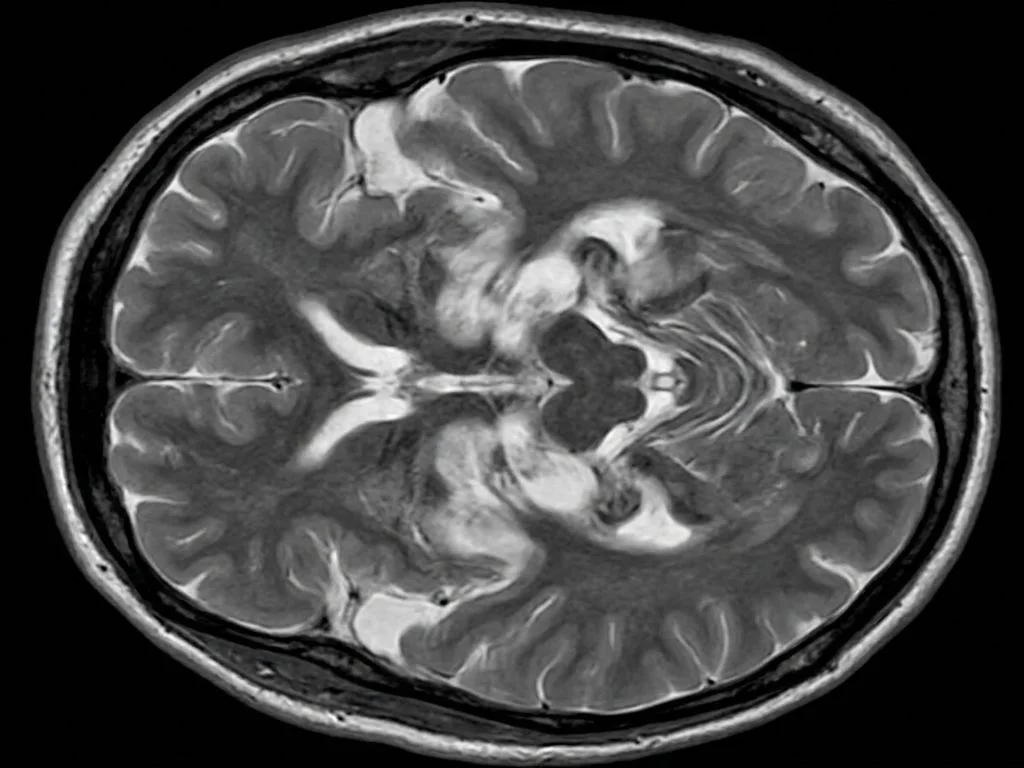
Correct Answer: C. Herpes simplex virus
Herpes simplex virus (HSV), particularly HSV-1, is the most common cause of sporadic viral encephalitis worldwide and in India. The clinical triad of fever, headache, and confusion with seizures is classic for acute encephalitis. The bitemporal lobe involvement on MRI is the pathognomonic finding that discriminates HSV encephalitis from other viral causes. HSV has a predilection for the medial temporal lobes (hippocampus, amygdala, and inferior temporal cortex) due to retrograde axonal transport via the olfactory nerve and trigeminal nerve pathways. This temporal lobe localization is so characteristic that it is virtually diagnostic of HSV encephalitis. The inflammation typically appears as T2/FLAIR hyperintensity in the temporal lobes, often with hemorrhagic changes. HSV encephalitis presents acutely with altered mental status, seizures (in 50–80% of cases), behavioral changes, and focal neurological deficits. CSF analysis typically shows lymphocytic pleocytosis with elevated protein and normal or low glucose. PCR for HSV DNA in CSF is the gold standard for diagnosis. Early recognition and treatment with IV acyclovir (10–15 mg/kg every 8 hours) is critical, as delayed treatment leads to significant morbidity and mortality. In India, HSV encephalitis remains a leading cause of hospitalization in neurology units and requires high clinical suspicion given the non-specific initial presentation.
Why the other options are wrong
A. Cytomegalovirus — CMV encephalitis occurs almost exclusively in severely immunocompromised patients (CD4 <50 cells/μL in HIV/AIDS). It typically presents with ventriculoencephalitis or diffuse white matter disease, NOT the characteristic bitemporal lobe involvement seen here. CMV is not a cause of sporadic encephalitis in immunocompetent individuals and would not present with this acute febrile picture in an otherwise healthy patient. B. Toxoplasma gondii — Toxoplasma encephalitis is also an opportunistic infection seen in advanced HIV/AIDS (CD4 <100 cells/μL) and presents with multiple ring-enhancing lesions on MRI, not bitemporal inflammation. It is rare in immunocompetent hosts. The clinical presentation and imaging pattern do not match toxoplasmosis, which typically causes focal mass lesions rather than diffuse temporal lobe encephalitis. D. Mycobacterium tuberculosis — TB meningitis (TBM) is endemic in India and a common cause of meningitis, but it typically involves the basal cisterns and meninges rather than causing selective bitemporal lobe inflammation. TBM presents more insidiously over weeks with constitutional symptoms, and CSF shows lymphocytic pleocytosis with high protein and low glucose. The acute presentation with seizures and specific bitemporal MRI findings are not typical of TBM, which would show basilar enhancement and hydrocephalus.
High-Yield Facts
- Bitemporal lobe involvement on MRI is pathognomonic for HSV encephalitis — no other common viral encephalitis shows this pattern
- HSV-1 is the most common cause of sporadic viral encephalitis in immunocompetent individuals worldwide and in India
- Seizures occur in 50–80% of HSV encephalitis cases and are often the presenting feature; status epilepticus can develop
- CSF PCR for HSV DNA is the gold standard diagnostic test — more sensitive and specific than culture or serology
- IV acyclovir 10–15 mg/kg every 8 hours is the DOC — must be started empirically on clinical suspicion before confirmatory testing
- Medial temporal lobe predilection is due to retrograde axonal transport via olfactory and trigeminal nerves from the primary infection site
Mnemonics
HSV Encephalitis = TEMPORAL Temporal lobes (bitemporal), Encephalitis (acute), MRI shows inflammation, PCR confirms (CSF), Olfactory/trigeminal route, Rapid acyclovir needed, Acute presentation (fever + seizures), Lymphocytic CSF Opportunistic Encephalitis in AIDS CMV = ventriculoencephalitis (CD4 <50); Toxo = ring lesions (CD4 <100); HSV = temporal lobes (any CD4, immunocompetent). Use this to rule out CMV and Toxo in non-AIDS patients.
NBE Trap
NBE may pair temporal lobe involvement with other viral causes (CMV, Toxo) to trap students who know "encephalitis + immunocompromised = opportunistic" but forget that HSV is the only common cause of bitemporal encephalitis in immunocompetent hosts. The question does not mention immunosuppression, which is the key discriminator.
Clinical Pearl
In Indian emergency departments, any patient presenting with acute fever, headache, confusion, and seizures should trigger empiric IV acyclovir coverage while awaiting CSF PCR results — HSV encephalitis is the leading treatable cause of sporadic encephalitis, and delays in therapy correlate directly with poor neurological outcomes and long-term sequelae including memory impairment and behavioral changes.
_Reference: Harrison Ch. 381 (Viral Meningitis and Encephalitis); Robbins Ch. 28 (Infectious Diseases of the Nervous System)_