Correct Answer: A. Ask for CBNAAT
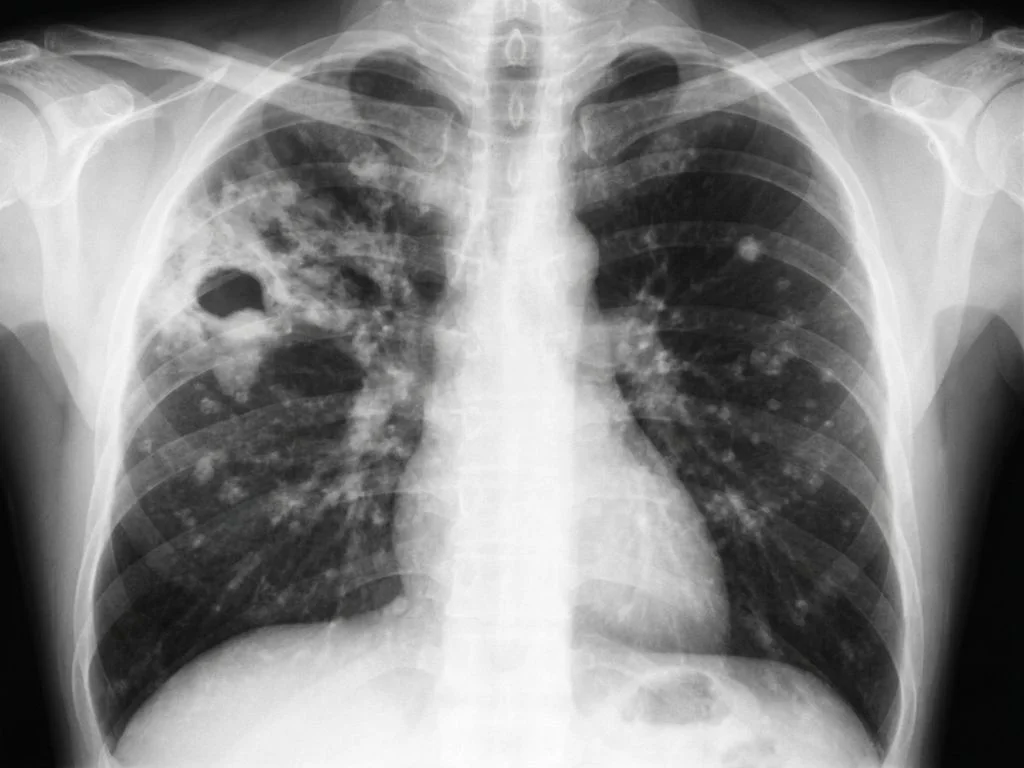
According to the latest NTEP (National TB Elimination Programme) guidelines in India, when a patient presents with clinical and radiological evidence of TB but has negative sputum smears, CBNAAT (Cartridge-Based Nucleic Acid Amplification Test) is the recommended next diagnostic step. CBNAAT is a WHO-endorsed rapid molecular test that detects Mycobacterium tuberculosis DNA and simultaneously screens for rifampicin resistance within 2 hours. It has superior sensitivity (95–98%) compared to sputum microscopy, especially in smear-negative cases, and is particularly valuable in immunocompromised patients and those with extrapulmonary TB. The NTEP algorithm mandates CBNAAT as the first-line confirmatory test for all presumptive TB cases in India, replacing the older practice of relying solely on repeated smear microscopy. In this homeless patient with strong clinical suspicion (fever, cough, weight loss, radiological findings) and negative smears, CBNAAT offers rapid diagnosis and enables early initiation of appropriate therapy, reducing transmission and improving outcomes. The test is freely available at designated NTEP centers across India.
Why the other options are wrong
B. Wait until TB culture results to start ATT — This is wrong because TB culture takes 2–8 weeks for results, during which time the patient remains infectious and disease progresses. NTEP guidelines explicitly recommend starting ATT based on clinical and radiological evidence without waiting for culture confirmation in smear-negative cases with strong clinical suspicion. Delaying treatment violates the principle of early case detection and treatment, a cornerstone of TB control in India. C. Ask for line probe assay — This is wrong because line probe assay (LPA) is a second-line confirmatory test used after TB diagnosis is confirmed to detect drug resistance (MDR-TB). It is not a first-line diagnostic tool for establishing TB in smear-negative cases. Using LPA before CBNAAT wastes time and resources; CBNAAT is the NTEP-recommended first step in the diagnostic algorithm. D. Repeat sputum smears — This is wrong because repeating sputum smears in a smear-negative case with strong clinical and radiological suspicion is outdated practice. NTEP guidelines have moved away from relying on repeated microscopy due to its low sensitivity in smear-negative TB. CBNAAT is far more sensitive and rapid, making repeated smears an inefficient and potentially harmful delay in diagnosis and treatment initiation.
High-Yield Facts
- CBNAAT is the first-line confirmatory test for all presumptive TB cases in India per NTEP guidelines, with 95–98% sensitivity in smear-negative cases.
- Smear-negative TB with strong clinical and radiological evidence warrants CBNAAT, not repeated microscopy or culture waiting.
- CBNAAT turnaround time is 2 hours and simultaneously detects rifampicin resistance, enabling rapid diagnosis and appropriate drug selection.
- TB culture takes 2–8 weeks and is no longer the gatekeeper for starting ATT in India; clinical + radiological + CBNAAT evidence is sufficient.
- Line probe assay (LPA) is a second-line test for drug-resistance detection after TB diagnosis is confirmed, not a first-line diagnostic tool.
Mnemonics
NTEP First-Line Diagnostic Ladder Clinical suspicion → CBNAAT → Culture (if needed for drug resistance). In smear-negative TB, skip repeated smears and go straight to CBNAAT. When CBNAAT is Your Answer Smear-Negative + Radiological evidence = CBNAAT. (SNR = CBNAAT). Use this when the question hints at negative smears but strong clinical/radiological TB suspicion.
NBE Trap
NBE may lure students into choosing "repeat sputum smears" by banking on outdated teaching that microscopy is the gold standard. The trap is the phrase "negative sputum smears"—students may think "repeat them," not realizing NTEP has shifted to molecular diagnostics (CBNAAT) as the standard of care for smear-negative TB in India.
Clinical Pearl
In India's TB-endemic setting, homeless patients with poor nutritional status and possible immunosuppression often present with smear-negative TB. CBNAAT at a designated NTEP center is free and rapid, enabling same-day diagnosis and treatment initiation—critical for preventing transmission in crowded shelters and improving cure rates in this vulnerable population.
_Reference: NTEP Guidelines 2023 (India), Park's Textbook of Preventive and Social Medicine (TB Control section)_