
NEETPGAI
FeaturesBlogComparePricing
Log inStart Free
NEETPGAI

AI-powered NEET PG preparation platform. Master all 19 subjects with adaptive MCQs, AI tutoring, and spaced repetition.

Product

  • Features
  • Subjects
  • Previous Year Questions
  • Compare
  • Pricing
  • Blog

Features

  • Adaptive MCQ Practice
  • AI Tutor
  • Mock Tests
  • Spaced Repetition

Resources

  • Blog
  • Study Guides
  • NEET PG Updates
  • Contact & support

Legal

  • Privacy Policy
  • Terms of Service

Stay updated

© 2026 NEETPGAI. All rights reserved.
    PYQs/2023/Q40
    Verified answer (AI cross-checked + SME reviewed)

    Q40 (2023, Others) — Correct answer: B. Intraosseous route access for giving IV fluids.
    NEET PG 2023
    Q40
    scissors Surgery
    Others
    tier-2 (3/3 verifier agreement)
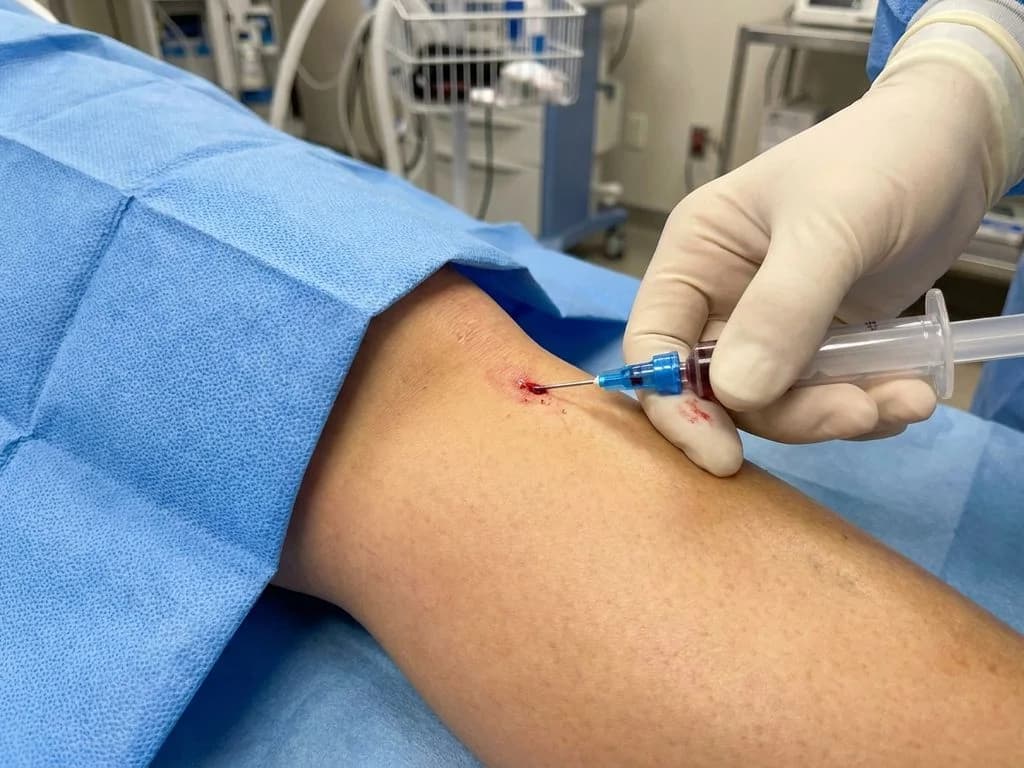
    Clinical image for NEET PG 2023 Q40

    Identify the procedure being performed in the image given below.

    A. Intraosseous abscess drainage
    B. Intraosseous route access for giving IV fluids
    C. Intraosseous cannula for pain relief
    D. Bone marrow aspiration

    Correct Answer: B. Intraosseous route access for giving IV fluids

    The intraosseous (IO) route is a rapid vascular access technique used primarily in emergency and resuscitation settings when peripheral IV access is difficult or impossible. The procedure involves inserting a needle directly into the medullary cavity of long bones—typically the proximal tibia (most common in children and adults), distal femur, or proximal humerus. The medullary cavity is a non-collapsible vascular space that drains directly into the systemic circulation via nutrient and emissary veins, allowing rapid administration of fluids, medications, and blood products. In Indian emergency departments and trauma centers, IO access is increasingly recognized as a critical skill per ATLS guidelines and Indian trauma protocols. The needle placement is confirmed by aspiration of bone marrow and loss of resistance. This route is particularly valuable in pediatric resuscitation, hemorrhagic shock, and situations where peripheral veins are inaccessible (burns, severe dehydration, cardiac arrest). The procedure is temporary—typically maintained for 24–48 hours—and must be replaced with definitive IV access once the acute emergency stabilizes.

    Why the other options are wrong

    A. Intraosseous abscess drainage — This is wrong because IO access is a vascular route for fluid/medication delivery, not a drainage procedure. Abscess drainage requires a separate percutaneous or surgical approach with imaging guidance (ultrasound or CT). The needle used for IO access is solid-tipped with a trocar, designed for marrow cavity penetration, not aspiration of purulent material. Confusing IO access with drainage is a common trap for students unfamiliar with emergency procedures. C. Intraosseous cannula for pain relief — This is wrong because IO access is not used as a primary route for analgesia delivery in routine pain management. While medications (including analgesics) can be administered via IO in emergencies, the primary indication is rapid vascular access for resuscitation fluids and life-saving drugs. Pain relief is a secondary benefit in emergency settings, not the primary purpose. This option misrepresents the clinical role of IO access. D. Bone marrow aspiration — This is wrong because bone marrow aspiration is a diagnostic procedure performed with a different needle (Jamshidi needle or aspiration needle) at specific sites (posterior iliac crest, anterior iliac crest, or sternum) to obtain marrow samples for hematologic diagnosis. IO access uses a shorter, wider-bore needle inserted into the medullary cavity for therapeutic vascular access, not diagnostic sampling. The anatomical sites, needle types, and clinical purposes are entirely different.

    High-Yield Facts

    • Proximal tibia is the preferred IO site in children and adults due to easy landmark identification and low complication risk.
    • IO access provides vascular access in <60 seconds, making it critical in cardiac arrest and hemorrhagic shock when peripheral IV fails.
    • Medullary cavity drains via nutrient veins directly into systemic circulation, allowing rapid drug/fluid distribution equivalent to central IV access.
    • Complications include osteomyelitis, compartment syndrome, and fat embolism if IO access is maintained >48 hours or placed incorrectly.
    • IO is contraindicated in fractures of the target bone and in patients with severe osteoporosis or osteogenesis imperfecta.
    • ATLS and Indian trauma protocols recommend IO as second-line access after two failed peripheral IV attempts in emergency resuscitation.

    Mnemonics

    IO Site Selection (TIBIA) Tibia (proximal) – first choice in children/adults | Ilium (anterior) – alternative | Bone marrow cavity – target space | Immediate access – <60 sec | Alternative to central line – in emergencies When to Use IO (CRASH) Cardiac arrest | Resuscitation (hemorrhagic shock) | Access failure (peripheral veins) | Severe dehydration | Hypovolemia – use IO as second-line vascular access

    NBE Trap

    NBE may pair IO access with bone marrow aspiration to trap students unfamiliar with the distinction between therapeutic vascular access (IO) and diagnostic sampling (BMA). The similar needle insertion into bone marrow can confuse candidates who haven't internalized the different anatomical sites, needle types, and clinical indications.

    Clinical Pearl

    In Indian emergency departments managing pediatric septic shock or adult trauma with failed peripheral access, IO access is a life-saving skill that bypasses the need for central line insertion and reduces time to resuscitation. A child in hypovolemic shock with collapsed veins can receive fluids and epinephrine via proximal tibial IO within 60 seconds—this is the difference between survival and organ failure.

    _Reference: Bailey & Love Ch. 5 (Emergency Surgery); ATLS Manual (American College of Surgeons); Harrison Ch. 295 (Critical Care Medicine)_

    Ask AI Tutor about this question

    Stuck on a distractor? Want a worked-through clinical scenario? The AI Tutor is a NEETPGAI Pro feature — sign up free to practice the full question bank, then unlock the AI Tutor when you're ready.

    Explain this concept in plain language
    Why is each wrong option wrong?
    Give me a clinical scenario where this is tested
    Sign up free Already have an account? Log in

    Free to start, no credit card required. The 3 prompts/day quota is shared with practice + tutor + deep-dive across NEETPGAI.

    Memory-based reconstruction

    NBE does not officially release NEET PG papers per the 2025 Supreme Court directive. This question was reconstructed from 1 community source: PrepLadder NEET PG 2023 Recall PDF. Cross-verified by Claude Haiku 4.5 + Gemini 2.5 Flash + community-aggregate vote, then reviewed by a practising medical SME.

    ← All NEET PG 2023 questionsPractice with AI Tutor →