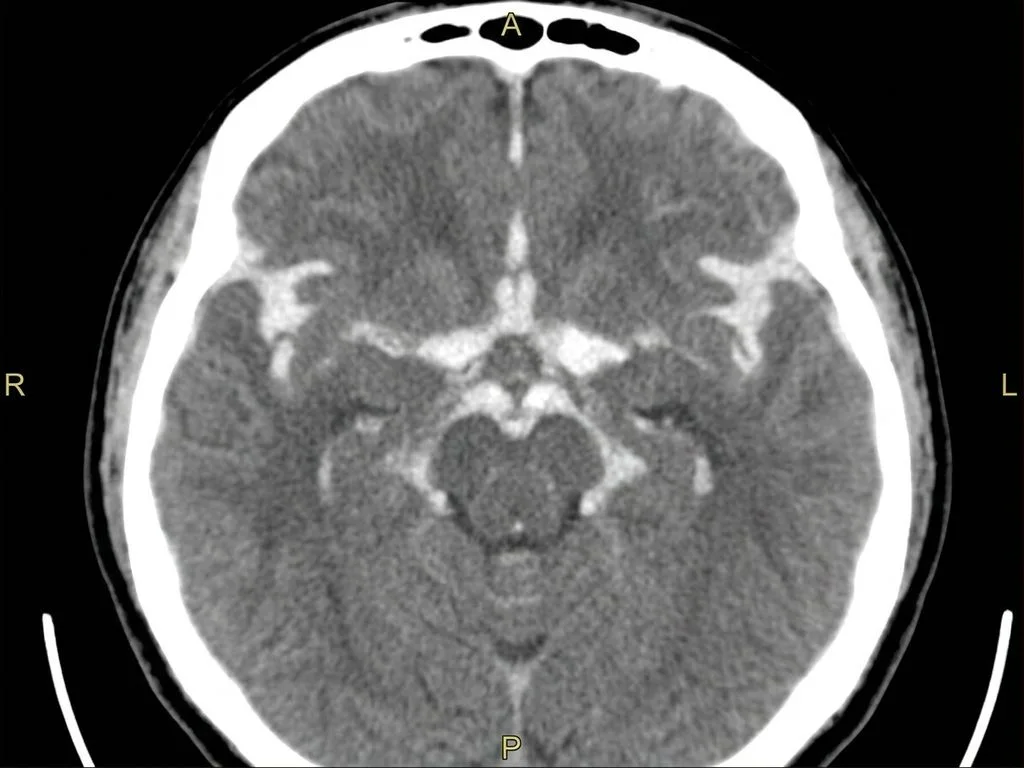
Correct Answer: C. Angiography
In a patient with confirmed subarachnoid hemorrhage (SAH) on CT, the immediate next step after clinical stabilization is diagnostic angiography (preferably CT angiography or conventional angiography). This is the gold standard for identifying the source of bleeding—typically a ruptured aneurysm (80–90% of non-traumatic SAH cases in India). Angiography is essential before any definitive intervention because: (1) it localizes the aneurysm and assesses its morphology, (2) it evaluates vasospasm risk and collateral circulation, (3) it guides the choice between endovascular coiling or surgical clipping, and (4) it rules out other sources (AVM, mycotic aneurysm, vasculitis). In Indian practice, CT angiography is often the first-line imaging due to availability and speed, followed by conventional angiography if intervention is planned. The patient's hypertension (160/100 mmHg) is a secondary response to raised intracranial pressure and should be managed cautiously—aggressive lowering risks worsening cerebral perfusion. Angiography must precede surgery or any other intervention to confirm diagnosis and plan the approach.
Why the other options are wrong
A. Surgery — Surgery (aneurysm clipping) is a definitive treatment but cannot be performed without first identifying the aneurysm location, size, and morphology via angiography. Operating blindly or on an unconfirmed diagnosis risks catastrophic outcomes. Angiography must precede surgical planning in all SAH cases. B. Fibrinolytic therapy — Fibrinolytic therapy is contraindicated in acute SAH because it increases rebleeding risk and worsens outcomes. It has no role in SAH management. This is a classic NBE trap—students may confuse SAH with acute ischemic stroke, where thrombolytics are indicated. SAH requires hemostasis, not fibrinolysis. D. Nimodipine — Nimodipine (a calcium channel blocker) is a secondary preventive agent used to reduce vasospasm-related ischemic deficits after SAH, typically started after angiography and diagnosis confirmation. It is not the immediate next step; angiography must first confirm SAH etiology and guide further management. Nimodipine is adjunctive, not diagnostic.
High-Yield Facts
- CT angiography or conventional angiography is the gold standard for identifying the source of SAH (aneurysm in 80–90% of non-traumatic cases).
- Angiography must precede surgery or endovascular intervention to localize the lesion, assess morphology, and plan the approach.
- Hypertension in acute SAH is secondary to raised ICP and should not be aggressively lowered before angiography (risk of worsening cerebral perfusion).
- Nimodipine is started after diagnosis confirmation to prevent vasospasm-related ischemia, not as the immediate next step.
- Fibrinolytic therapy is contraindicated in SAH due to high rebleeding risk; it is used in ischemic stroke, not hemorrhage.
Mnemonics
SAH Management Sequence: SCAN Stabilize (airway, BP, ICP), Confirm (CT), Angiography (source), Next (intervention—surgery/coiling). Angiography is the diagnostic bridge before any definitive treatment. Why NOT Fibrinolysis in SAH: BLEED Bleeding already present, Lytics increase rebleeding, Exclude fibrinolysis, Endovascular or Direct surgery instead. Thrombolytics are for ischemia, not hemorrhage.
NBE Trap
NBE pairs SAH with immediate surgery or fibrinolytic therapy to trap students who skip the diagnostic step. The trap is forgetting that angiography is mandatory before any intervention—it is the diagnostic gatekeeper in SAH management.
Clinical Pearl
In Indian emergency departments, a patient with SAH and hypertension often receives antihypertensive agents reflexively—but aggressive BP lowering before angiography can precipitate stroke. The hypertension is protective (maintaining cerebral perfusion despite raised ICP); angiography must come first to guide both diagnosis and hemodynamic management.
_Reference: Bailey & Love Ch. 57 (Neurosurgery); Harrison Ch. 445 (Subarachnoid Hemorrhage)_