
| Pathogen | Frequency | Notes |
|---|---|---|
| Streptococcus pneumoniae | 25–35% | Most common; encapsulated gram-positive diplococcus |
| Haemophilus influenzae (non-typeable) | 20–30% | Second most common; gram-negative coccobacillus |
| Moraxella catarrhalis | 10–15% | Gram-negative diplococcus; more common in younger children |
| Group A Streptococcus | <5% | Rare in ASOM; more common in acute mastoiditis |
| Viruses (RSV, rhinovirus, influenza) | 50–70% | Often precedes bacterial infection |
These pathogens typically ascend from the nasopharynx via the Eustachian tube, especially during upper respiratory infections when mucociliary clearance is impaired.
Loading illustration…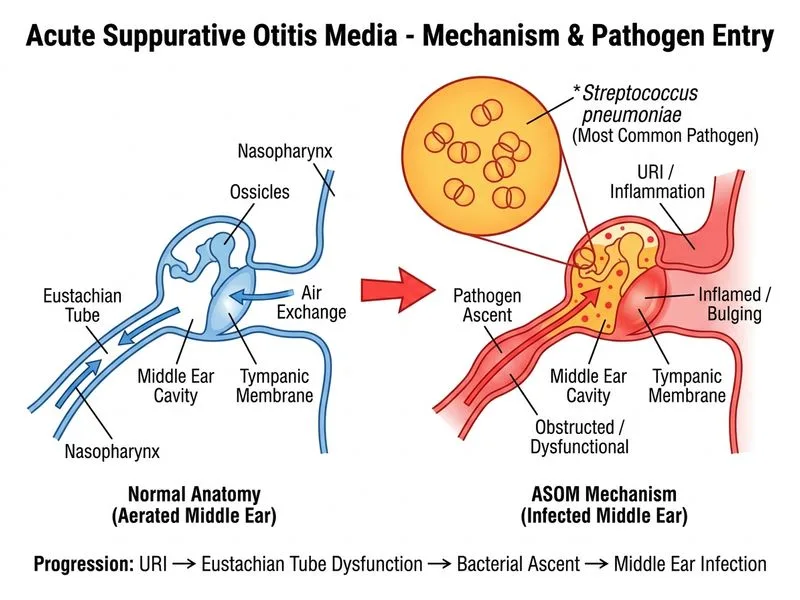
Sign up free to access AI-powered MCQ practice with detailed explanations and adaptive learning.
Daily MCQs, study tips, and topper strategies on Telegram.
Join on Telegram →