
Mitral valve prolapse (MVP) with regurgitation carries a small but real risk of ventricular arrhythmias and sudden cardiac death, particularly in symptomatic patients with palpitations or syncope.
Holter monitoring is the standard initial investigation to stratify arrhythmia risk and guide beta-blocker or antiarrhythmic therapy.
| Feature | Relevance |
|---|---|
| Detects arrhythmias | MVP-related arrhythmias are paroxysmal; Holter captures them over 24 hrs |
| Non-invasive | Safe, repeatable, no contrast or radiation |
| Guides therapy | Presence/absence of arrhythmias determines need for beta-blockers or antiarrhythmics |
| Risk stratification | Arrhythmia burden predicts SCD risk |
| Investigation | Role in MVP |
|---|---|
| Transoesophageal echo | Better visualisation of posterior leaflet; not for risk stratification |
| Cardiac MRI | Assesses myocardial fibrosis; not standard in uncomplicated MVP |
| Coronary angiography | Indicated only if ischaemic chest pain or positive stress test; not for MVP risk assessment |
| Exercise stress test | May be used if exertional symptoms; Holter is primary for arrhythmia detection |
Loading illustration…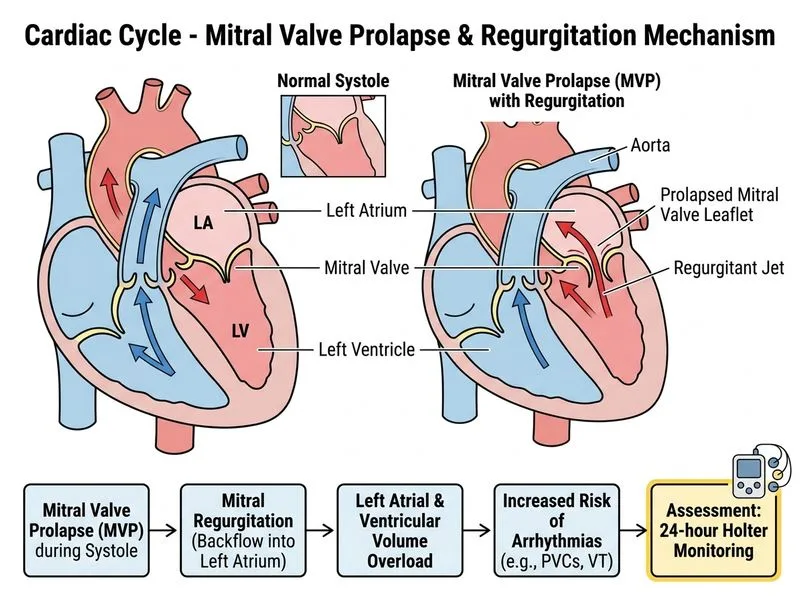
Sign up free to access AI-powered MCQ practice with detailed explanations and adaptive learning.
Daily MCQs, study tips, and topper strategies on Telegram.
Join on Telegram →