Cardiac Cycle MCQ — NEET PG Practice Question | NEETPGAI
Cardiac Cycle
medium
heart-pulse Physiology
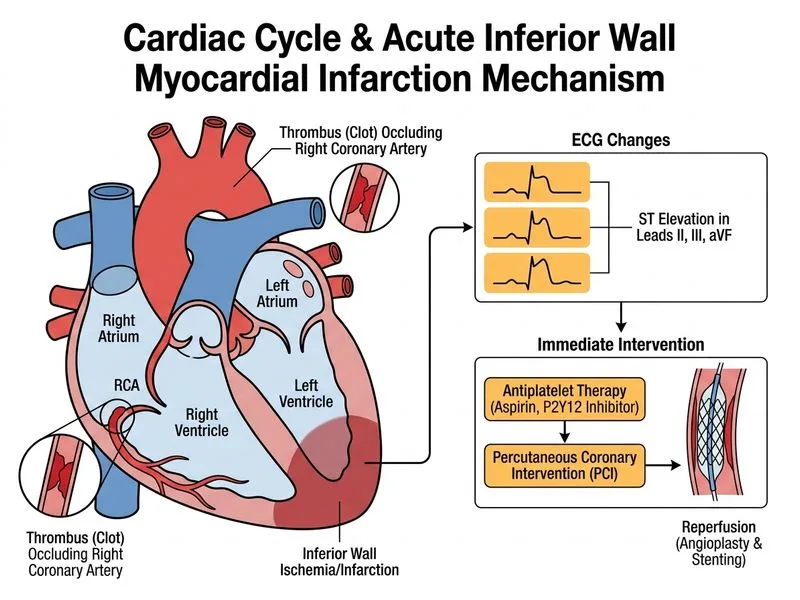
A 52-year-old man with a history of hypertension presents to the emergency department with acute onset chest pain radiating to the left arm and diaphoresis. His ECG shows ST elevation in leads II, III, and aVF. His blood pressure is 145/92 mmHg, heart rate 98/min, and respiratory rate 20/min. Troponin I is elevated at 2.8 ng/mL (normal <0.04). What is the most appropriate immediate next step in management?
A. Start intravenous heparin and schedule coronary angiography within 24 hours after stabilization
B. Initiate thrombolytic therapy with streptokinase and refer to a non-PCI capable center
C. Administer aspirin 300 mg, loading dose of P2Y12 inhibitor, and arrange immediate coronary angiography with percutaneous coronary intervention
Administer aspirin and observe with serial troponin measurements every 3 hours
During acute coronary occlusion, the affected myocardial segment loses contractility during systole, leading to dyskinesis. The remaining viable myocardium compensates, but this creates a mismatch in ventricular wall motion and reduces overall cardiac output. Reperfusion must occur as soon as possible to restore normal systolic function and prevent irreversible necrosis.
Management Algorithm for STEMI
Loading diagram...
Rationale for Correct Answer
High-YieldNEET PG
The current standard of care for STEMI in a PCI-capable center is primary percutaneous coronary intervention (PCI) within 90 minutes of first medical contact. This is superior to thrombolysis in reducing mortality, reinfarction, and stroke.
Clinical Pearl
Dual antiplatelet therapy (aspirin + P2Y12 inhibitor) must be initiated immediately, even before angiography. This prevents stent thrombosis and improves outcomes. The P2Y12 inhibitor options include:
Clopidogrel 600 mg loading dose
Prasugrel 60 mg loading dose (preferred in acute coronary syndromes)
Ticagrelor 180 mg loading dose (preferred in STEMI)
Key Point
Time is myocardium. Every minute of delay increases infarct size and mortality. The "door-to-balloon time" should be ≤90 minutes for primary PCI.
Additional Supportive Measures
While arranging PCI:
Anticoagulation with unfractionated heparin or enoxaparin
Beta-blockers (if not contraindicated)
ACE inhibitors
Statins
Oxygen if SpO₂ <90%
Analgesia with morphine
Harrison 21e Ch 297
Loading illustration…
Practice similar questions
Sign up free to access AI-powered MCQ practice with detailed explanations and adaptive learning.