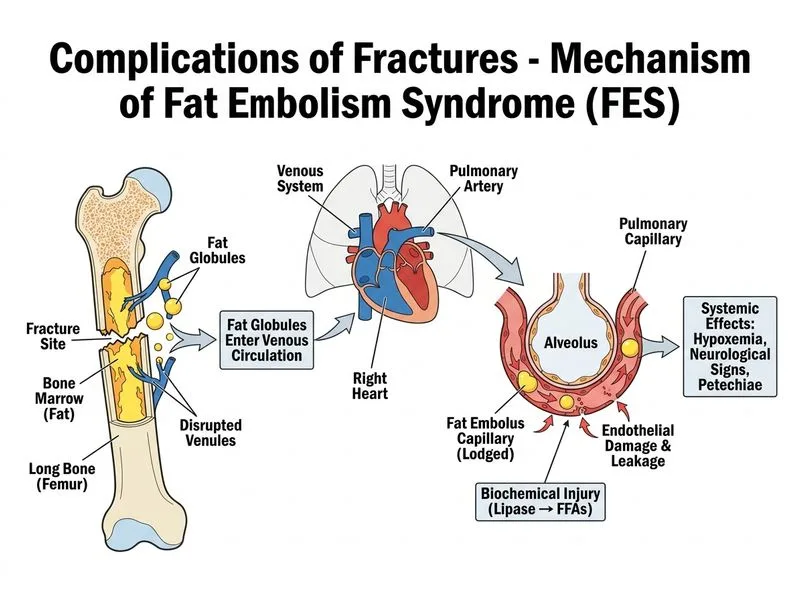
## Early Systemic Complications of Long Bone Fractures **Key Point:** Fat embolism syndrome (FES) is the most common early systemic complication, occurring within 24–72 hours of long bone fracture, particularly femur, tibia, and pelvis. ### Pathophysiology Fat embolism occurs when marrow fat enters the venous circulation through: 1. Disrupted medullary vessels at fracture site 2. Increased intramedullary pressure forcing fat globules into systemic circulation 3. Mechanical obstruction and chemical injury to pulmonary capillaries ### Clinical Features of FES - **Respiratory:** dyspnea, tachypnea, hypoxemia (PaO₂ < 60 mmHg) - **Neurological:** confusion, restlessness, altered consciousness (petechial rash on conjunctiva and axillae) - **Cutaneous:** petechial rash (pathognomonic but late sign) - **Timing:** typically 12–72 hours post-injury ### Diagnostic Criteria (Gurd's Criteria) **Major criteria (need ≥1):** - Petechial rash - Respiratory symptoms with hypoxemia - Cerebral symptoms **Minor criteria (need ≥4):** - Tachycardia > 110 bpm - Fever > 38.5°C - Retinal changes (cotton-wool spots) - Jaundice - Renal changes (lipiduria) - Thrombocytopenia - ESR elevation **High-Yield:** FES is more common with multiple fractures, pelvic fractures, and delayed fracture stabilization. Early fixation reduces FES incidence. **Clinical Pearl:** The classic triad is respiratory distress + petechial rash + altered mental status, but rash may be absent in mild cases. ### Management - Supportive care (oxygen, mechanical ventilation if needed) - Early fracture stabilization (reduces fat release) - Corticosteroids (controversial but used in severe cases) - Prophylaxis: early mobilization, adequate hydration [cite:Rockwood & Green's Fractures in Adults Ch 1] 

Sign up free to access AI-powered MCQ practice with detailed explanations and adaptive learning.