
## Rationale for Early Antitoxin Administration **Key Point:** Diphtheria antitoxin is a passive immunotherapy that neutralizes only *circulating* (unbound) diphtheria toxin. Once toxin binds to tissue receptors and enters cells, it is protected from neutralization. Therefore, early administration—ideally within 48 hours of symptom onset—is critical to prevent irreversible tissue damage. **Mechanism of Diphtheria Toxin:** - Toxin binds to heparin-binding EGF-like growth factor precursor (HB-EGF) on cell surface - Undergoes receptor-mediated endocytosis - Catalytic domain translocates into cytoplasm and inactivates EF-2 - Once internalized, antitoxin cannot reach it **Clinical Principle:** - Antitoxin is given empirically on clinical suspicion, not culture confirmation - Delay of even a few hours can allow toxin to bind and cause irreversible damage - Antitoxin does NOT have bactericidal activity—antibiotics (penicillin, erythromycin) are used to eliminate the organism - Culture confirmation takes days; clinical diagnosis must suffice **High-Yield:** The "golden window" for antitoxin efficacy is within 48 hours of symptom onset. After this, toxin has largely bound to tissue and antitoxin is less effective. 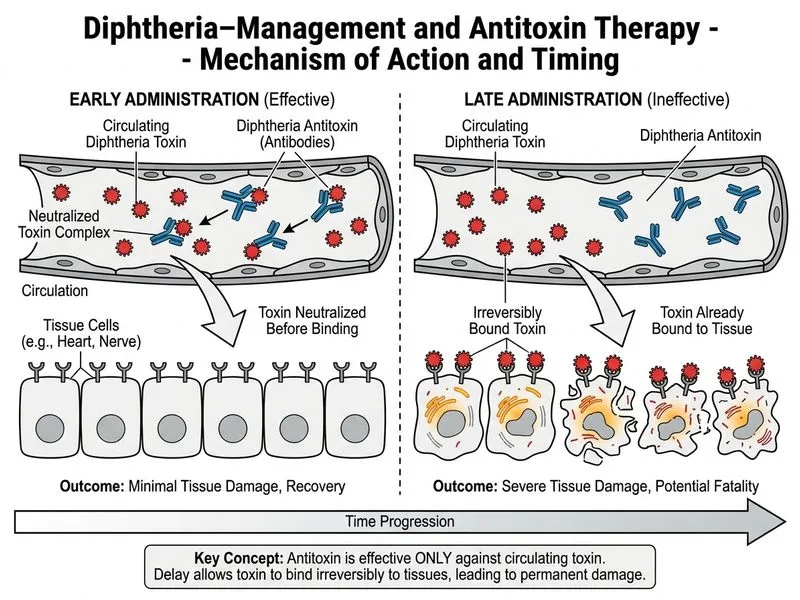
Sign up free to access AI-powered MCQ practice with detailed explanations and adaptive learning.