
Comminuted fractures represent a high-energy injury pattern with significant soft tissue damage and poor prognosis for healing compared to simple fractures. The multiple fragments compromise the structural integrity and make reduction and fixation more challenging.
| Fracture Type | Number of Fragments | Characteristics | Prognosis |
|---|---|---|---|
| Simple (Closed) | 2 | Bone broken into 2 pieces; skin intact | Better |
| Comminuted | >2 | Multiple fragments; high-energy trauma | Worse |
| Compound (Open) | Variable | Bone communicates with skin; infection risk | Guarded |
| Pathological | Variable | Underlying bone disease (osteoporosis, metastases) | Depends on cause |
Loading illustration…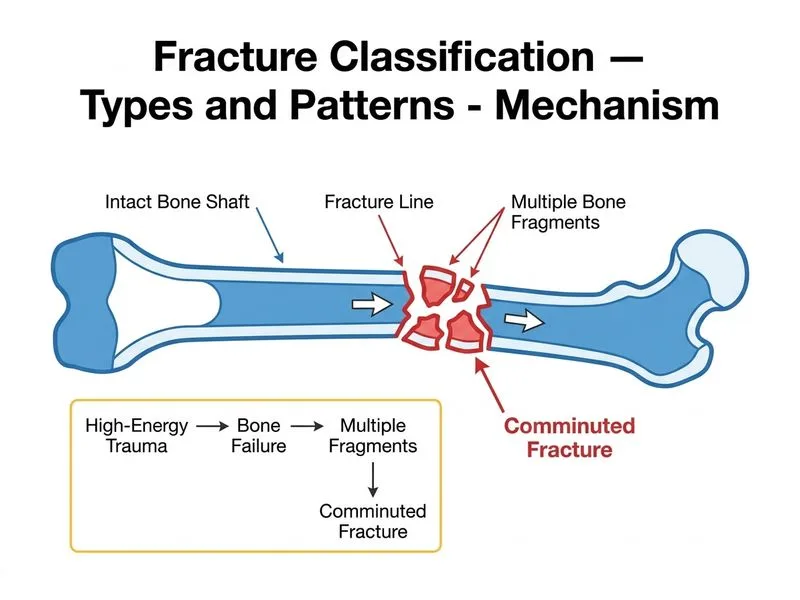
Sign up free to access AI-powered MCQ practice with detailed explanations and adaptive learning.
Daily MCQs, study tips, and topper strategies on Telegram.
Join on Telegram →