
Exfoliative toxins target desmoglein-1 (a desmosomal adhesion protein), leading to:
| Toxin | Mechanism | Clinical Manifestation |
|---|---|---|
| Exfoliative toxin (ETA/ETB) | Serine protease; cleaves desmoglein-1 | Bullous impetigo, staphylococcal scalded skin syndrome (SSSS) |
| Alpha-hemolysin | Pore-forming toxin; lyses RBCs and WBCs | Non-bullous impetigo, cellulitis |
| Panton-Valentine leukocidin (PVL) | Bi-component toxin; kills neutrophils | Severe skin infections, abscesses, necrotizing pneumonia |
| TSST-1 | Superantigen; triggers massive T-cell activation | Toxic shock syndrome, scarlet fever-like rash |
Loading illustration…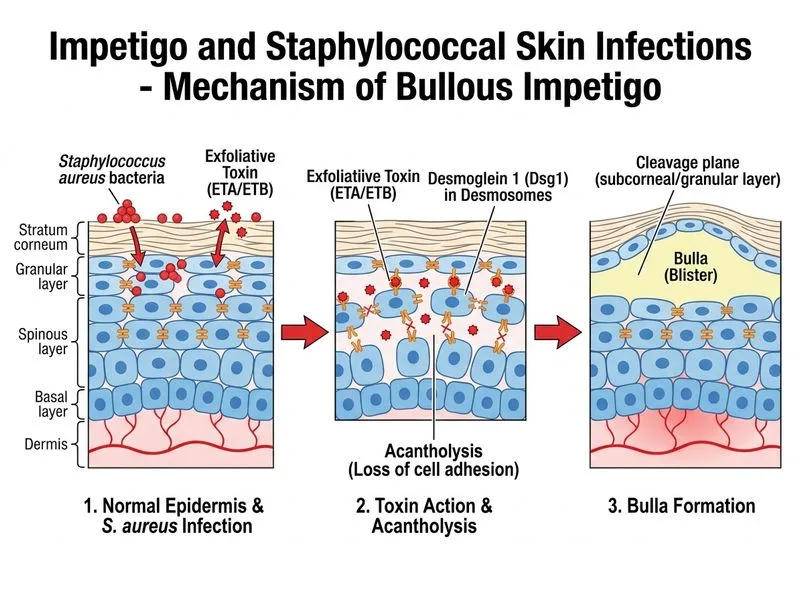
Sign up free to access AI-powered MCQ practice with detailed explanations and adaptive learning.
Daily MCQs, study tips, and topper strategies on Telegram.
Join on Telegram →