
NEETPGAI
FeaturesNEET PGFMGEINI-CETBlogPricing
Log inStart Free
NEETPGAI

AI-powered NEET PG preparation platform. Master all 19 subjects with adaptive MCQs, AI tutoring, and spaced repetition.

Product

  • Features
  • Subjects
  • Previous Year Questions
  • NEET PG Preparation
  • FMGE Preparation
  • INI-CET Preparation
  • Compare
  • Pricing
  • Blog

Features

  • Adaptive MCQ Practice
  • AI Tutor
  • Mock Tests
  • Spaced Repetition

Resources

  • Blog
  • Study Guides
  • NEET PG Updates
  • Contact & support

Legal

  • Privacy Policy
  • Terms of Service

Stay updated

© 2026 NEETPGAI. All rights reserved.
    Subjects/Pediatrics/Neonatal Jaundice
    Neonatal Jaundice
    medium
    smile Pediatrics

    A 3-day-old term Indian neonate born via normal vaginal delivery presents with jaundice. Serum bilirubin is 16 mg/dL. The infant is breastfeeding well, passing stools normally, and has no signs of hemolysis. Weight loss is 7% from birth weight. What is the most appropriate next step in management?

    A. Optimize breastfeeding, ensure 8–12 feeds per day, and recheck bilirubin in 24 hours
    B. Start phototherapy immediately and recheck bilirubin in 24 hours
    C. Perform exchange transfusion and start phototherapy
    D. Start phototherapy and supplement with formula feeds

    Explanation

    Clinical Context

    This is a 3-day-old term neonate with unconjugated hyperbilirubinemia in the physiological jaundice window. The bilirubin level of 16 mg/dL at 72 hours is below the phototherapy threshold for a term infant (phototherapy threshold at 72 hours ≈ 17.5–18 mg/dL for term infants ≥35 weeks).

    Key Point:

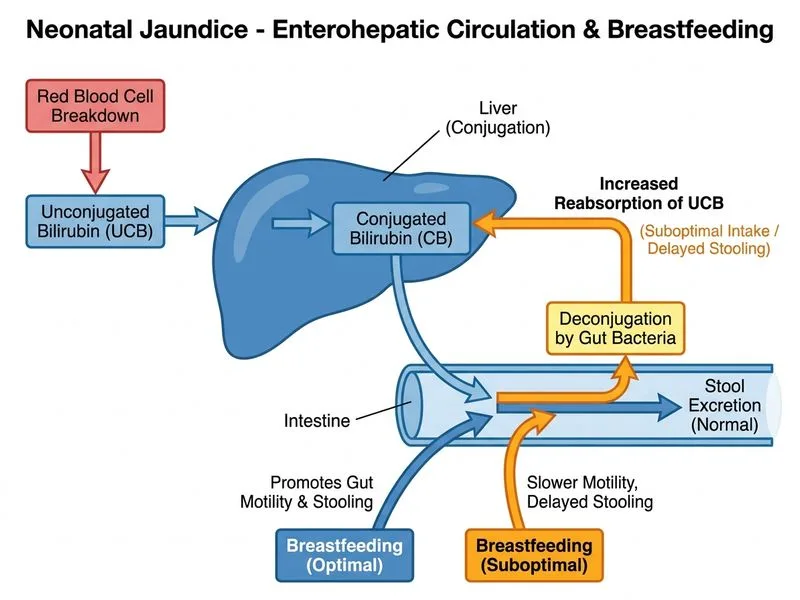
    Breastfeeding jaundice (inadequate milk intake due to poor latch or infrequent feeds) is the most common preventable cause of severe neonatal jaundice. The 7% weight loss and "breastfeeding well" statement suggests suboptimal milk transfer.

    Management Algorithm

    Loading diagram...

    High-Yield:

    Phototherapy thresholds for term infants (≥35 weeks):

    Table
    Age (hours)TSB threshold (mg/dL)
    2418
    4821
    7217.5–18
    9617

    At 72 hours, TSB 16 mg/dL is below threshold; phototherapy is not yet indicated.

    Clinical Pearl:

    Breastfeeding jaundice vs. breast milk jaundice:

    • Breastfeeding jaundice: inadequate milk intake → poor weight gain, early onset (day 2–3) → optimize feeding
    • Breast milk jaundice: adequate intake but breast milk factors → later onset (day 5+) → may need supplementation or phototherapy

    This infant has signs of breastfeeding jaundice (7% weight loss, day 3 presentation). The priority is lactation support and frequent feeds, not phototherapy.

    Tip:

    Always check the phototherapy nomogram (AAP 2009) before starting treatment. A bilirubin level "looks high" but must be plotted against age-specific thresholds. Premature phototherapy wastes resources and increases parental anxiety.

    AAP Neonatal Jaundice Guidelines 2009

    Loading illustration…Neonatal Jaundice diagram
    Practice similar questions

    Sign up free to access AI-powered MCQ practice with detailed explanations and adaptive learning.

    Start Practicing Free More Pediatrics Questions

    Join our NEET PG community

    Daily MCQs, study tips, and topper strategies on Telegram.

    Join on Telegram →