Which organism is the most common causative agent of orbital cellulitis in immunocompetent children?
A. Anaerobic bacteria
B. Staphylococcus aureus
C. Streptococcus pneumoniae
D. Haemophilus influenzae type b
Explanation
Microbiology of Orbital Cellulitis
Key Point
Staphylococcus aureus is the most common causative organism of orbital cellulitis in immunocompetent children, particularly in the post-Hib and post-pneumococcal vaccine era, and is the organism most consistently cited in current ophthalmology and infectious disease textbooks (Kanski's Clinical Ophthalmology; Mandell, Douglas, and Bennett's Principles of Infectious Diseases).
Common Organisms by Patient Population
Table
Organism
Frequency
Clinical Context
Staphylococcus aureus
Most common
Skin/soft tissue source, trauma, sinusitis; MRSA increasingly important
Streptococcus pneumoniae
Common (2nd)
Sinusitis-related; less frequent post-PCV vaccination
Haemophilus influenzae type b
Rare (< 5%)
Now uncommon due to Hib vaccination
Anaerobic bacteria
Rare
Dental infections, trauma with anaerobic seeding
Gram-negative rods
Uncommon
Immunocompromised hosts
Historical Context
High-YieldNEET PG
Prior to widespread Haemophilus influenzae type b (Hib) vaccination, H. influenzae was the leading cause of orbital cellulitis in children. Following routine Hib and pneumococcal conjugate vaccination, S. aureus (including community-acquired MRSA) has emerged as the predominant pathogen. Multiple culture-based studies from tertiary paediatric centres confirm S. aureus as the single most frequently isolated organism in orbital cellulitis.
Clinical Pearl
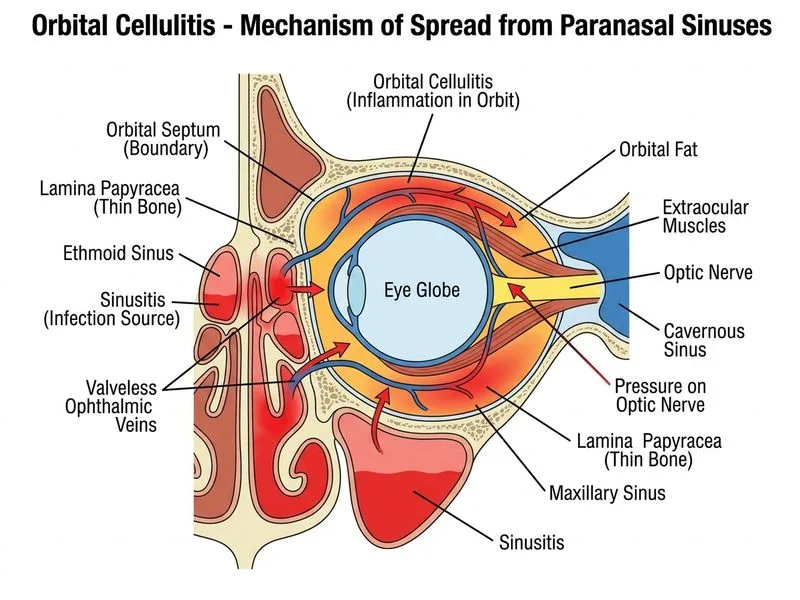
Orbital cellulitis in children most commonly arises from contiguous spread from acute bacterial sinusitis (especially ethmoid sinusitis) or from periorbital skin/soft-tissue infections. S. aureus is the dominant pathogen in both settings. Empirical antibiotic coverage must include anti-staphylococcal activity; in regions with high MRSA prevalence, vancomycin or clindamycin should be considered.
Why not S. pneumoniae? While S. pneumoniae is a recognised cause, particularly in sinusitis-related orbital cellulitis, it is not the single most common organism overall. Post-PCV13 vaccination has further reduced its relative frequency. Current evidence and standard references (Kanski, Mandell) list S. aureus as the leading causative agent.
Mnemonic
SA first — S. aureus leads, then S. pneumoniae, then H. influenzae (now rare post-vaccination) in immunocompetent children.
Loading illustration…
Practice similar questions
Sign up free to access AI-powered MCQ practice with detailed explanations and adaptive learning.