
This patient demonstrates inadequate response to monotherapy with a beta-blocker despite adequate dosing and good tolerability. His heart rate of 58 bpm indicates the drug is achieving its pharmacodynamic effect (beta-1 receptor blockade), yet blood pressure control remains suboptimal.
Adding a second agent with a different mechanism (e.g., amlodipine for vasodilation via L-type calcium channel blockade, or lisinopril for ACE inhibition and vasodilation) provides synergistic blood pressure reduction. This follows guideline-recommended step-care for resistant hypertension and is more effective than further beta-blocker dose escalation.
Dose escalation of atenolol beyond 100 mg provides diminishing returns in blood pressure reduction while increasing bradycardia risk. The patient's heart rate of 58 bpm already suggests near-maximal β₁ blockade.
Loading illustration…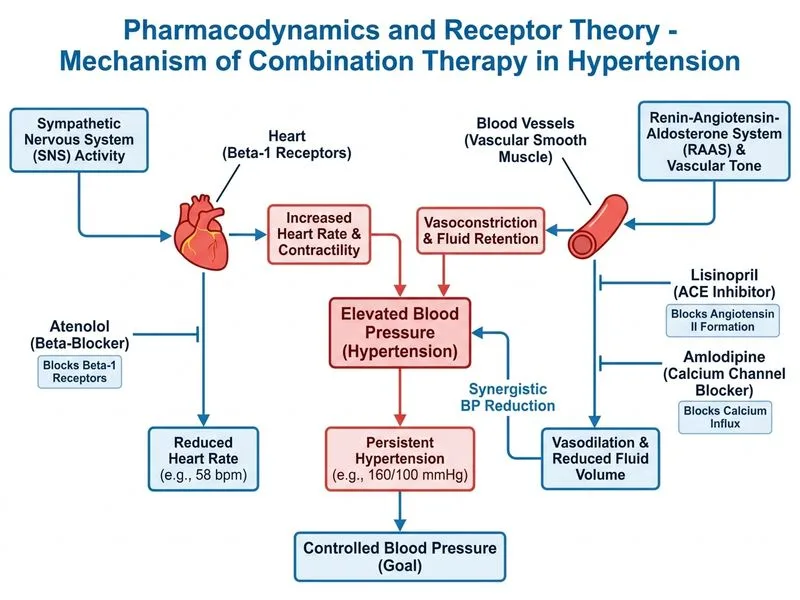
Sign up free to access AI-powered MCQ practice with detailed explanations and adaptive learning.
Daily MCQs, study tips, and topper strategies on Telegram.
Join on Telegram →