Which genetic alteration is most frequently associated with clear cell renal cell carcinoma (ccRCC)?
A. Loss of chromosome 22q with NF2 gene mutation
B. Gain of chromosome 7 with MET gene amplification
C. Loss of chromosome 3p with VHL gene inactivation
D. Translocation t(X;1) with PRCC-TFE3 fusion
Explanation
VHL Gene Inactivation in Clear Cell RCC
Key Point
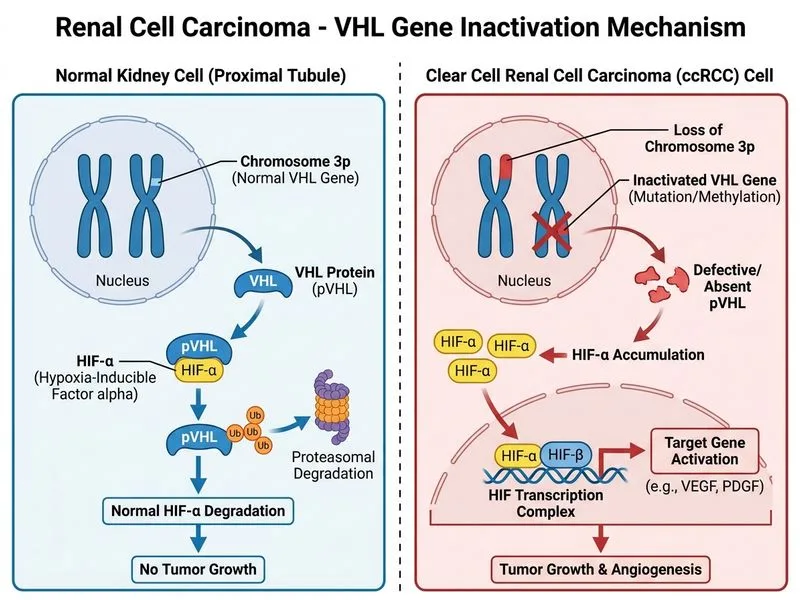
Loss of chromosome 3p and inactivation of the VHL (von Hippel-Lindau) tumor suppressor gene occurs in approximately 80–90% of sporadic clear cell renal cell carcinomas, making it the most frequent genetic alteration in this histotype.
Mechanism of VHL Loss
1.
VHL protein normally targets hypoxia-inducible factor (HIF) for proteasomal degradation
2.
Loss of VHL → HIF accumulation → upregulation of VEGF, PDGF, and other angiogenic factors
3.
Results in constitutive angiogenesis and tumor growth
Other RCC Subtypes and Their Genetic Associations
Table
RCC Subtype
Primary Genetic Alteration
Gene/Chromosome
Frequency
Clear cell
Loss 3p / VHL inactivation
VHL
80–90%
Papillary (Type 1)
Gain 7, 17, 20
MET amplification
~40%
Papillary (Type 2)
Loss 3p
SETD2, BAP1, PBRM1
Variable
Chromophobe
Loss 1, 2, 6, 10, 13, 17, 21
Multiple
Polysomy
Oncocytoma
Gain 11q
FLCN (benign)
~80%
High-YieldNEET PG
VHL loss is so characteristic of ccRCC that it is considered a defining feature and is used in molecular classification of renal tumors.
Clinical Pearl
Patients with hereditary VHL syndrome (von Hippel-Lindau disease) have germline VHL mutations and develop multiple ccRCCs with near 100% penetrance by age 60, often bilateral and multifocal.
Why VHL is the Answer
VHL inactivation is the initiating event in the majority of ccRCC cases and is present in both sporadic and hereditary forms. This makes it the single most important and frequently tested genetic alteration in renal cell carcinoma pathology.
Loading illustration…
Practice similar questions
Sign up free to access AI-powered MCQ practice with detailed explanations and adaptive learning.