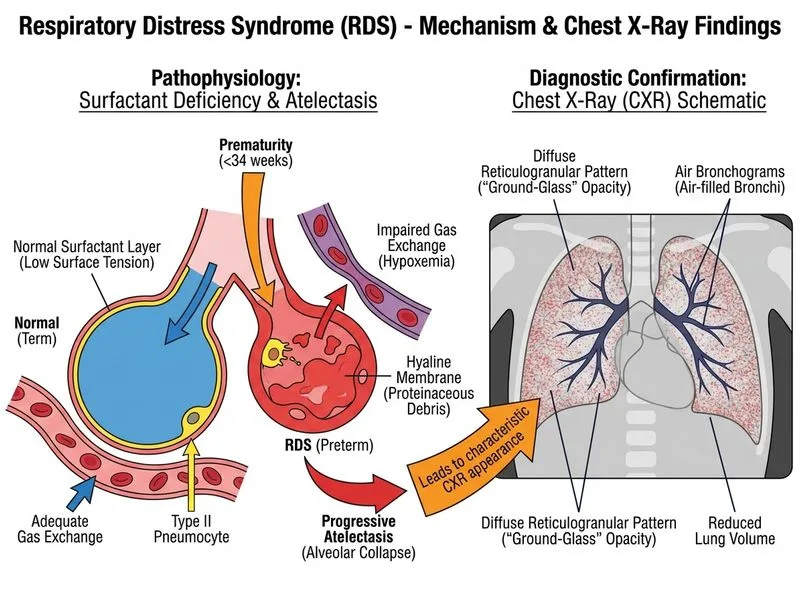
A 2-hour-old male neonate born at 32 weeks gestation to a primigravida mother (no antenatal steroids given) presents with grunting, nasal flaring, and intercostal retractions. Oxygen saturation is 88% on room air. Clinical suspicion for Respiratory Distress Syndrome (RDS) is high. Which investigation is most appropriate to confirm the diagnosis?
A. Chest X-ray (CXR)
B. Lecithin-sphingomyelin (L/S) ratio
C. Lung ultrasound
D. Blood gas analysis
Explanation
Diagnostic Approach to Neonatal RDS
Key Point
Chest X-ray is the gold standard imaging investigation to confirm Respiratory Distress Syndrome in a symptomatic neonate. It provides definitive radiological evidence and helps exclude other causes of respiratory distress.
Classic CXR Findings in RDS
Table
Finding
Description
Timing
Ground-glass appearance
Diffuse, fine granular opacity
Early (1–6 hours)
Air bronchograms
Bronchi silhouetted against opacified lung
Pathognomonic for RDS
Reticulogranular pattern
"Salt-and-pepper" appearance
Progressive
Atelectasis
Reduced lung volumes, elevated diaphragm
Severe cases
Hyperinflation
Flattened diaphragm (late, if mechanical ventilation)
After intubation
High-YieldNEET PG
The combination of ground-glass opacity + air bronchograms on CXR in a preterm neonate with clinical signs of respiratory distress is diagnostic of RDS. No other investigation is needed to confirm the diagnosis once clinical suspicion is high.
Clinical Pearl
CXR should be obtained within the first 6 hours of life in any preterm infant with respiratory distress. Serial CXRs help track disease progression and response to surfactant therapy.
Why CXR is Superior to Other Investigations
Loading diagram...
Key Point
L/S ratio is an antenatal test (performed on amniotic fluid before delivery) to assess fetal lung maturity risk. It cannot be used to confirm RDS after birth.
Blood gas analysis reflects the severity of RDS (hypoxemia, hypercapnia, acidosis) but does not confirm the diagnosis — it is a functional assessment, not a diagnostic test.
Loading illustration…
Practice similar questions
Sign up free to access AI-powered MCQ practice with detailed explanations and adaptive learning.