
## Clinical Presentation Analysis This patient presents with the classic triad of septic shock: **Key Point:** Septic shock is characterized by systemic infection with vasodilation, resulting in warm shock (warm extremities, bounding pulses, low SVR). ### Diagnostic Features Present | Feature | Finding | Significance | |---------|---------|---------------| | Source of infection | Fever + dysuria + flank pain | Urosepsis (common in diabetics) | | Hemodynamics | Warm skin, hypotension, tachycardia | Distributive shock pattern | | Lactate elevation | 4.2 mmol/L | Tissue hypoperfusion despite vasodilation | | Temperature | 39.2°C (fever) | Septic response | | Risk factor | Diabetes mellitus | Impaired immune response, increased infection risk | ### Pathophysiology of Septic Shock 1. Bacterial endotoxins (LPS) trigger TLR4 activation 2. Massive release of pro-inflammatory cytokines (TNF-α, IL-1, IL-6) 3. Widespread vasodilation → decreased SVR and maldistribution of blood flow 4. Myocardial depression despite high cardiac output 5. Microvascular thrombosis and tissue hypoperfusion **High-Yield:** Septic shock is a **distributive shock** with: - **Warm extremities** (vasodilation) - **Low SVR** (decreased systemic vascular resistance) - **High cardiac output** (initially) - **Elevated lactate** (tissue hypoperfusion despite adequate flow) **Clinical Pearl:** The presence of fever + hypotension + tachycardia + warm skin in a patient with a clear source of infection (UTI/urosepsis) is pathognomonic for septic shock. **Mnemonic: SIRS criteria for sepsis** — Temperature (>38°C or <36°C), Infection source, Respiratory rate (>20), Systemic response ### Why This Is Not Other Shock Types See distractor analysis below for detailed differentiation. [cite:Robbins 10e Ch 4] 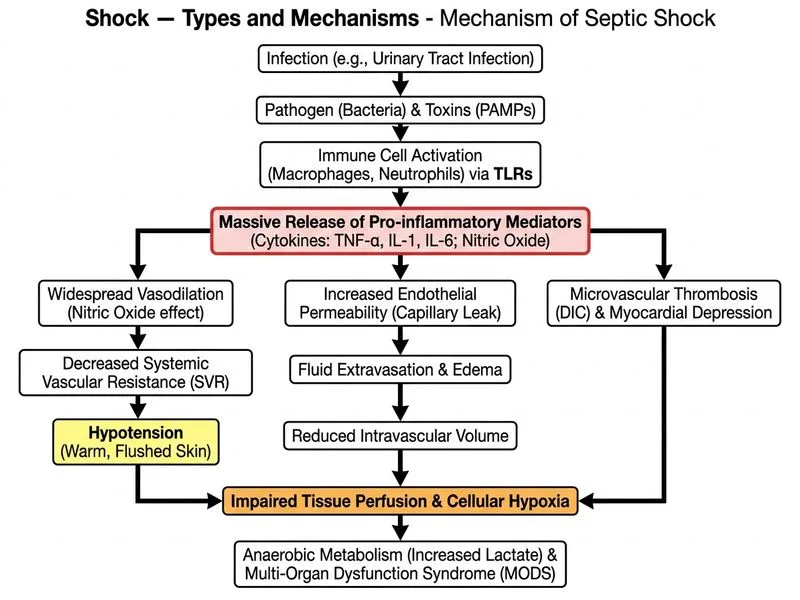
Sign up free to access AI-powered MCQ practice with detailed explanations and adaptive learning.