
| Feature | GPA | MPA |
|---|---|---|
| Granulomatous inflammation | Present (necrotizing granulomas) | Absent |
| Necrotizing vasculitis | Present (small & medium vessels) | Present (small vessels only) |
| Organ involvement | Upper respiratory tract, lungs, kidneys | Kidneys, lungs (rarely upper RT) |
| ANCA type | c-ANCA/PR3 (70–90%) | p-ANCA/MPO (70–80%) |
| Glomerulonephritis | Necrotizing with crescents | Necrotizing with crescents |
MPA presents only necrotizing vasculitis of small vessels without granulomas.
The presence of necrotizing granulomas in lung or upper respiratory tract biopsy in a patient with ANCA-positive vasculitis and glomerulonephritis is pathognomonic for GPA. MPA, by definition, lacks granulomatous inflammation.
Robbins 10e Ch 11
Loading illustration…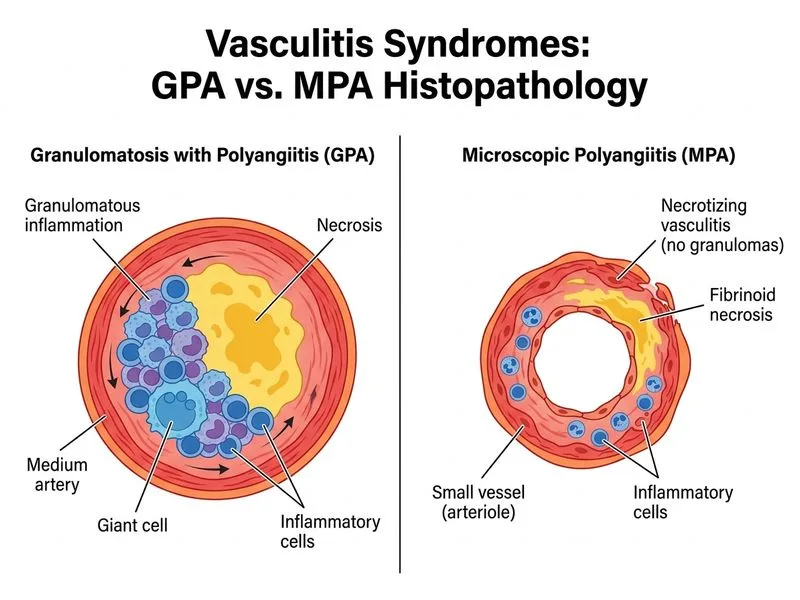
Sign up free to access AI-powered MCQ practice with detailed explanations and adaptive learning.
Daily MCQs, study tips, and topper strategies on Telegram.
Join on Telegram →