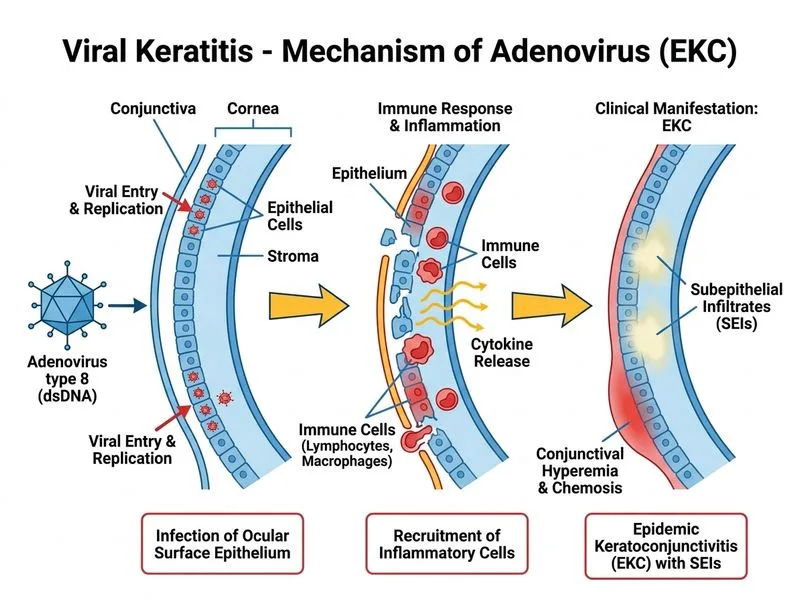
## Epidemic Keratoconjunctivitis (EKC) — Viral Aetiology **Key Point:** Adenovirus type 8 is the most common cause of EKC worldwide, followed by types 19 and 37. These are highly contagious and spread via contaminated hands, fomites, and ophthalmic instruments. ### Adenovirus Type 8 Characteristics - **Incubation period:** 5–12 days - **Presentation:** Acute follicular conjunctivitis with severe photophobia and foreign body sensation - **Keratitis pattern:** Subepithelial infiltrates (hallmark finding), appearing 1–2 weeks after onset - **Duration:** Self-limiting; typically resolves in 3–4 weeks, but subepithelial infiltrates may persist longer - **Transmission:** Highly contagious; spreads rapidly in healthcare settings and schools ### Comparison with Other Viral Causes | Virus | Keratitis Type | Subepithelial Infiltrates | Recurrence | Chronicity | | --- | --- | --- | --- | --- | | Adenovirus 8 | Epidemic (EKC) | Yes (hallmark) | No | Self-limited | | HSV-1 | Dendritic/amoeboid ulcers | No | Yes (frequent) | Chronic/recurrent | | VZV | Disciform/endotheliitis | Rare | Rare | Usually self-limited | | CMV | Endotheliitis/anterior uveitis | No | Rare | Immunocompromised only | **High-Yield:** EKC caused by adenovirus 8 is a notifiable disease in many countries due to its epidemic potential. Strict hand hygiene and instrument sterilization are critical in ophthalmology clinics. **Clinical Pearl:** Subepithelial infiltrates in adenoviral keratitis may cause significant visual symptoms (glare, halos) and can take weeks to months to fully resolve, even after the acute infection has cleared. 
Sign up free to access AI-powered MCQ practice with detailed explanations and adaptive learning.