
## Classification of Normocytic, Normochromic Anemias **Key Point:** Normocytic, normochromic anemias with elevated reticulocyte count (>2%) indicate an appropriate bone marrow response to peripheral red cell loss or destruction. ### Hemolytic Anemia Hemolytic anemias present with: - Normal MCV (76–100 fL) and normal MCHC (32–36 g/dL) - Elevated reticulocyte count (>2%, often 5–20%) - Increased indirect bilirubin, LDH, and urobilinogen - Decreased haptoglobin - Positive direct antiglobulin test (DAT/Coombs) in immune-mediated hemolysis **High-Yield:** The hallmark of hemolytic anemia is an **elevated reticulocyte count** reflecting the bone marrow's compensatory response to RBC destruction. ### Differential: Other Normocytic Anemias | Anemia Type | MCV | MCHC | Reticulocyte Count | Key Feature | |---|---|---|---|---| | Hemolytic | Normal | Normal | **Elevated (>2%)** | RBC destruction | | Acute blood loss | Normal | Normal | Elevated (>2%) | Hypovolemia, normal indices initially | | Bone marrow failure | Normal | Normal | **Low (<2%)** | Inadequate RBC production | | Anemia of chronic disease | Low–normal | Low–normal | Low–normal | Inflammation, iron sequestration | **Clinical Pearl:** In hemolytic anemia, the reticulocyte count is the most important discriminator—it reflects the bone marrow's ability to mount an appropriate erythropoietic response to RBC loss. **Mnemonic: HALO** — Hemolytic anemia = Appropriate response, Leukocytes/Platelets often normal, Osmotic fragility test positive (in hereditary spherocytosis) ### Why Reticulocyte Count Matters Reticulocytes are immature RBCs released prematurely from the bone marrow in response to erythropoietin stimulation. In hemolysis, EPO rises → marrow releases reticulocytes early → elevated count reflects **adequate marrow reserve and appropriate response**. 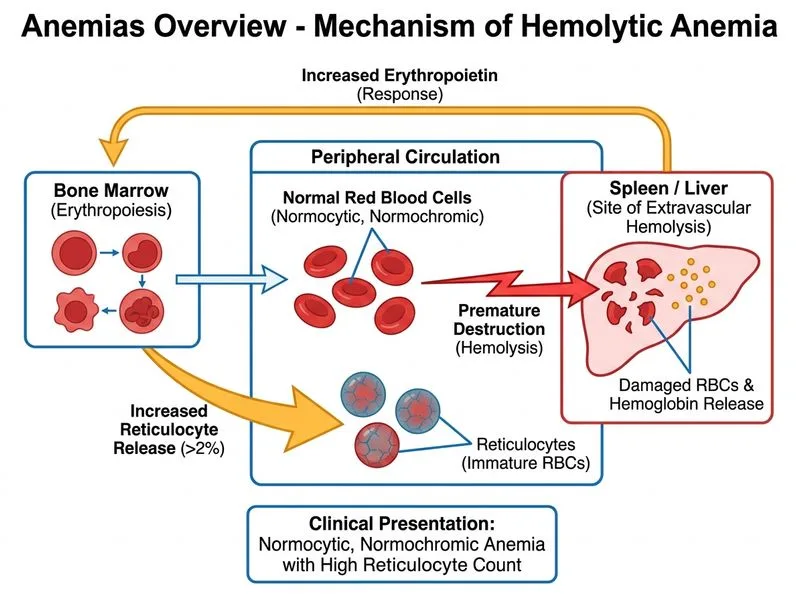
Sign up free to access AI-powered MCQ practice with detailed explanations and adaptive learning.