
## Chromosomal Translocations in CML **Key Point:** The Philadelphia chromosome, t(9;22)(q34;q11), results in the BCR-ABL1 fusion gene, which is the hallmark of chronic myeloid leukemia. ### Mechanism of ABL1 Activation The translocation juxtaposes the ABL1 gene (from chromosome 9) with the BCR gene (from chromosome 22), creating a constitutively active tyrosine kinase. This fusion protein: 1. Lacks the normal regulatory domains of ABL1 2. Remains permanently phosphorylated 3. Drives uncontrolled myeloid proliferation 4. Is the therapeutic target for tyrosine kinase inhibitors (imatinib, dasatinib, nilotinib) ### Other Oncogenes and Their Translocations | Oncogene | Translocation | Malignancy | Fusion Gene | |---|---|---|---| | MYC | t(8;14) | Burkitt lymphoma | IGH-MYC | | RAS | Point mutations | Multiple solid tumors | — | | HER2 | Amplification (not translocation) | Breast cancer | — | | ABL1 | t(9;22) | CML | BCR-ABL1 | **High-Yield:** The BCR-ABL1 fusion is virtually pathognomonic for CML and is used for diagnosis. Its presence defines CML in chronic phase and is a prerequisite for diagnosis. **Clinical Pearl:** Imatinib mesylate (Gleevec) specifically targets the ABL1 tyrosine kinase domain, achieving complete cytogenetic response in >90% of chronic-phase CML patients when given as first-line therapy. [cite:Robbins 10e Ch 7] 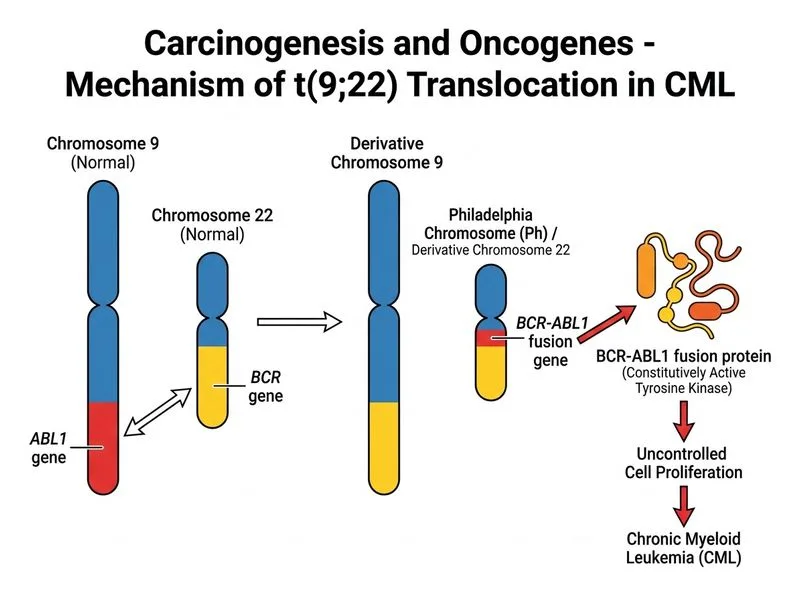
Sign up free to access AI-powered MCQ practice with detailed explanations and adaptive learning.