
## Finerenone Mechanism in CKD **Key Point:** Finerenone is a non-steroidal mineralocorticoid receptor (MR) antagonist that reduces CKD progression primarily through **MR-mediated anti-inflammatory and anti-fibrotic effects**, independent of blood pressure reduction. ### Mechanism: 1. **MR activation in CKD:** Aldosterone and cortisol activate MR in kidney tubules, immune cells, and fibroblasts, promoting inflammation, oxidative stress, and fibrosis. 2. **Finerenone's action:** Selectively blocks MR in these tissues, reducing: - Pro-inflammatory cytokine production (IL-6, TNF-α, MCP-1) - Fibroblast activation and extracellular matrix deposition - Oxidative stress and endothelial dysfunction 3. **BP-independent benefits:** The renoprotective effect occurs **even in patients with well-controlled blood pressure**, distinguishing it from traditional aldosterone antagonists (spironolactone, eplerenone). 4. **FIDELITY trial evidence:** Finerenone reduced CKD progression (composite of ≥40% eGFR decline, ESRD, or renal death) and cardiovascular events in diabetic CKD, with benefits additive to ACEi/ARB. **Clinical Pearl:** Finerenone is a **non-steroidal MR antagonist**, meaning it has selectivity for MR over glucocorticoid receptors, reducing gynecomastia and hyperkalemia risk compared to spironolactone. **High-Yield:** Finerenone is indicated in CKD Stage 3–4 with albuminuria (diabetic or non-diabetic) and is effective even with concurrent RAAS inhibition. 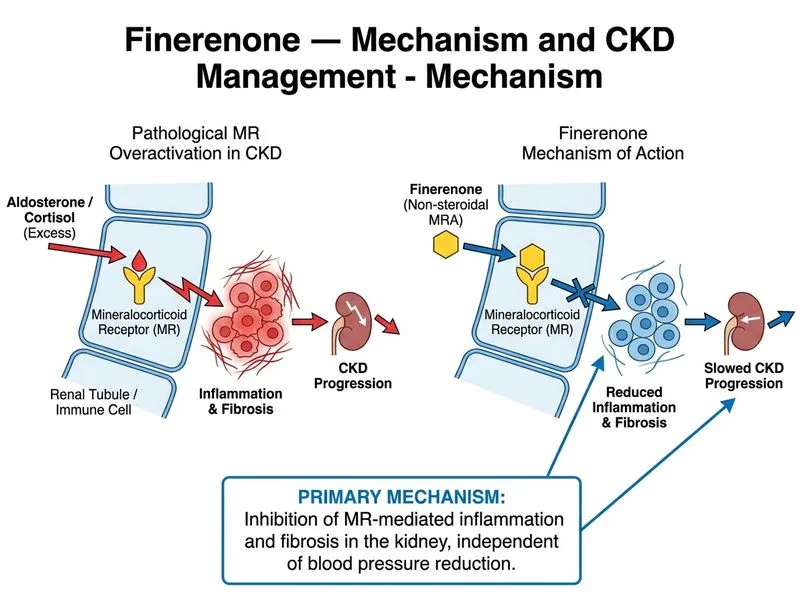
Sign up free to access AI-powered MCQ practice with detailed explanations and adaptive learning.