
## Posterior Gastric Ulcer and Vascular Erosion **Key Point:** Posterior wall gastric ulcers erode into the **left gastric artery** (also called the left gastric or coronary artery of the stomach), which runs along the lesser curvature on the posterior surface of the stomach. **Anatomical Basis:** - The **left gastric artery** is the largest branch of the celiac trunk and supplies the lesser curvature and cardia of the stomach - It runs in the **gastropancreatic fold** (anterior layer of the lesser omentum) and lies posterior to the stomach - Posterior wall ulcers erode posteriorly and directly into this vessel **Clinical Comparison:** | Ulcer Location | Artery at Risk | Clinical Presentation | |---|---|---| | Anterior wall | Right gastric artery | Perforation into peritoneal cavity | | Posterior wall | Left gastric artery | Hemorrhage (erosion into vessel) | | Greater curvature | Gastroepiploic arteries | Hemorrhage | **Clinical Pearl:** Posterior gastric ulcers cause **hemorrhage** (erosion into vessel), while anterior gastric ulcers cause **perforation** (erosion through anterior wall). This distinction is critical in surgical management. **High-Yield:** The left gastric artery is the most common source of bleeding in gastric ulcer disease, accounting for approximately 60% of gastric ulcer hemorrhages. 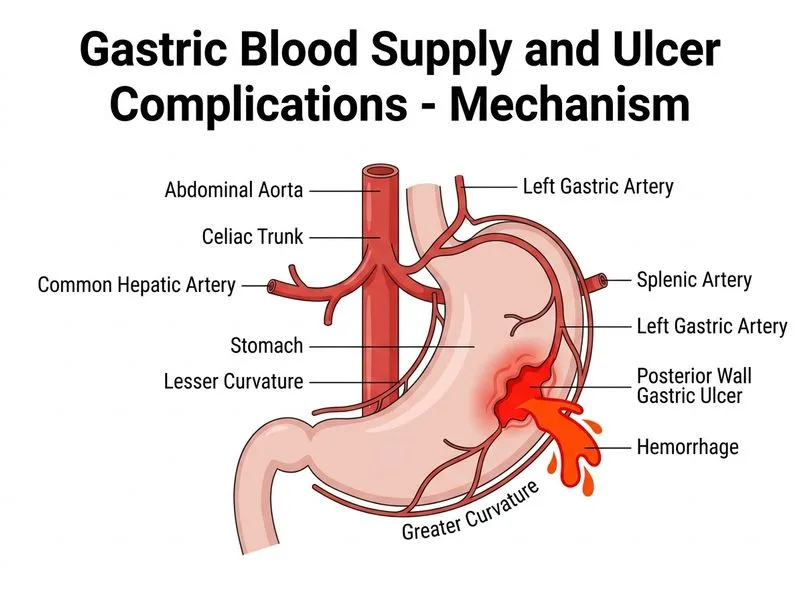
Sign up free to access AI-powered MCQ practice with detailed explanations and adaptive learning.