
## Clinical Scenario Analysis This patient presents with acute ischemic stroke symptoms within the 4.5-hour thrombolytic window (onset at 2 hours, now presenting immediately). Non-contrast CT excludes hemorrhage, which is the critical safety prerequisite for thrombolysis. ## Thrombolytic Eligibility **Key Point:** Intravenous alteplase (rt-PA) is indicated for acute ischemic stroke within 4.5 hours of symptom onset in eligible patients, with the strongest evidence for benefit within 3 hours. **High-Yield:** The patient meets inclusion criteria: - Time window: 2 hours (well within 4.5 hours) - CT head negative for hemorrhage - No contraindications mentioned (no recent surgery, no anticoagulation, no severe hyperglycemia) - NIHSS score implied to be significant (facial droop + hemiparesis) ## Dosing and Administration Alteplase dosing for acute stroke: - **Total dose:** 0.9 mg/kg (maximum 90 mg) - **Bolus:** 10% of total dose over 1 minute - **Infusion:** Remaining 90% over 60 minutes **Clinical Pearl:** Every minute of delay in reperfusion results in loss of ~1.9 million neurons. "Time is brain" — thrombolysis should not be delayed for additional imaging once CT excludes hemorrhage and clinical presentation is consistent with stroke. ## Why This Approach ```mermaid flowchart TD A[Acute stroke symptoms < 4.5 hrs]:::outcome --> B{CT head negative for ICH?}:::decision B -->|Yes| C{Eligible for thrombolysis?}:::decision C -->|Yes| D[IV alteplase 0.9 mg/kg]:::action C -->|No| E[Aspirin + supportive care]:::action B -->|No| F[Hemorrhagic stroke protocol]:::urgent D --> G[Monitor for reperfusion/complications]:::action ``` **Mnemonic: THROMBOLYSIS WINDOW** — Time < 4.5 hrs, Hemorrhage excluded, Reasonable deficits, Onset documented, Monitoring available, Blood glucose acceptable, Onset witnessed, Lesion on imaging (optional), Young/old no absolute bar, Signs consistent, Imaging CT done, Seizure/sepsis ruled out. 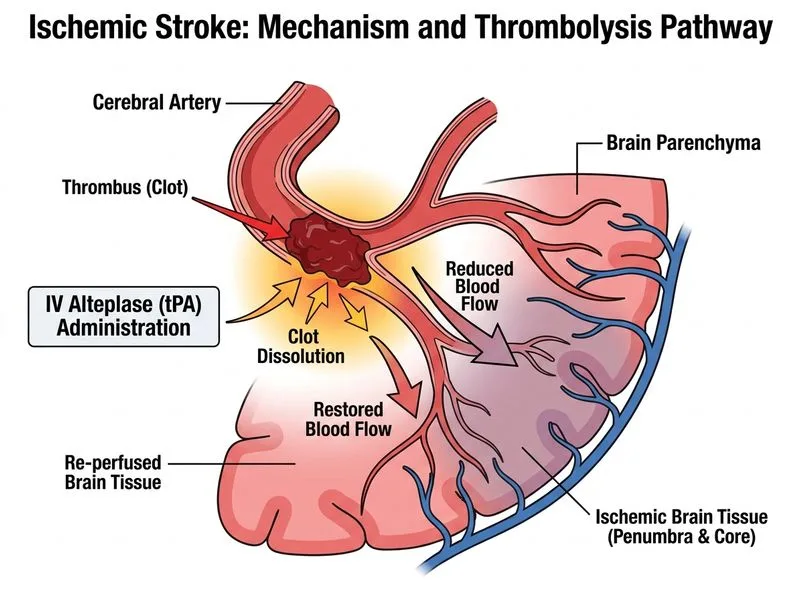
Sign up free to access AI-powered MCQ practice with detailed explanations and adaptive learning.