
## Mechanism of IV Lidocaine in Neuropathic Pain Intravenous lidocaine is increasingly used for refractory neuropathic pain, particularly CIPN. While lidocaine is classically known as a local anesthetic that blocks voltage-gated sodium channels (Nav) at peripheral sites, its systemic analgesic effect in neuropathic pain operates via a distinct mechanism: **Key Point:** IV lidocaine reduces ectopic spontaneous discharge from damaged peripheral nerves and sensitized dorsal root ganglia (DRG) by blocking Nav channels. This suppresses the aberrant firing that drives neuropathic pain and prevents central sensitization and wind-up in the spinal cord. **Clinical Pearl:** The analgesic effect of IV lidocaine occurs at doses below those required for systemic local anesthetic toxicity, and the benefit often outlasts the infusion duration, suggesting modulation of central pain processing. **High-Yield:** IV lidocaine is particularly effective in CIPN, post-herpetic neuralgia, and complex regional pain syndrome. A typical protocol is 5 mg/kg IV over 30–60 minutes, repeated weekly or monthly. ### Why Option 0 is Correct: - Lidocaine blocks Nav channels in both peripheral nerves and DRG neurons, reducing ectopic discharge - This dampens central sensitization and wind-up, providing sustained analgesia - This is the primary mechanism for systemic lidocaine analgesia in neuropathic pain ### Comparison with Other Mechanisms: | Mechanism | Agent | Role in CIPN | |-----------|-------|-------------| | Na+ channel blockade | Lidocaine (IV) | **Primary** | | GABA-A potentiation | Gabapentin, pregabalin | First-line (failed here) | | NMDA antagonism | Ketamine, memantine | Adjunctive | | Monoamine reuptake inhibition | Duloxetine, amitriptyline | First-line (failed here) | 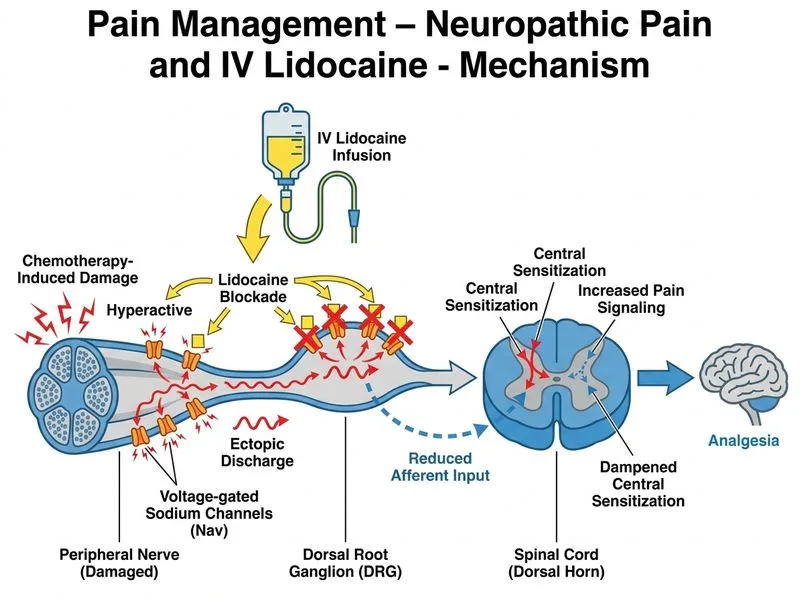
Sign up free to access AI-powered MCQ practice with detailed explanations and adaptive learning.