
NEETPGAI
FeaturesNEET PGFMGEINI-CETBlogPricing
Log inStart Free
NEETPGAI

AI-powered NEET PG preparation platform. Master all 19 subjects with adaptive MCQs, AI tutoring, and spaced repetition.

Product

  • Features
  • Subjects
  • Previous Year Questions
  • NEET PG Preparation
  • FMGE Preparation
  • INI-CET Preparation
  • Compare
  • Pricing
  • Blog

Features

  • Adaptive MCQ Practice
  • AI Tutor
  • Mock Tests
  • Spaced Repetition

Resources

  • Blog
  • Study Guides
  • NEET PG Updates
  • Contact & support

Legal

  • Privacy Policy
  • Terms of Service

Stay updated

© 2026 NEETPGAI. All rights reserved.
    Subjects/Pharmacology/Pharmacodynamics and Receptor Theory
    Pharmacodynamics and Receptor Theory
    medium
    pill Pharmacology

    A 38-year-old woman with acute asthma exacerbation is treated with salbutamol nebulization. After 20 minutes, her peak expiratory flow improves from 180 L/min to 280 L/min, but she remains dyspneic with an oxygen saturation of 88% on room air. Respiratory rate is 26/min. What is the most appropriate next step in management?

    A. Switch to a long-acting beta-2 agonist (salmeterol)
    B. Initiate systemic corticosteroids (oral or intravenous)
    C. Repeat salbutamol nebulization and add supplemental oxygen
    D. Administer intravenous magnesium sulfate

    Explanation

    Clinical Context

    This patient has had a partial response to initial salbutamol nebulization — peak flow improved from 180 to 280 L/min, but she remains dyspneic, tachypneic (RR 26/min), and hypoxic (SpO₂ 88%). This is an acute, life-threatening situation requiring immediate concurrent interventions.

    Why Option A is the Most Appropriate Next Step

    Key Point
    In acute asthma with partial SABA response and ongoing hypoxemia, the immediate priorities are:
    1. 1.
      Correct hypoxemia — SpO₂ of 88% is dangerous and must be addressed within minutes. Supplemental oxygen (target SpO₂ 93–95% per GINA) is a first-line emergency measure.
    2. 2.
      Repeat bronchodilator — Salbutamol nebulization should be repeated (every 20 minutes in the first hour, or continuously) as the patient has not achieved adequate bronchodilation. GINA and BTS guidelines recommend repeated/continuous SABA as the cornerstone of acute exacerbation management.

    These two interventions (repeat SABA + supplemental O₂) are the most immediate, direct, and life-saving steps and should occur before or simultaneously with systemic corticosteroids.

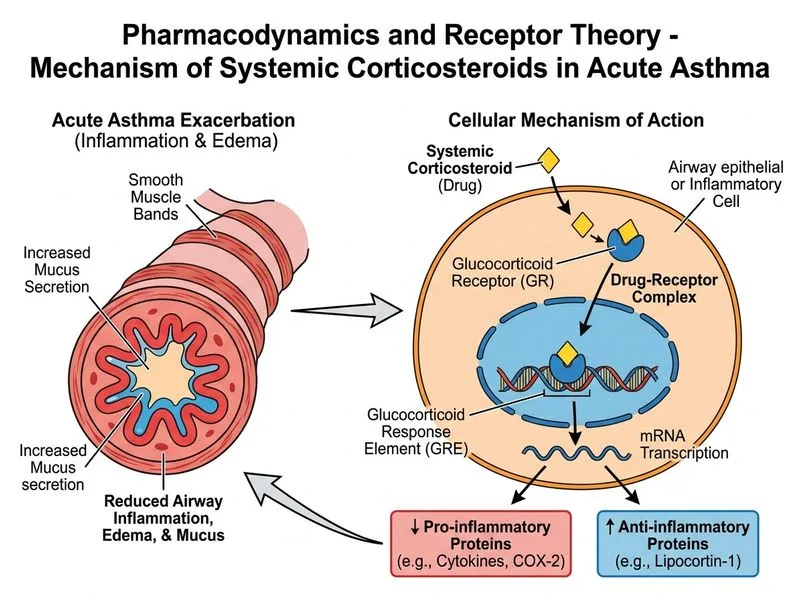
    Role of Systemic Corticosteroids

    Systemic corticosteroids (Option D) are absolutely indicated in this scenario and should be initiated early — but their onset of action is 4–6 hours (genomic mechanism). They do not address the immediate hypoxemia or bronchospasm in the next few minutes. In standard acute asthma protocols (GINA 2023, BTS/SIGN), repeat SABA + oxygen is the first action, with corticosteroids added as a concurrent but slightly downstream step.

    High-YieldNEET PG
    The "next step" framing in this vignette — with SpO₂ 88% and ongoing dyspnea — demands the most immediate life-saving intervention, which is correcting hypoxemia and repeating bronchodilation, not waiting for corticosteroids to take effect.

    Why Other Options Are Wrong

    • Option B (Salmeterol): Long-acting beta-2 agonists are contraindicated as monotherapy in acute exacerbations. Onset is too slow (12–24 hours) and they do not provide rapid bronchodilation. (KD Tripathi, Essentials of Medical Pharmacology, 8th ed.)
    • Option C (IV Magnesium Sulfate): Reserved for severe/life-threatening asthma not responding to initial bronchodilator therapy (typically after 3 doses of SABA + ipratropium + steroids). Not the next step here.
    • Option D (Systemic Corticosteroids): Important and should be given early, but does not address the immediate hypoxemia or acute bronchospasm. Repeat SABA + O₂ takes precedence as the most immediate intervention.

    Clinical Pearl

    GINA 2023 Acute Asthma Protocol: Step 1 — Supplemental O₂ + repeated SABA (salbutamol) every 20 minutes. Step 2 — Add systemic corticosteroids early. Step 3 — Add ipratropium bromide. Step 4 — Consider IV magnesium sulfate for severe cases. The sequence matters: oxygen and repeat SABA are the first actions in a patient with SpO₂ 88%.

    Reference: GINA Global Strategy for Asthma Management 2023; BTS/SIGN British Guideline on the Management of Asthma 2022; KD Tripathi Essentials of Medical Pharmacology 8th ed.

    Loading illustration…Pharmacodynamics and Receptor Theory diagram
    Practice similar questions

    Sign up free to access AI-powered MCQ practice with detailed explanations and adaptive learning.

    Start Practicing Free More Pharmacology Questions

    Join our NEET PG community

    Daily MCQs, study tips, and topper strategies on Telegram.

    Join on Telegram →