
## Sheehan Syndrome **Clinical Presentation:** Postpartum amenorrhea, galactorrhea (paradoxically), failure to lactate, and **normal prolactin** are classic for Sheehan syndrome. **Pathophysiology:** - Severe postpartum hemorrhage causes pituitary infarction - Anterior pituitary necrosis → loss of FSH, LH, ACTH, TSH, and GH - **Paradox:** Lactation failure (loss of prolactin support) but galactorrhea occurs due to loss of dopamine inhibition (dopamine normally suppresses prolactin) - Prolactin level is normal or low, not elevated **Key Point:** The combination of: - Postpartum timing - Amenorrhea + galactorrhea + lactation failure - **Normal or low prolactin** (not elevated) - Other signs of hypopituitarism (fatigue, cold intolerance, hypotension) **Clinical Pearl:** Sheehan syndrome is a medical emergency if unrecognized; requires hormone replacement (estrogen/progesterone, levothyroxine, hydrocortisone). 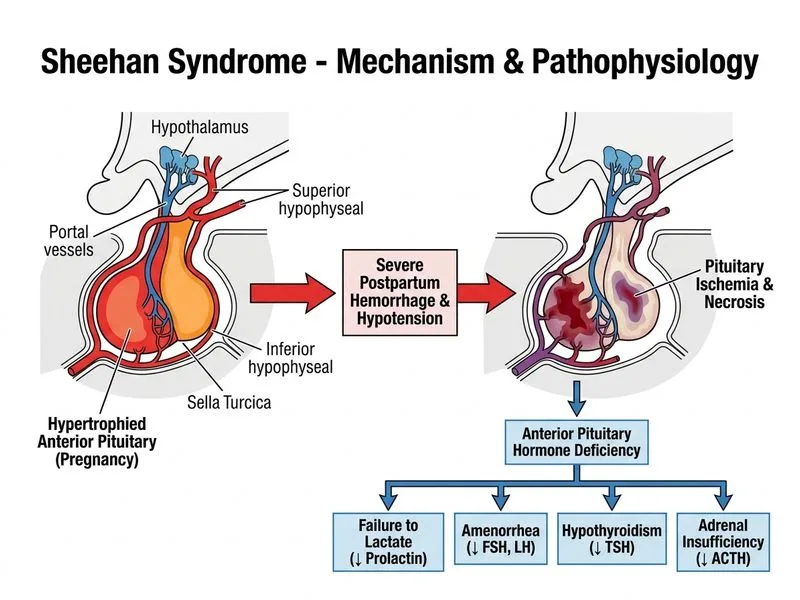
Sign up free to access AI-powered MCQ practice with detailed explanations and adaptive learning.