
## Clinical Diagnosis This patient presents with **septic shock** secondary to community-acquired pneumonia (CAP) with sepsis criteria met: - Fever, respiratory infection source (consolidation on CXR) - Hypotension (88/54 → 90/56 after fluid resuscitation) - Tachycardia and tachypnea - Elevated lactate (4.2 mmol/L) indicating tissue hypoperfusion - Inadequate urine output (0.3 mL/kg/hr, target >0.5 mL/kg/hr) ## Sepsis-3 / Surviving Sepsis Campaign Guidelines **Key Point:** After initial fluid resuscitation (30 mL/kg crystalloid bolus) fails to restore adequate perfusion (persistent hypotension, elevated lactate, oliguria), vasopressor therapy is indicated. **High-Yield:** The Surviving Sepsis Campaign 2021 recommends: 1. Fluid resuscitation: 30 mL/kg crystalloid for hypotension or lactate ≥4 mmol/L 2. If hypotension persists after fluid resuscitation → initiate vasopressor (norepinephrine first-line) 3. Target MAP ≥65 mmHg 4. Broad-spectrum antibiotics within 1 hour ## Why Norepinephrine? | Vasopressor | First-line? | Mechanism | Target | |---|---|---|---| | Norepinephrine | Yes (septic shock) | α1 + β1 (balanced) | MAP ≥65 mmHg | | Dopamine | Alternative | Dose-dependent; high-dose tachycardia risk | If NE unavailable | | Epinephrine | Refractory shock | α1 + β1 + β2 | Add if NE inadequate | | Vasopressin | Adjunct only | V1 receptor | Never monotherapy | **Clinical Pearl:** Norepinephrine is preferred in septic shock because it restores both perfusion pressure (α1) and cardiac output (β1) without excessive tachycardia or arrhythmia risk. ## Why Not the Other Options? - **Second fluid bolus (option B):** Already received 30 mL/kg; persistent hypotension despite adequate fluid resuscitation indicates vasopressor dependency, not fluid responsiveness. Further fluid risks pulmonary edema in sepsis-induced ARDS. - **Hydrocortisone (option C):** Indicated only in refractory septic shock (requiring high-dose vasopressors) or adrenal insufficiency; this patient has not yet received vasopressor trial. - **Echocardiography (option D):** Clinical picture is classic septic shock (infection source, lactate, response to fluids). Cardiogenic shock would show elevated JVP, pulmonary edema, and poor fluid response; no indication here. 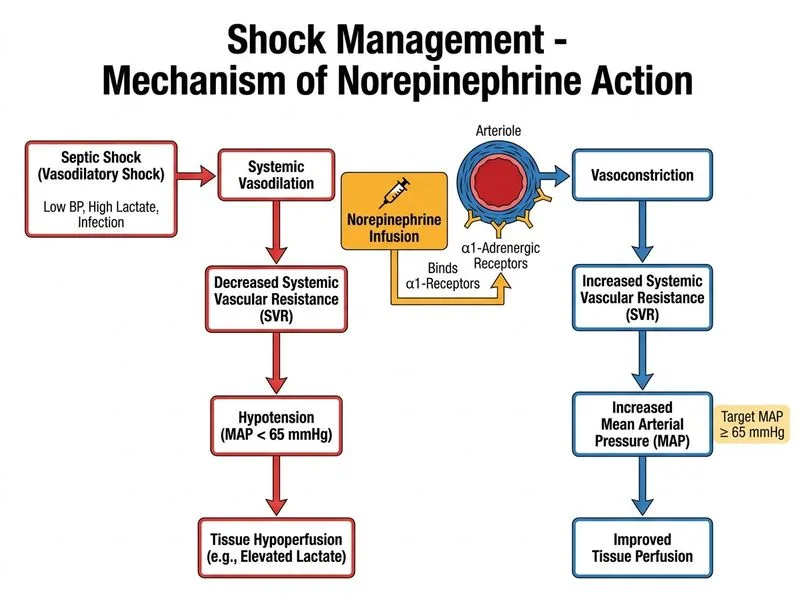
Sign up free to access AI-powered MCQ practice with detailed explanations and adaptive learning.