STEMI Diagnosis and Management MCQ — NEET PG Practice Question | NEETPGAI
STEMI Diagnosis and Management
easy
stethoscope Medicine
What is the maximum recommended door-to-balloon time for primary percutaneous coronary intervention (PCI) in STEMI?
A. 120 minutes
B. 60 minutes
C. 150 minutes
D. 90 minutes
Explanation
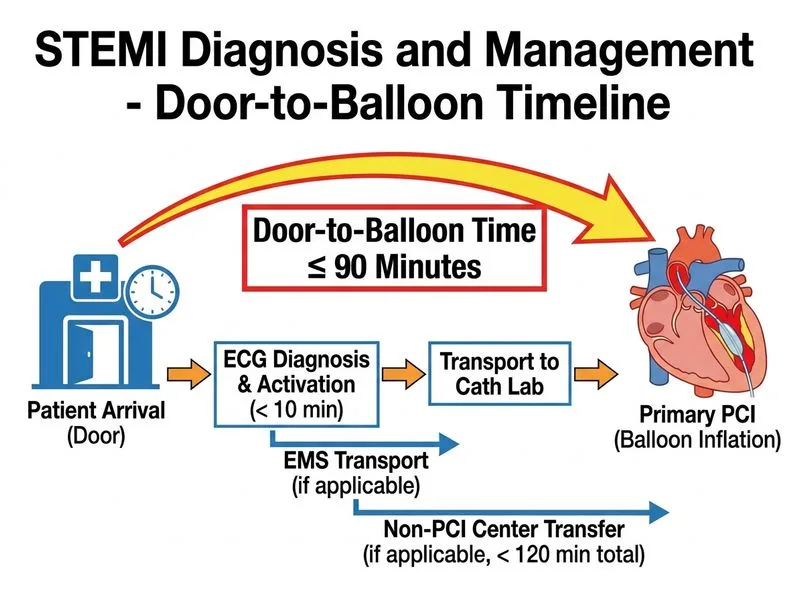
Door-to-Balloon Time in STEMI
Key Point
The door-to-balloon time is the interval from first medical contact (arrival at hospital) to inflation of the angioplasty balloon during primary PCI. This is a critical performance metric in STEMI management.
Recommended Timeframe
High-YieldNEET PG
The guideline-recommended maximum door-to-balloon time is 90 minutes for primary PCI in STEMI. This applies to all patients presenting within 12 hours of symptom onset.
Clinical Significance
Every 30-minute delay in achieving reperfusion increases 1-year mortality by approximately 7.5%. Achieving door-to-balloon time ≤90 minutes is associated with:
Reduced infarct size
Improved left ventricular function
Lower in-hospital mortality
Better long-term outcomes
Special Circumstances
Door-to-balloon time 90–120 minutes: Acceptable if PCI-capable center is distant; still superior to fibrinolysis
Fibrinolysis alternative: Door-to-needle time should be ≤30 minutes if PCI cannot be performed within 120 minutes of first medical contact
Clinical Pearl
In India, where many STEMI patients present to non-PCI centers, rapid transfer protocols and telemedicine-assisted diagnosis are essential to meet the 90-minute target.
Loading illustration…
Practice similar questions
Sign up free to access AI-powered MCQ practice with detailed explanations and adaptive learning.