STEMI Diagnosis and Management MCQ — NEET PG Practice Question | NEETPGAI
STEMI Diagnosis and Management
medium
stethoscope Medicine
A 58-year-old man with hypertension presents to the emergency department with acute onset substernal chest pain radiating to the left arm for 2 hours. His blood pressure is 145/92 mmHg, heart rate 98/min. On examination, he has an S4 gallop. A 12-lead ECG shows ST elevation in leads II, III, and aVF with reciprocal ST depression in I and aVL. Which investigation is most appropriate to confirm acute myocardial infarction and guide immediate reperfusion therapy?
A. Coronary angiography
B. Echocardiography
C. Cardiac troponin I (cTnI) or high-sensitivity troponin
D. Chest X-ray
Explanation
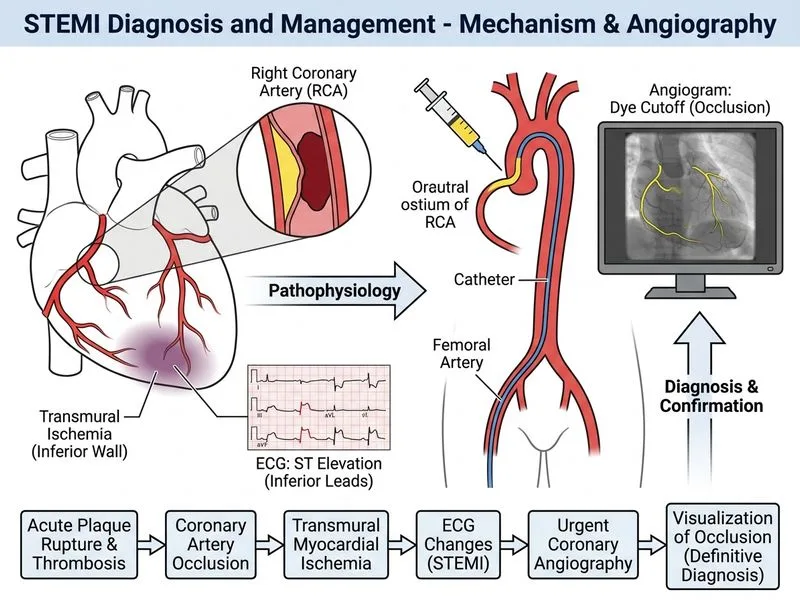
Diagnosis and Management of STEMI
Clinical Context
This patient presents with classic acute STEMI features:
Acute chest pain with typical radiation
ST elevation in inferior leads (II, III, aVF) → inferior wall STEMI
Reciprocal changes in lateral leads
Hemodynamic signs of acute MI (S4 gallop suggests ventricular dysfunction)
Investigation of Choice: Coronary Angiography
Key Point
In a patient with ECG-confirmed STEMI (ST elevation ≥1 mm in two contiguous leads), coronary angiography is the gold standard and definitive diagnostic and therapeutic procedure. It is both diagnostic AND therapeutic.
Why Coronary Angiography?
1.
Diagnostic confirmation: Visualizes the culprit coronary artery and identifies the exact site of occlusion
2.
Therapeutic intervention: Enables immediate primary percutaneous coronary intervention (PCI) — the preferred reperfusion strategy in STEMI
3.
Risk stratification: Identifies extent of disease, collaterals, and complications (mechanical)
4.
Time-sensitive: Should be performed within 90 minutes of first medical contact (door-to-balloon time)
Role of Other Investigations
Table
Investigation
Role in STEMI
Timing
Troponin (cTnI/cTnT)
Confirms myocardial necrosis; rises after 3–4 hours
Do NOT delay coronary angiography while awaiting troponin results. ECG + clinical presentation are sufficient to diagnose STEMI and proceed to the catheterization laboratory. Troponin is confirmatory but not required for immediate decision-making.
Warning
Chest X-ray and echocardiography are NOT diagnostic for acute MI and should NOT delay transfer to the catheterization laboratory. They are adjunctive investigations performed after reperfusion therapy.
Harrison 21e Ch 297
Loading illustration…
Practice similar questions
Sign up free to access AI-powered MCQ practice with detailed explanations and adaptive learning.