
## Alpha-Fetoprotein (AFP) in Hepatocellular Carcinoma **Key Point:** AFP is the most widely used and clinically relevant tumor marker for hepatocellular carcinoma (HCC), particularly in high-risk populations such as those with cirrhosis, chronic hepatitis B, or hepatitis C. ### Clinical Significance of AFP **High-Yield:** AFP levels >400 ng/mL are highly suggestive of HCC in at-risk patients. Levels between 20–400 ng/mL require imaging confirmation (CT/MRI) for diagnosis. ### AFP in HCC Surveillance - **Screening tool:** Used in cirrhotic patients every 3–6 months - **Prognostic marker:** Elevated AFP at diagnosis correlates with advanced disease and poorer prognosis - **Monitoring response:** Declining AFP during treatment indicates therapeutic response ### Comparison with Other Markers | Marker | Primary Tumor | Sensitivity in HCC | Specificity in HCC | |--------|---------------|-------------------|-------------------| | AFP | HCC | 60–70% | 80–90% | | CEA | Colorectal, lung | Low in HCC | Low in HCC | | CA 19-9 | Pancreatic, biliary | Low in HCC | Low in HCC | | PSA | Prostate | Not relevant | Not relevant | **Clinical Pearl:** AFP can be elevated in benign liver disease (cirrhosis, chronic hepatitis) and germ cell tumors, so it is not absolutely specific for HCC but remains the gold standard marker in the appropriate clinical context. **Mnemonic:** **AFP-HCC** = Alpha-Fetoprotein for Hepatocellular Carcinoma — remember this association for surveillance and diagnosis in cirrhotic patients. 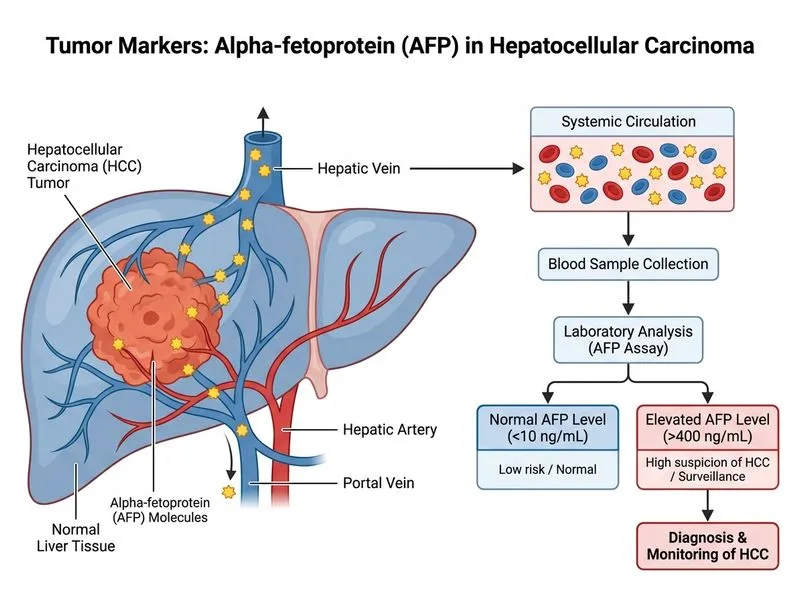
Sign up free to access AI-powered MCQ practice with detailed explanations and adaptive learning.