Version 1.0 — Published May 2026
Quick Answer
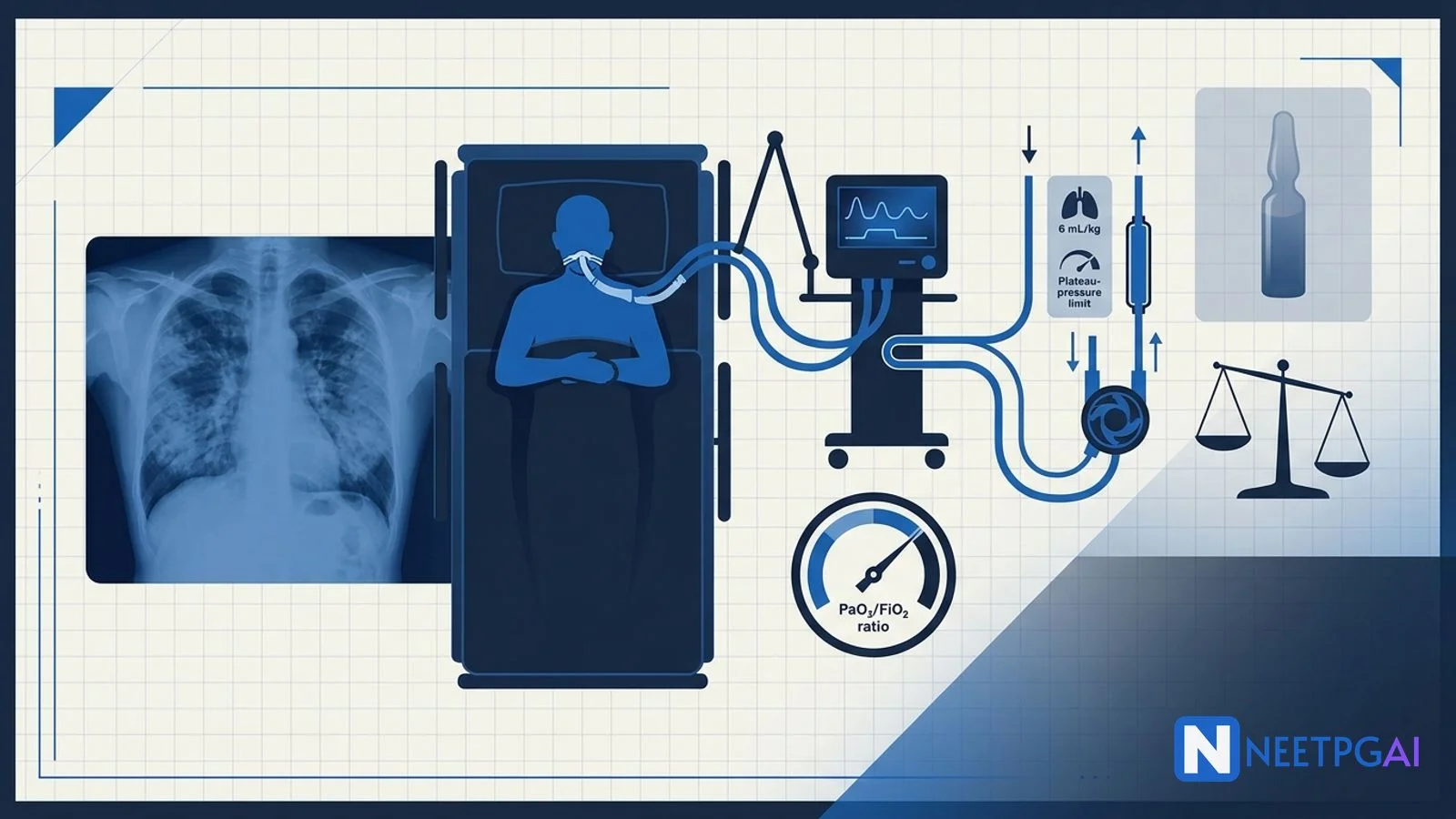
Acute respiratory distress syndrome (ARDS) is a syndrome of acute, diffuse, inflammatory lung injury producing hypoxemic respiratory failure refractory to oxygen. In a 48-year-old with severe community-acquired pneumonia who develops acute hypoxemia (PaO2/FiO2 = 140), bilateral CXR infiltrates, and no left ventricular failure, the diagnosis is moderate ARDS by the Berlin definition. Follow this 8-step workflow:
- Confirm the Berlin definition — acute onset <1 week, bilateral imaging, not cardiac, PaO2/FiO2 on PEEP ≥5
- Stratify severity — mild 200-300, moderate 100-200, severe <100
- Intubate early if work of breathing is unsustainable or SpO2 <90 on high-flow O2
- Set low tidal volume ventilation — 6 mL/kg of predicted body weight (PBW), plateau pressure <30 cm H2O, driving pressure <15 cm H2O
- Titrate PEEP — higher PEEP table for moderate/severe; aim for SpO2 88-95 percent on FiO2 ≤0.6 if possible
- Add adjuncts for moderate-severe disease — neuromuscular blockade (48 h cisatracurium) and prone positioning (≥16 h/day) for PaO2/FiO2 <150
- Manage fluids conservatively — negative balance after shock resolves (FACTT)
- Refer for VV-ECMO if refractory severe hypoxemia (PaO2/FiO2 <80) or refractory hypercapnia despite optimised therapy
Driving pressure (plateau − PEEP) <15 cm H2O is the single strongest predictor of survival in mechanically ventilated ARDS.
The case
A 48-year-old auto-rickshaw driver from Bhopal is admitted to the emergency department with 5 days of progressive fever, productive cough, and worsening breathlessness. He is a 25-pack-year smoker, has untreated type 2 diabetes (HbA1c 9.2 percent at admission), and has no prior cardiac or pulmonary disease. On day 2 of his ward admission, despite ceftriaxone 2 g IV daily and azithromycin 500 mg IV daily for community-acquired pneumonia, he becomes increasingly tachypneic with respiratory rate climbing to 38/min, SpO2 dropping to 84 percent on a non-rebreather mask at 15 L/min, and use of accessory muscles. He is transferred to the ICU.
On arrival to ICU at 2:00 AM: pulse 122/min, BP 108/64 mmHg, temperature 39.4 C, respiratory rate 38/min, SpO2 88 percent on non-rebreather, GCS 14 (alert but distressed). Auscultation: bilateral coarse crackles up to mid-zones, no wheeze, no S3 gallop, no peripheral edema, JVP not raised. Cardiovascular: regular rhythm, no murmur. Investigations on transfer:
- Arterial blood gas on FiO2 1.0 (non-rebreather): pH 7.31, PaO2 140 mmHg, PaCO2 42 mmHg, HCO3 19, lactate 3.4 mmol/L
- PaO2/FiO2 ratio: 140 (moderate ARDS by Berlin definition)
- CBC: WBC 18,200 (neutrophil 86 percent), Hb 12.4, platelets 168,000
- CRP: 312 mg/L; procalcitonin 14.2 ng/mL
- Renal: Creatinine 1.4 mg/dL (baseline unknown), urea 62, Na 132, K 4.6
- Liver: ALT 64, AST 78, INR 1.2, albumin 2.6
- Chest X-ray: Bilateral diffuse opacities involving all four quadrants, no cardiomegaly, no Kerley B lines, no pleural effusions
- Bedside echocardiogram: Normal LV systolic function (EF 60 percent), no significant valvular lesion, IVC variable, no pericardial effusion
- NT-proBNP: 240 pg/mL (low — not cardiogenic)
- Influenza and RSV PCR: Negative; COVID-19 RT-PCR: Negative; respiratory panel pending
- Sputum Gram stain: Gram-positive diplococci in pairs (suggestive of pneumococcus); culture pending
He has met all four Berlin criteria: acute onset within 1 week (3 days), bilateral imaging opacities, not explained by cardiac failure (normal echo and low NT-proBNP), PaO2/FiO2 140 on FiO2 1.0 with non-rebreather (he is intubated within 30 minutes and PaO2/FiO2 is re-measured on PEEP 8 — see below).
ABCD assessment and initial workflow
ARDS recognition is the easy part — the operational decisions are early intubation, ventilator setup, and adjuncts.
A — Airway: He is alert but exhausted. Anticipate respiratory failure; do not delay intubation while waiting for "more deterioration." Pre-oxygenate with non-invasive ventilation or high-flow nasal cannula at FiO2 1.0, prepare RSI with ketamine 1.5 mg/kg + rocuronium 1.2 mg/kg (avoid succinylcholine if hyperkalemia or rhabdo suspected). Cuffed 8.0 mm tube. Confirm with capnography and bilateral chest expansion.
B — Breathing: Pre-intubation SpO2 88 on non-rebreather, RR 38, accessory muscle use. Post-intubation initial settings: volume control, tidal volume 6 mL/kg PBW (see calculation below), respiratory rate 20-25, PEEP 8-10, FiO2 1.0 initially then titrate down. Aim plateau pressure <30, driving pressure <15, SpO2 88-95 percent.
C — Circulation: Pulse 122, BP 108/64. Two large-bore IVs. Place an arterial line and central venous catheter (CVC) for vasopressor delivery and CVP/ScvO2 monitoring. Start balanced crystalloid (Ringer lactate) 30 mL/kg for septic shock if MAP <65 — but once shock is resolved, transition to conservative fluid balance (FACTT). Norepinephrine first-line vasopressor; add vasopressin 0.03 U/min as second agent.
D — Disability/Dextrose: GCS 14 pre-intubation. Capillary glucose 218 mg/dL — start insulin infusion targeting 140-180. Manage sedation post-intubation: dexmedetomidine or propofol; avoid benzodiazepines as first-line (PADIS guideline).
Initial workflow checklist (first 60 minutes):
- Early intubation with lung-protective settings from the start
- Calculate PBW; set Vt at 6 mL/kg PBW
- Plateau pressure check every 4 hours; adjust Vt down if Pplat >30
- Arterial line, CVC; ABG every 6 hours or after any setting change
- Source control: blood cultures × 2, sputum/ETA Gram stain and culture, urine antigen for pneumococcus and Legionella, respiratory virus PCR
- Broad-spectrum antibiotics within 1 hour of recognition (sepsis bundle)
- Strict ins-and-outs; daily weights
- DVT prophylaxis (LMWH if no contraindication)
- Stress ulcer prophylaxis (PPI or H2 blocker if mechanically ventilated)
- Head-of-bed elevation 30-45 degrees (VAP prevention bundle)
- Subglottic suctioning ETT if available
- Daily sedation interruption + spontaneous breathing trial readiness assessment
Predicted body weight calculation
This is a NEET PG favourite and a common ICU error — tidal volume is set by PREDICTED body weight, NOT actual body weight. A 100 kg obese patient has the same lung capacity as a 70 kg patient of the same height.
Male PBW (kg) = 50 + 0.91 × (height in cm − 152.4)
Female PBW (kg) = 45.5 + 0.91 × (height in cm − 152.4)
For our 48-year-old man, height 170 cm: PBW = 50 + 0.91 × (170 − 152.4) = 50 + 16.0 = 66 kg. Tidal volume target = 6 mL/kg × 66 kg = 396 mL (round to 400 mL).
Many trainees set Vt at 6 mL/kg of his actual body weight of 82 kg, which gives 492 mL — a 25 percent overshoot that drives ventilator-induced lung injury. Always use PBW.
Berlin definition — the four criteria
The 2012 Berlin definition replaced the older 1994 AECC definition. Four criteria must all be met.
| Criterion | Requirement |
|---|
| Timing | Acute onset within 1 week of a known clinical insult or new/worsening respiratory symptoms |
| Chest imaging | Bilateral opacities on CXR or CT, not fully explained by effusion, lobar/lung collapse, or nodules |
| Origin of edema | Respiratory failure not fully explained by cardiac failure or fluid overload (objective assessment required if no risk factor present) |
| Oxygenation | PaO2/FiO2 ratio on PEEP or CPAP ≥5 cm H2O |
Severity grading (all on PEEP ≥5)
| Severity | PaO2/FiO2 | Mortality (Berlin cohort) |
|---|
| Mild | 200-300 | ~27 percent |
| Moderate | 100-200 | ~32 percent |
| Severe | <100 | ~45 percent |
Our patient at PaO2/FiO2 140 is moderate ARDS and qualifies for the full adjunct ladder once intubated.
Differences from the 1994 AECC definition
- AECC had "acute lung injury" (PaO2/FiO2 <300) as a separate entity — Berlin folded this into "mild ARDS"
- AECC required pulmonary capillary wedge pressure (PCWP) <18 — Berlin removed this and substituted objective assessment for cardiac origin (echo, BNP)
- AECC did not specify PEEP — Berlin requires PEEP ≥5 to standardise oxygenation measurement
- Berlin added severity stratification by PaO2/FiO2
Pathophysiology — three phases
ARDS is fundamentally diffuse alveolar damage (DAD) with three histopathological phases that evolve over days to weeks.
Phase 1 — Exudative (days 1-7)
- Activation of alveolar macrophages and neutrophils with release of TNF-alpha, IL-1, IL-6, IL-8
- Disruption of the alveolar-capillary membrane (Type I pneumocytes most vulnerable)
- Protein-rich exudate floods the alveoli; hyaline membranes form (the histological hallmark)
- Surfactant inactivated by plasma proteins; reduced lung compliance
- Microthrombi in pulmonary capillaries; pulmonary hypertension begins
- Imaging: bilateral ground-glass opacities, dependent consolidation, "baby lung" with only 20-30 percent of alveolar volume aerated
Phase 2 — Proliferative (days 7-21)
- Type II pneumocyte hyperplasia repopulates damaged epithelium
- Fibroblast proliferation in the interstitium
- Some patients recover here; others progress to fibrosis
- Imaging: organising pneumonia pattern; reduced ground-glass, more consolidation
Phase 3 — Fibrotic (weeks 3+)
- Collagen deposition and architectural distortion
- Honeycomb cysts, traction bronchiectasis
- Persistent ventilator dependence, refractory hypoxemia, pulmonary hypertension
- Mortality very high in this phase
Histological diffuse alveolar damage with hyaline membranes is the pathological gold standard but is rarely confirmed clinically because lung biopsy carries substantial risk in severe ARDS. The Berlin definition is a clinical-radiological surrogate.
Common causes of ARDS
| Direct (pulmonary) | Indirect (extrapulmonary) |
|---|
| Pneumonia (bacterial, viral including COVID-19, fungal) | Sepsis (extrapulmonary source) |
| Aspiration | Trauma / multiple injuries |
| Inhalation injury (smoke, toxic gas) | Massive transfusion / TRALI |
| Pulmonary contusion | Pancreatitis |
| Drowning | Burns |
| Reperfusion injury post-thrombectomy | Drug overdose / toxic ingestion |
| Fat embolism | Cardiopulmonary bypass |
Pneumonia is the single most common cause globally (40-50 percent), followed by sepsis (20-30 percent) and aspiration (10-15 percent). In our patient, severe pneumococcal pneumonia is the trigger.
Diagnosis
Moderate ARDS (Berlin definition, PaO2/FiO2 = 140 on PEEP 8) secondary to severe community-acquired pneumococcal pneumonia in a 48-year-old uncontrolled diabetic with septic shock — diffuse alveolar damage in the exudative phase, requiring lung-protective ventilation, source control with antibiotics, conservative fluid strategy, and early consideration of prone positioning and neuromuscular blockade.
Management — lung-protective ventilation is the cornerstone
Step 1 — Low tidal volume ventilation (ARMA / ARDSNet protocol)
Set the ventilator from the moment of intubation:
- Mode: Volume control or pressure control — either works if the limits are observed
- Tidal volume: 6 mL/kg of PBW (initial); reduce to 4 mL/kg if plateau pressure >30
- Respiratory rate: 20-35/min titrated to pH 7.25-7.45 (permissive hypercapnia accepted to pH 7.20)
- PEEP and FiO2: start with the low PEEP/high FiO2 or high PEEP/low FiO2 table (ARDSNet); aim SpO2 88-95 percent or PaO2 55-80 mmHg
- Plateau pressure target: <30 cm H2O (measure with 0.5-second inspiratory hold every 4 h)
- Driving pressure target: <15 cm H2O (Pplat − PEEP) — strongest survival predictor (Amato et al. NEJM 2015)
- I:E ratio: 1:1 to 1:2 initially; inverse-ratio ventilation for refractory hypoxemia (rarely)
The ARMA trial (NEJM 2000) randomised 861 ARDS patients to 6 vs 12 mL/kg PBW. Mortality fell from 39.8 to 31.0 percent — absolute reduction 8.8 percent, NNT 12. This single intervention is the most evidence-based therapy in ARDS.
Step 2 — PEEP titration
PEEP recruits collapsed alveoli, prevents atelectrauma at end-expiration, and improves oxygenation. Two approaches:
- ARDSNet PEEP/FiO2 tables: simple, validated; pair PEEP with FiO2 (e.g., FiO2 0.5 → PEEP 8-10; FiO2 0.8 → PEEP 14)
- Higher-PEEP strategies (LOVS, ExPress): more recruitment for moderate-severe; meta-analyses suggest mortality benefit in PaO2/FiO2 <200 subgroup
- Best-PEEP titration: decremental PEEP trial after a recruitment manoeuvre, picking the PEEP with best compliance or oxygenation index
Avoid PEEP that drives plateau pressure above 30 or causes haemodynamic compromise. Routine recruitment manoeuvres (e.g., sustained 40 cm H2O for 40 seconds) were tested in the ART trial and worsened mortality — do not use routinely.
Step 3 — Neuromuscular blockade (NMB) for moderate-severe
For PaO2/FiO2 <150 with refractory hypoxemia or dyssynchrony in the first 48 hours, deep sedation plus cisatracurium infusion 15-37.5 mg/h for 48 hours improves oxygenation and may reduce mortality (ACURASYS 2010 — mortality 23.7 vs 33.3 percent, p=0.04). The follow-up ROSE trial (2019) showed no mortality benefit but also no harm; current practice is selective use for PaO2/FiO2 <150 with severe dyssynchrony, not blanket use.
NMB ensures volume control, eliminates spontaneous-effort lung injury (P-SILI), and facilitates proning.
Step 4 — Prone positioning (PROSEVA)
For PaO2/FiO2 <150 on FiO2 ≥0.6 and PEEP ≥5 despite optimised conventional ventilation, prone positioning for at least 16 hours/day reduces 28-day mortality (PROSEVA 2013, 32.8 → 16.0 percent). Proning works by:
- Redistributing ventilation to previously dependent (well-perfused) dorsal lung
- Improving ventilation-perfusion matching
- Recruiting collapsed dorsal alveoli
- Reducing overdistension of ventral lung
- Improving secretion clearance
Continue proning until PaO2/FiO2 >150 in the supine position with FiO2 ≤0.6 and PEEP ≤10 for at least 4 hours.
Contraindications: spinal instability, raised ICP, recent sternotomy, severe haemodynamic instability that cannot be stabilised. Common complications: pressure ulcers (face, sternum, iliac), endotracheal tube dislodgement, central line displacement, brachial plexus injury.
Step 5 — Conservative fluid management (FACTT)
After shock has resolved (sustained MAP >65 without escalating vasopressors), transition to a negative fluid balance using diuretics (furosemide infusion 5-20 mg/h). The FACTT trial (NEJM 2006) showed conservative fluid balance increased ventilator-free days by 2.5 and ICU-free days by 3.4, with no increase in shock or renal failure.
Track daily weights, ins-and-outs, and dynamic markers (passive leg raise, pulse pressure variation). Goal: euvolemia trending mildly hypovolemic, not aggressive dehydration.
Step 6 — Source control and supportive care
- Antibiotics: broad empirical coverage adjusted by culture (in our patient, narrow to penicillin/ceftriaxone once pneumococcus confirmed sensitive)
- Glucose: 140-180 mg/dL using insulin infusion (NICE-SUGAR)
- DVT prophylaxis: LMWH unless contraindicated
- Stress ulcer prophylaxis: PPI or H2 blocker
- Sedation: light sedation, daily interruption (PADIS); avoid benzodiazepines first-line
- Delirium prevention: ABCDEF bundle (Awakening, Breathing, Coordination, Delirium monitoring, Early mobility, Family)
- Nutrition: early enteral, trophic feeds initially (EDEN trial); target full caloric goal by day 5-7
- Transfusion: restrictive threshold (Hb 7 g/dL)
Step 7 — ECMO referral for refractory disease
Veno-venous ECMO is considered when conventional therapy fails. Murray (Lung Injury) score thresholds and the operational PaO2/FiO2 cutoff:
| Indication | Threshold |
|---|
| Severe hypoxemia | PaO2/FiO2 <80 on FiO2 ≥0.9 for >6 hours despite optimised conventional therapy |
| Refractory hypoxemia | PaO2/FiO2 <50 for >3 hours |
| Refractory respiratory acidosis | pH <7.20 with RR up to 35 and Vt at 6 mL/kg PBW |
| Murray score | ≥3.0 (severe) |
| Bridge to recovery / transplant | Selected cases |
Trials: CESAR (Lancet 2009) showed referral to ECMO centre improved 6-month survival without severe disability; EOLIA (NEJM 2018) was stopped early for futility but Bayesian re-analysis and post-hoc crossover analysis support benefit in refractory severe ARDS. Modern practice is early referral in the first 7 days of mechanical ventilation; refer before lungs are irreversibly fibrotic.
Contraindications: irreversible underlying disease, severe multi-organ failure, age over 65 with frailty, contraindication to anticoagulation, mechanical ventilation >7 days at high settings, prognosis after ECMO unacceptable.
Step 8 — Therapies that do NOT work in ARDS
Recurring NEET PG trap — these have been tested and failed:
- Routine corticosteroids (in non-COVID, non-pneumocystis ARDS) — historically uncertain; DEXA-ARDS (Lancet 2020) showed benefit at dexamethasone 20 mg/day × 5 days then 10 mg/day × 5 days, but routine steroids are still controversial — use in severe ARDS or specific indications (COVID-19, eosinophilic pneumonia, vasculitis)
- Inhaled nitric oxide — improves oxygenation transiently but no mortality benefit; rescue therapy only
- Inhaled prostacyclin — same as NO; rescue only
- High-frequency oscillatory ventilation (HFOV) — OSCILLATE (NEJM 2013) stopped early for harm; OSCAR neutral. Do NOT use routinely.
- Surfactant — failed in adult ARDS trials (works in neonatal RDS)
- Beta-agonists (salbutamol) — BALTI-2 trial showed harm
- Statins — no benefit in HARP-2 and SAILS trials
- Routine recruitment manoeuvres — ART trial showed harm
Why high tidal volumes harm — ventilator-induced lung injury (VILI)
Ventilator-induced lung injury is the unifying concept that explains why ARDS used to have 70 percent mortality before lung-protective ventilation. Four mechanisms:
| Mechanism | Driver | Effect |
|---|
| Volutrauma | High tidal volume (large absolute volume) | Alveolar overdistension, capillary leak, edema |
| Barotrauma | High plateau and peak pressures | Pneumothorax, pneumomediastinum, subcutaneous emphysema |
| Atelectrauma | Cyclic opening/closing of unstable alveoli at low PEEP | Shear injury at alveolar interfaces |
| Biotrauma | Repetitive mechanical injury triggers cytokine release (TNF, IL-6, IL-8) | Systemic inflammatory cascade, multi-organ failure |
The "baby lung" concept (Gattinoni): in ARDS only 20-30 percent of alveolar volume is aerated, the rest is consolidated or collapsed. Setting tidal volume by total body weight overdistends the small functional volume — equivalent to giving a baby's lungs an adult tidal volume. Hence 6 mL/kg PBW.
Complications
Pulmonary
- Barotrauma — pneumothorax (5-15 percent), pneumomediastinum, subcutaneous emphysema; needs chest tube drainage
- Ventilator-associated pneumonia (VAP) — 10-25 percent of ventilated patients; prevention bundle (HOB elevation, oral chlorhexidine, subglottic suction, daily SAT/SBT)
- Pulmonary fibrosis — survivors may have restrictive PFTs and reduced DLCO at 1 year
- Pulmonary hypertension — common in severe ARDS, worsens RV function
- Recurrent atelectasis, secretion retention
Extra-pulmonary
- Acute kidney injury — 40-50 percent of ARDS patients; multifactorial (sepsis, fluid, drugs)
- ICU-acquired weakness — critical illness myopathy and polyneuropathy; especially after prolonged NMB and steroids
- Delirium — 60-80 percent of ventilated patients; long-term cognitive impairment
- DVT/PE — despite prophylaxis
- Pressure ulcers — particularly with prone positioning
- Long-term mental health — PTSD, anxiety, depression in 20-40 percent of survivors and family
India-specific considerations
NEET PG vignettes increasingly include India-specific context. Key points:
ICU bed availability. India has roughly 90,000 ICU beds for 1.4 billion population (1 bed per 15,500 vs 1 per 3,000 in high-income countries). Most tier-2 cities have limited or no ventilators outside government medical colleges. The COVID-19 pandemic forced rapid expansion but capacity remains constrained.
Ventilator triage. Conventional invasive ventilation requires a ventilator, ICU bed, trained nurses, respiratory therapists (rare in India), and reliable oxygen supply. Non-invasive ventilation (BiPAP, high-flow nasal cannula) and prone positioning of awake patients (used widely during COVID-19) reduce ventilator demand and are practical for resource-limited ICUs.
Awake prone positioning. Pre-intubation prone positioning of conscious patients on HFNC or NIV has been adopted in many Indian ICUs since the COVID-19 pandemic — reduces intubation rates in select patients, though does not improve mortality. NEET PG vignettes may test this.
ECMO availability. India has approximately 50 centres with ECMO capability — concentrated in tier-1 metros. Cost is prohibitive for most families (Rs 5-10 lakh for the course). Patient selection is critical.
Tropical ARDS aetiologies. Beyond pneumonia and sepsis, India has higher rates of dengue, leptospirosis, scrub typhus, malaria with ARDS, and tropical pulmonary eosinophilia. Aetiological workup must include rapid antigen tests for these.
ARDS in pregnancy. Higher rates of postpartum H1N1, amniotic fluid embolism, and aspiration during obstetric emergencies. Same Berlin criteria and lung-protective ventilation apply; obstetric input for fetal monitoring.
How NEET PG tests ARDS
Seven recurring patterns. Recognise the pattern and the question collapses.
Pattern 1 — The Berlin definition question: Vignette gives a patient with hypoxemia and bilateral infiltrates after sepsis or pneumonia. Diagnosis? ARDS by Berlin criteria. Trap: vignette includes Kerley B lines, cardiomegaly, or raised BNP — that's cardiogenic pulmonary edema, NOT ARDS.
Pattern 2 — The tidal volume question: "What tidal volume?" — answer is 6 mL/kg of PREDICTED body weight, not actual. Trap: vignette gives actual weight 80 kg, height 165 cm — calculate PBW (around 59 kg, so Vt ~350 mL).
Pattern 3 — The plateau pressure question: Patient on Vt 6 mL/kg PBW but plateau is 34. Next step? Reduce tidal volume to 4-5 mL/kg PBW (accept permissive hypercapnia to pH 7.20). Trap: "increase PEEP" — that increases plateau further.
Pattern 4 — The prone positioning question: Severe ARDS with PaO2/FiO2 130 on FiO2 0.7, PEEP 12, despite optimisation. Next step? Prone positioning for at least 16 hours/day. Trap: "ECMO" too early — exhaust prone, NMB, optimised PEEP first.
Pattern 5 — The ECMO question: PaO2/FiO2 65 on FiO2 1.0 PEEP 18 for 8 hours despite prone, NMB, optimised settings. Next step? VV-ECMO referral. Trap: "increase PEEP further" — won't help refractory severe disease.
Pattern 6 — The fluid management question: ARDS patient day 3, MAP 75 off vasopressors, positive fluid balance of 6 L. Next step? Conservative fluid balance — start diuretic (furosemide infusion). Trap: "more fluids" — wrong once shock has resolved.
Pattern 7 — The therapy-that-doesn't-work question: Vignette asks "next intervention" with options including inhaled nitric oxide, HFOV, surfactant, or beta-agonists. Trap: pick the evidence-based intervention (lung-protective, prone, ECMO). NO, HFOV, surfactant, salbutamol are all wrong as primary therapy.
High-yield one-liners:
- Berlin definition: acute, bilateral, not cardiac, PaO2/FiO2 on PEEP ≥5
- Severity: mild 200-300, moderate 100-200, severe <100
- Vt 6 mL/kg PBW (predicted body weight, not actual); Pplat <30; driving pressure <15
- ARMA trial (NEJM 2000): 6 vs 12 mL/kg cut mortality from 39.8 to 31.0 percent
- PROSEVA: proning ≥16 h/day cut mortality from 32.8 to 16.0 percent for PaO2/FiO2 <150
- ACURASYS: cisatracurium 48 h for PaO2/FiO2 <150
- FACTT: conservative fluid balance once shock resolves
- CESAR/EOLIA: VV-ECMO for refractory severe ARDS
- Histology: diffuse alveolar damage with hyaline membranes
- Three phases: exudative (1-7 d), proliferative (7-21 d), fibrotic (3+ wk)
- VILI mechanisms: volutrauma, barotrauma, atelectrauma, biotrauma
- Routine HFOV, NO, surfactant, beta-agonists, statins do NOT improve mortality
Key takeaways
- ARDS is defined clinically by the Berlin criteria — there is no laboratory or pathology test in clinical practice.
- Lung-protective ventilation (Vt 6 mL/kg PBW, Pplat <30, driving pressure <15) is the single most evidence-based therapy.
- Predicted body weight is calculated from height and sex, not actual weight — a frequent NEET PG trap.
- For moderate-severe disease (PaO2/FiO2 <150), add 48-hour neuromuscular blockade and prone positioning ≥16 h/day.
- Conservative fluid management once shock resolves (FACTT) improves ventilator-free days.
- VV-ECMO is for refractory severe ARDS — refer early in the first 7 days before lungs become fibrotic.
- Routine corticosteroids, inhaled NO, HFOV, surfactant, and beta-agonists are NOT beneficial in adult ARDS (with disease-specific exceptions like COVID-19).
- VILI through volutrauma, barotrauma, atelectrauma, and biotrauma explains why high tidal volumes harm.
- India-specific resource limits favour awake proning, careful triage, and aggressive non-invasive support.
Frequently Asked Questions
What is the Berlin definition of ARDS and how does it stratify severity?
The 2012 Berlin definition requires four criteria. (1) Timing — acute onset within 1 week of a known clinical insult or new or worsening respiratory symptoms. (2) Chest imaging — bilateral opacities on CXR or CT, not fully explained by effusion, lobar collapse, or nodules. (3) Origin of edema — respiratory failure not fully explained by cardiac failure or fluid overload (objective assessment, e.g. echocardiography, required if no risk factor is present). (4) Oxygenation — PaO2/FiO2 ratio measured with PEEP or CPAP at least 5 cm H2O. Severity is graded by PaO2/FiO2 on PEEP at least 5: mild 200-300, moderate 100-200, severe under 100. Berlin replaced the older 1994 AECC definition which used acute lung injury (PaO2/FiO2 under 300) and required PCWP under 18 — the Berlin definition removed PCWP and added the explicit PEEP requirement so all severity grading is done with positive pressure.
What is lung-protective ventilation and why is it the cornerstone of ARDS management?
Lung-protective ventilation is the deliberate use of low tidal volumes (6 mL/kg of predicted body weight, not actual weight) and limited plateau pressures (under 30 cm H2O) to prevent ventilator-induced lung injury (VILI). The landmark ARMA trial published in NEJM 2000 compared 6 vs 12 mL/kg PBW and showed an absolute mortality reduction from 39.8 to 31.0 percent, a number needed to treat of approximately 12 — one of the largest mortality benefits in critical care. The mechanism is reduced volutrauma, barotrauma, atelectrauma, and biotrauma. Predicted body weight is calculated using height and sex (male PBW equals 50 plus 0.91 multiplied by height in cm minus 152.4; female PBW equals 45.5 plus 0.91 multiplied by the same). PEEP is titrated to achieve adequate oxygenation while keeping plateau pressure under 30 and driving pressure under 15 cm H2O. Permissive hypercapnia (pH down to 7.20) is accepted to allow tidal volume reduction.
When is prone positioning indicated in ARDS and what is the evidence?
Prone positioning is indicated in severe ARDS with PaO2/FiO2 under 150 on FiO2 at least 0.6 and PEEP at least 5, after optimisation of ventilator settings, sedation, and neuromuscular blockade. The 2013 PROSEVA trial randomised 466 severe ARDS patients to 16-hour prone sessions vs supine — 28-day mortality dropped from 32.8 to 16.0 percent (absolute reduction 16.8 percent, NNT 6). Prone sessions are typically performed for at least 12-16 hours daily, continued until PaO2/FiO2 stays above 150 in the supine position with FiO2 at most 0.6 and PEEP at most 10 for at least 4 hours after returning to supine. Mechanisms include redistribution of ventilation to dependent regions, improved ventilation-perfusion matching, reduced overdistension of ventral lung, and improved secretion clearance. Contraindications include spinal instability, raised intracranial pressure, severe haemodynamic instability, and recent sternotomy.
What are the indications for ECMO in adult ARDS and which trials guide selection?
Veno-venous ECMO is considered in severe ARDS refractory to optimised conventional ventilation. The Murray (Lung Injury) score and PaO2/FiO2 under 80 on FiO2 at least 0.9 are the operational triggers. Indications: severe hypoxemia (PaO2/FiO2 under 80 for over 6 hours, or under 50 for over 3 hours) despite optimised conventional management including low tidal volume, optimised PEEP, neuromuscular blockade, and prone positioning; refractory hypercapnia with pH under 7.20 despite respiratory rate up to 35; bridge to lung transplant or recovery. The CESAR (2009) and EOLIA (2018) trials and a Bayesian re-analysis support ECMO referral early in refractory severe ARDS. Contraindications include irreversible underlying disease, severe multi-organ failure, advanced age with frailty, contraindication to systemic anticoagulation, and any condition where prognosis after ECMO is unacceptable.
What is the role of conservative fluid management in ARDS?
Conservative fluid management improves lung function and ventilator-free days but does not reduce mortality. The FACTT trial (NEJM 2006) compared conservative (CVP under 4 or PAOP under 8) vs liberal (CVP 10-14 or PAOP 14-18) fluid management in 1000 ARDS patients — the conservative arm gained 2.5 ventilator-free days and 3.4 ICU-free days with no increase in shock or renal failure. The principle is to keep the lungs as dry as possible once shock is resolved. The practical workflow is to resuscitate adequately for shock in the first 24-48 hours, then transition to negative fluid balance using diuretics (furosemide infusions are typical) once mean arterial pressure is sustained without escalating vasopressors. Daily weights, ins-and-outs, and dynamic measures (passive leg raise, pulse pressure variation) are tracked to guide diuretic dosing. The goal is euvolemia trending towards mildly hypovolemic, not aggressive diuresis to hypovolemia.
This content is for educational purposes for NEET PG exam preparation. It is not a substitute for professional medical advice, diagnosis, or treatment. Clinical information has been reviewed by qualified medical professionals.
Written by: NEETPGAI Editorial Team
Reviewed by: Pending SME Review
Last reviewed: May 2026