Quick Answer
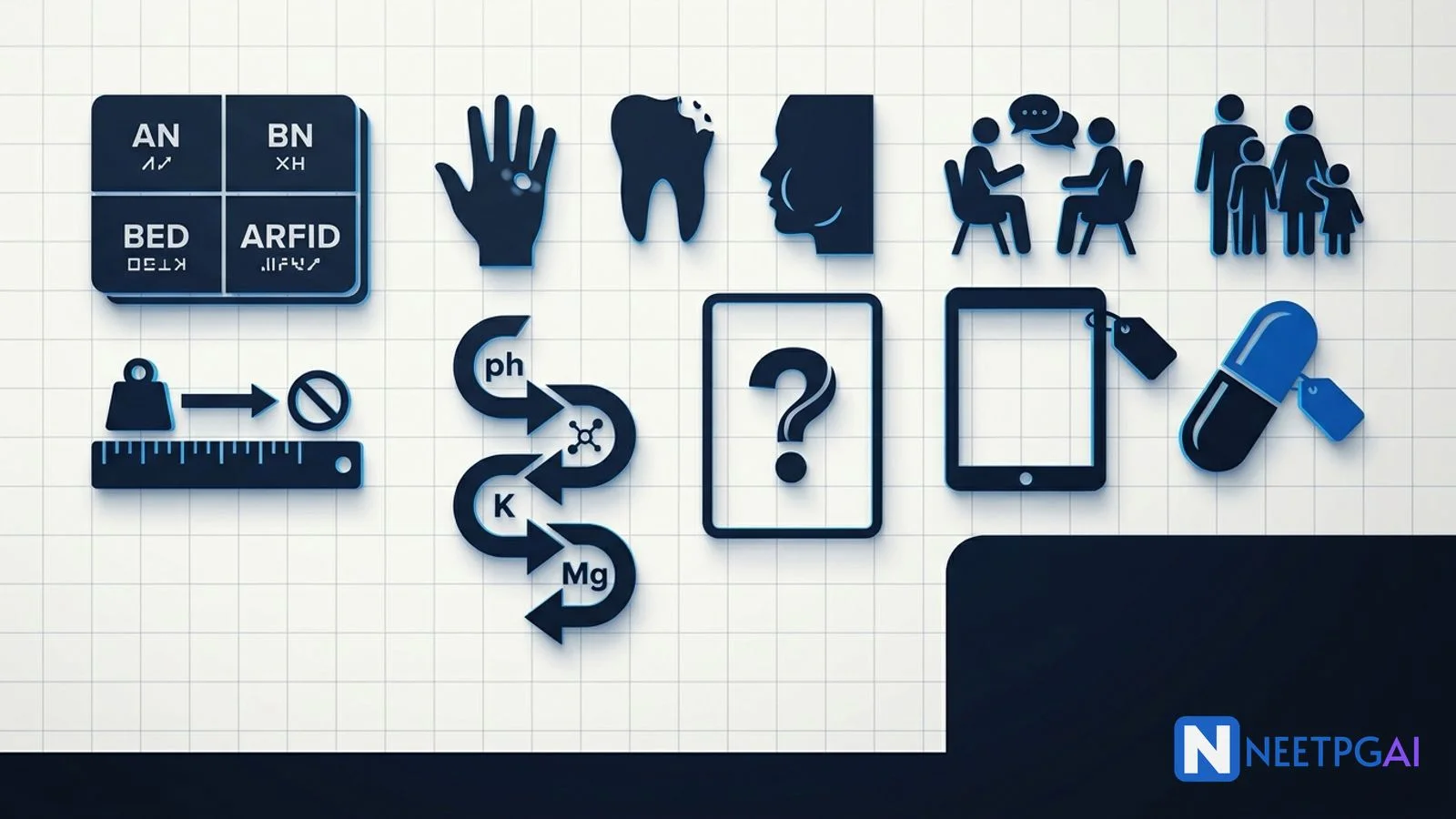
Eating disorders show up in 1 to 2 questions per NEET PG paper — but the vignettes are dense and the DSM-5 criteria are testable. Lock these:
- Anorexia nervosa — restriction, fear of gaining weight, distorted body image; restricting vs binge-purge subtypes; highest mortality of any psychiatric disorder.
- Bulimia nervosa — recurrent binges plus compensatory behaviour weekly for 3 months; normal or overweight; Russell sign; fluoxetine 60 mg is the only FDA-approved SSRI.
- Binge eating disorder — recurrent binges without compensation; obesity association; lisdexamfetamine FDA-approved 2015.
- ARFID — sensory or fear-based avoidance without body-shape concern; commoner in children with autism.
- Pica — persistent eating of non-nutritive substances after 2 years; iron deficiency, pregnancy, autism.
- Refeeding syndrome — hypophosphataemia is the hallmark; thiamine first, feed slowly, replace electrolytes.
- SCOFF questionnaire — Sick / Control / One stone / Fat / Food; 2 or more positive prompts assessment.
- Adolescent AN — family-based therapy (Maudsley) is first-line.
- Bulimia and BED — CBT-E is the psychotherapy gold standard.
- Olanzapine — modest evidence for weight gain in outpatient AN.
Eating disorders are a compulsory read for NEET PG psychiatry — DSM-5 criteria, medical complications, refeeding syndrome, and the choice of psychotherapy versus pharmacotherapy are tested in nearly every paper. This deep dive covers all six DSM-5 feeding and eating disorders, screening tools, complications and the India-specific epidemiology every candidate should know.
Classification — DSM-5 Feeding and Eating Disorders
- Anorexia nervosa (AN) — restricting or binge-purge subtype.
- Bulimia nervosa (BN).
- Binge eating disorder (BED).
- Avoidant / restrictive food intake disorder (ARFID).
- Pica.
- Rumination disorder.
- Other specified feeding or eating disorder (OSFED) — includes atypical AN (all criteria met but weight in normal range), purging disorder, night eating syndrome.
Anorexia nervosa
DSM-5 criteria
- A — Restriction of energy intake leading to significantly low body weight (BMI under 18.5 in adults; less than 5th percentile in children).
- B — Intense fear of gaining weight or persistent behaviour interfering with weight gain.
- C — Disturbance in body-weight perception; undue influence of body weight on self-evaluation; or lack of recognition of the seriousness of the low weight.
Subtypes (last 3 months):
- Restricting type — dieting, fasting, excessive exercise; no bingeing or purging.
- Binge-eating and purging type — recurrent bingeing or purging (vomiting, laxatives, diuretics, enemas).
Severity by BMI (adults): mild at or above 17, moderate 16 to 16.99, severe 15 to 15.99, extreme under 15.
The DSM-IV amenorrhoea criterion was removed in DSM-5.
Medical complications
- Cardiovascular — sinus bradycardia (HR under 50), hypotension, orthostatic changes, prolonged QT, sudden cardiac death, cardiac atrophy with reduced LV mass, pericardial effusion.
- Endocrine — amenorrhoea, low T3 with euthyroid sick pattern, low FSH and LH, hypercortisolism, growth hormone resistance, hypoglycaemia.
- Skin and hair — lanugo hair, dry skin, brittle nails, hair loss, carotenoderma (yellow skin from carotene).
- Skeletal — osteopenia and osteoporosis (multifactorial — low oestrogen, low IGF-1, hypercortisolism), pathological fracture.
- Renal — dehydration, pre-renal azotaemia, chronic renal impairment.
- Gastrointestinal — delayed gastric emptying, constipation, gastric dilatation with refeeding.
- Haematological — pancytopenia, anaemia, iron deficiency, gelatinous marrow.
- Neurological — brain atrophy (reversible with weight gain), cognitive impairment.
- Salivary and dental (in purging) — parotid enlargement, dental erosion.
- Signs of purging — Russell sign (calluses on dorsum of hand), hypokalaemic hypochloraemic metabolic alkalosis.
Indications for hospitalisation
- Heart rate under 40 bpm.
- Systolic BP under 80 mmHg or orthostatic drop.
- Temperature under 36 °C.
- Electrolyte derangement (K under 3, Na under 130, PO4 low, Mg low).
- Prolonged QTc or dysrhythmia on ECG.
- BMI under 15 (or under 85 percent of expected in adolescents).
- Rapid weight loss.
- Acute suicide risk.
- Failed outpatient treatment.
Treatment
- Nutritional rehabilitation — the cornerstone; start slowly to prevent refeeding syndrome; target weight gain 0.5 to 1 kg per week outpatient, 1 to 1.5 kg per week inpatient.
- Adolescents — family-based therapy (FBT, Maudsley approach) is first-line; three phases with parents leading refeeding then handing autonomy back.
- Adults — CBT-E, MANTRA, SSCM; effect sizes modest.
- Pharmacotherapy — SSRIs do not treat core AN and are used only for comorbid anxiety or depression after weight restoration; olanzapine has modest evidence for weight gain in outpatient AN.
Bulimia nervosa
DSM-5 criteria
- Recurrent binge eating (large amount plus loss of control).
- Recurrent inappropriate compensatory behaviour (vomiting, laxatives, diuretics, enemas, fasting, excessive exercise).
- Both at least once a week for 3 months.
- Self-evaluation unduly influenced by body shape and weight.
- Not exclusively during episodes of anorexia nervosa.
Medical clues
- Russell sign — calluses on the dorsum of the dominant hand from repeated induced vomiting.
- Dental erosion — perimolysis on the lingual surface of upper teeth.
- Parotid enlargement (sialadenosis) — bilateral, painless.
- Mallory-Weiss tears — vomiting-related mucosal tears at gastroesophageal junction.
- Boerhaave syndrome — rare full-thickness oesophageal rupture.
- Electrolyte — hypokalaemic hypochloraemic metabolic alkalosis from vomiting; hypomagnesaemia; low chloride is a classic screening clue.
Treatment
- CBT-E (enhanced cognitive behaviour therapy for eating disorders) — gold standard psychotherapy.
- Fluoxetine 60 mg daily — only SSRI FDA-approved for bulimia; effective as an adjunct to CBT-E.
- Nutritional counselling — regular meals, structured eating.
- Electrolyte replacement and dental care.
Binge eating disorder
DSM-5 criteria
- Recurrent binge episodes (large amount plus loss of control) at least once a week for 3 months.
- Binge associated with three or more of — eating rapidly, eating past comfortable fullness, eating when not physically hungry, eating alone from embarrassment, feeling disgust or guilt.
- Marked distress about the binges.
- No recurrent compensatory behaviour.
- Not exclusively during BN or AN.
Strongly associated with obesity, insulin resistance, type 2 diabetes, and comorbid mood disorders.
Treatment
- CBT-E — first-line psychotherapy.
- Lisdexamfetamine — FDA-approved 2015 for moderate to severe BED (30 to 70 mg daily); watch for cardiovascular and psychiatric side effects.
- SSRIs — modest reduction in binges; useful for comorbid depression.
- Topiramate — reduces binges and body weight; sedation, cognitive slowing, kidney stones limit use.
- Bariatric surgery — considered for severe obesity comorbid with BED; requires eating-disorder-focused pre-op assessment.
ARFID, pica, and rumination disorder
Avoidant / restrictive food intake disorder (ARFID)
- Persistent failure to meet nutritional needs from lack of interest in eating, sensory food avoidance, or fear of aversive consequences (choking, vomiting).
- No body-weight or shape concerns (differentiates from AN).
- Significant weight loss, nutritional deficiency, dependence on supplements, or psychosocial impairment.
- More common in children and adolescents; frequently comorbid with autism spectrum, ADHD, anxiety disorders.
- Treatment — CBT-AR (adapted for ARFID), exposure-based feeding therapy, occupational therapy for sensory processing.
Pica
- Persistent eating of non-nutritive, non-food substances (soil, chalk, ice, paper, hair) for at least 1 month.
- Developmentally inappropriate (over age 2).
- Not culturally sanctioned.
- Associations — iron deficiency, zinc deficiency, pregnancy, autism, intellectual disability.
- Treatment — treat the underlying cause (iron replacement); behavioural interventions.
Rumination disorder
- Repeated regurgitation of food (rechewing, reswallowing, spitting out) for at least 1 month.
- Not attributable to GI or medical condition.
- Behavioural therapy — diaphragmatic breathing to disrupt the abdominal contraction that drives regurgitation.
Refeeding syndrome
A potentially fatal complication of nutritional rehabilitation in severe undernutrition.
Pathophysiology
Starvation catabolism depletes intracellular phosphate, potassium and magnesium despite preserved serum levels. Reintroduction of carbohydrate triggers an insulin surge — phosphate, potassium and magnesium are driven into cells for ATP, glycogen and protein synthesis. Serum phosphate falls precipitously (hypophosphataemia is the hallmark), potassium and magnesium follow. Thiamine is exhausted as it is a cofactor in carbohydrate metabolism.
Consequences
- Cardiac — arrhythmia, heart failure, sudden death.
- Neuromuscular — weakness, respiratory failure, rhabdomyolysis, seizures.
- Neurological — Wernicke encephalopathy from thiamine deficiency, delirium, coma.
- Haematological — haemolysis, leucocyte dysfunction.
- Fluid — oedema, congestive heart failure.
Prevention
- Identify high-risk patients (NICE criteria) — BMI under 16, weight loss over 15 percent in 3 to 6 months, minimal intake for over 10 days, low pre-refeeding phosphate/potassium/magnesium; or two of BMI under 18.5, weight loss over 10 percent, minimal intake for over 5 days, alcohol use disorder or drug history (insulin, chemotherapy, diuretics).
- Thiamine 200 to 300 mg orally daily starting before and for at least 10 days after feeding begins.
- Start feeding at 5 to 10 kcal/kg/day and escalate over 4 to 7 days to full requirements.
- Supplement phosphate, potassium and magnesium prophylactically.
- Check serum phosphate, potassium, magnesium daily for the first week; correct aggressively.
- Restrict sodium and fluid if oedema develops.
Screening — the SCOFF questionnaire
Five yes/no items; two or more positive answers should trigger a full assessment.
- S — do you make yourself Sick because you feel uncomfortably full?
- C — do you worry you have lost Control over how much you eat?
- O — have you recently lost more than One stone (6.35 kg) in a three-month period?
- F — do you believe yourself to be Fat when others say you are too thin?
- F — would you say Food dominates your life?
Comorbidities and outcomes
- Comorbid psychiatric conditions — major depression, generalised anxiety, OCD, PTSD (especially childhood sexual abuse history), substance use, borderline and other cluster B personality disorders. Comorbidity worsens prognosis and complicates treatment.
- Anorexia nervosa long-term outcomes — roughly 50 percent recover, 25 percent have a fluctuating chronic course, 10 to 20 percent die of the illness (medical complications and suicide combined). Highest mortality of any psychiatric disorder.
- Bulimia nervosa long-term outcomes — approximately 50 percent achieve remission; relapse is common; mortality lower than AN but suicide risk elevated.
- Binge eating disorder — remission achievable with CBT-E and pharmacotherapy; obesity and metabolic complications drive long-term morbidity.
India-specific context
- Rising prevalence with urbanisation — Indian community studies now report 1 to 2 percent AN, 1 to 3 percent BN, higher rates in urban college women, dancers, models and athletes.
- Under-diagnosis — stigma, low mental-health literacy, cultural framing of weight (thinness sometimes prized, sometimes stigmatised), limited primary-care screening.
- Tertiary care — dedicated eating disorder programmes at NIMHANS Bengaluru, AIIMS Delhi, PGI Chandigarh, CMC Vellore; most Indian psychiatric outpatients are treated ad hoc.
- Refeeding syndrome is under-recognised in medical wards refeeding chronically undernourished non-psychiatric patients (tuberculosis, cancer, chronic liver disease); the NICE framework should be applied uniformly.
- Insurance coverage — mental health parity under the Mental Healthcare Act 2017; IRDAI has mandated inclusion of mental illness in health insurance, but enforcement for eating disorder inpatient care is uneven.
- Cultural context — Indian eating disorder presentations sometimes lack the classic "fear of fatness" — instead using cultural explanations (fasting, purity, digestive complaints); non-fat-phobic AN is described in South Asian populations.
NEET PG MCQ traps
- Highest mortality of any psychiatric disorder — anorexia nervosa.
- Suicide is a leading cause of death in AN — especially binge-purge subtype.
- DSM-5 removed amenorrhoea criterion for AN.
- Russell sign — pathognomonic of chronic self-induced vomiting.
- Parotid sialadenosis — bilateral painless swelling in purging.
- Bulimia electrolyte pattern — hypokalaemic hypochloraemic metabolic alkalosis.
- Fluoxetine 60 mg — only SSRI FDA-approved for bulimia nervosa.
- Lisdexamfetamine — FDA-approved for binge eating disorder.
- Refeeding syndrome hallmark — hypophosphataemia.
- Prevention of refeeding — thiamine first, feed slowly (5 to 10 kcal/kg/day), replace phosphate, potassium, magnesium.
- Family-based therapy (Maudsley) — first-line for adolescent AN.
- CBT-E — first-line for BN and BED.
- Olanzapine — modest weight-gain benefit in outpatient AN.
- Bradycardia and orthostatic hypotension — hospitalise if HR under 40 or SBP under 80.
- Pica — persistent non-food eating; iron deficiency, pregnancy, autism, intellectual disability.
- ARFID — no body-shape concern; sensory or fear-based avoidance; commoner in autism.
- SCOFF questionnaire — five items; two or more positive triggers assessment.
- Bone loss in AN — multifactorial (low oestrogen, low IGF-1, hypercortisolism); not treated primarily with bisphosphonates.
- Wernicke encephalopathy — can be precipitated by refeeding without thiamine.
- Non-fat-phobic AN — described in South Asian populations; body-shape criterion may be culturally masked.
Frequently asked questions
What are the DSM-5 diagnostic criteria for anorexia nervosa and what distinguishes the two subtypes?
DSM-5 defines anorexia nervosa as (A) restriction of energy intake relative to requirements leading to a significantly low body weight in the context of age, sex, developmental trajectory and physical health, (B) intense fear of gaining weight or becoming fat, or persistent behaviour that interferes with weight gain, and (C) disturbance in the way in which one's body weight or shape is experienced, undue influence of body weight on self-evaluation, or persistent lack of recognition of the seriousness of the current low body weight. Two subtypes are recognised in the last three months — the restricting type (weight loss through dieting, fasting and excessive exercise, no recurrent binge or purge) and the binge-eating and purging type (recurrent episodes of bingeing or purging — self-induced vomiting, misuse of laxatives, diuretics or enemas). Severity by BMI in adults — mild at or above 17, moderate 16 to 16.99, severe 15 to 15.99, extreme under 15. DSM-5 removed the amenorrhoea criterion of DSM-IV.
What is refeeding syndrome and how do you prevent it in a severely malnourished patient?
Refeeding syndrome is a potentially fatal metabolic derangement that occurs when a severely malnourished patient is refed too rapidly. During starvation, catabolism depletes total-body phosphate, potassium and magnesium, though serum levels may remain relatively preserved. Once carbohydrate is reintroduced, insulin surges, driving phosphate, potassium and magnesium into cells for ATP synthesis, glycogen storage and protein synthesis. The abrupt intracellular shift produces hypophosphataemia (the hallmark), hypokalaemia, hypomagnesaemia, thiamine deficiency (Wernicke), fluid overload, cardiac arrhythmia, rhabdomyolysis, delirium, seizures and death. Prevention is careful — identify high-risk patients (BMI under 16, weight loss over 15 percent in 3 to 6 months, minimal intake for over 10 days, pre-existing low phosphate/potassium/magnesium), start refeeding at 5 to 10 kcal/kg/day and escalate over 4 to 7 days to full requirements, supplement thiamine 200 to 300 mg orally daily before feeding and for 10 days, supplement phosphate/potassium/magnesium prophylactically, and check electrolytes daily for the first week.
What is the evidence-based treatment for anorexia nervosa in adolescents versus adults?
In adolescents (under 18) with medically stable anorexia nervosa, the strongest evidence is for family-based therapy (FBT, the Maudsley approach), an outpatient manualised treatment in which parents take initial responsibility for refeeding their child; three phases move responsibility back to the adolescent as weight is restored. Full recovery rates approach 40 to 50 percent at end of treatment. In adults, individual therapy is the mainstay — cognitive behaviour therapy for eating disorders (CBT-E), the Maudsley Model of Anorexia Nervosa Treatment for Adults (MANTRA), and specialist supportive clinical management (SSCM) all have supportive evidence though effect sizes are modest. Nutritional rehabilitation is essential in every setting; hospitalisation is indicated for medical instability (HR under 40, systolic BP under 80, orthostatic changes, electrolyte derangement, ECG abnormalities, BMI under 15) or acute suicide risk. SSRIs do not treat the core illness in AN and are used only for comorbid anxiety or depression once weight is restored. Olanzapine has modest evidence for weight gain in outpatient AN.
How does bulimia nervosa differ from binge eating disorder and what are the first-line pharmacological treatments?
Bulimia nervosa is characterised by recurrent binge episodes (eating an objectively large amount with a sense of loss of control) plus recurrent inappropriate compensatory behaviour (self-induced vomiting, laxatives, diuretics, enemas, fasting, excessive exercise) at least once a week for three months, plus self-evaluation unduly influenced by body shape and weight. Patients are typically normal weight or overweight; medical clues are Russell sign (calluses on the dorsum of the hand from teeth during induced vomiting), dental enamel erosion, parotid gland enlargement (sialadenosis), Mallory-Weiss tears and hypokalaemic hypochloraemic metabolic alkalosis. Binge eating disorder shares the binge but not the compensatory behaviour, is strongly associated with obesity, and does not require overvaluation of shape and weight. Bulimia first-line pharmacotherapy is fluoxetine 60 mg (the only SSRI FDA-approved for bulimia); CBT-E is the psychotherapy gold standard. Binge eating disorder first-line pharmacotherapy is lisdexamfetamine (FDA-approved 2015) or SSRIs; topiramate has evidence as an adjunct; CBT-E remains the primary psychotherapy.
Why does anorexia nervosa carry the highest mortality of any psychiatric disorder and how is that mortality distributed?
Anorexia nervosa has the highest crude mortality rate of any psychiatric disorder — approximately 5 percent per decade, and roughly 10 to 20 percent lifetime in longitudinal cohorts. Mortality has three main contributors. First, medical complications of starvation and refeeding — cardiac arrhythmia (prolonged QT, sudden cardiac death from low potassium or magnesium), cardiac atrophy and reduced left ventricular mass, severe electrolyte disturbance, sepsis in the immunosuppressed underweight state, refeeding syndrome, gastric dilatation and rupture. Second, suicide — completed suicide accounts for about half of AN deaths and is more common in the binge-purge subtype. Third, chronic multi-system morbidity — osteoporosis and pathological fracture, infertility, growth failure in adolescents, chronic renal impairment. Early intervention, family-based therapy in adolescents, and long-term multidisciplinary follow-up reduce mortality; involuntary treatment under mental health legislation is occasionally necessary when refusal jeopardises survival.
This content is for educational purposes for NEET PG exam preparation. It is not a substitute for professional medical advice, diagnosis, or treatment. Clinical information has been reviewed by qualified medical professionals.
Written by: NEETPGAI Editorial Team
Reviewed by: Pending SME Review
Last reviewed: September 2026